
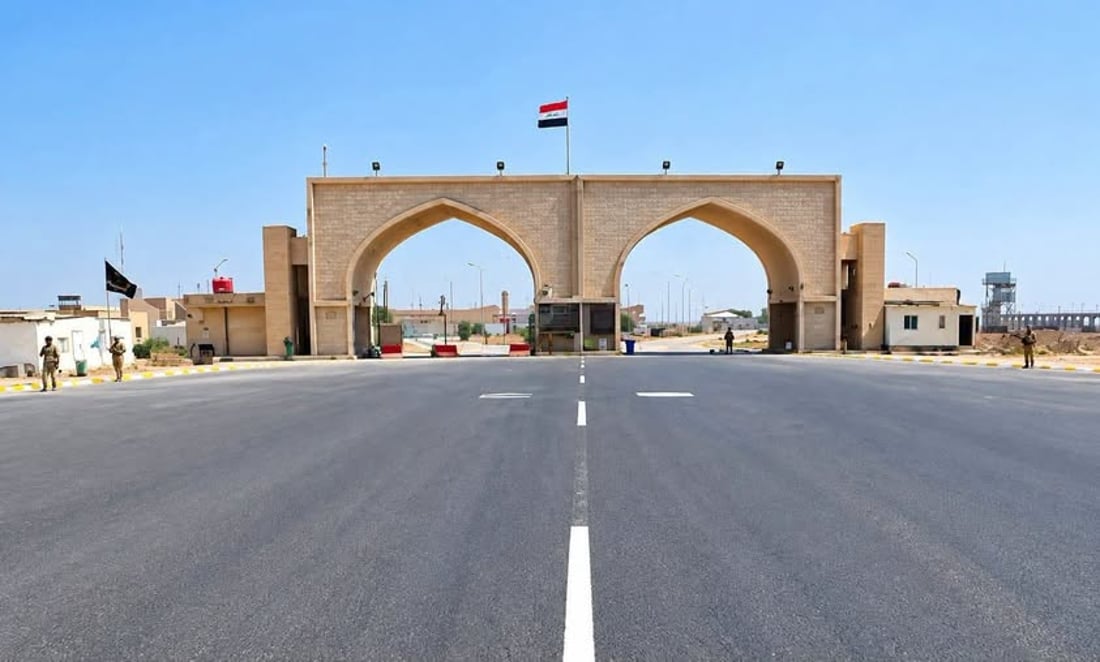
The al-Sheib border crossing between Iraq and Iran in Maysan governorate.
Staff on site
Iraq-Iran crossing could reopen ‘at any moment,’ customs chief says
BAGHDAD — The al-Sheib border crossing with Iran could reopen “at any moment,” though it is rated high-risk and has a single, often faulty scanner, the head of Iraq’s General Customs Authority said Wednesday.
Thamer Qasim Dawood said in an interview with journalist Ahmed al-Tayeb that customs staff and equipment remain at the crossing in Maysan governorate, which has been closed since Oct. 21. Its revenue can reach 2 billion to 4 billion dinars (about $1.3 million to $2.6 million at the official rate) a day, he said.
“There are signs that the al-Sheib crossing will reopen. Our employees are still present at the customs centers, and there is no instruction to withdraw staff or to withdraw devices and equipment,” Dawood said. “Work at the crossing may resume at any moment.”
He described a crossing that lacks the basics. “The al-Sheib crossing is classified as a high-risk crossing on the one hand, and on the other it lacks the most basic requirements for customs work,” he said.
The infrastructure there is “all but gone,” Dawood said. Employees work from caravans and stop attempts to smuggle goods through the crossing, which has no weighbridges for weighing trucks, he said.
A Cabinet decision moved the scanners at Iraq’s crossings from the Border Ports Authority to the customs authority, and most of them need replacing to suit conditions in Iraq, he said. “We have only one scanner at the al-Sheib center, and this scanner suffers breakdowns from time to time,” Dawood said.
The authority plans to equip all customs centers with scanners once funds are allocated or, at the least, to move to joint operation, an arrangement he did not describe. “We need more scanners suited to the nature of the goods entering Iraq. A single scanner costs $2 million, and some devices cost more than that,” he said.
Al-Sheib, in Maysan in the southeast, closed to goods and travelers on Oct. 21 on Prime Minister Ali al-Zaidi’s instructions, until further notice. Government spokesperson Haider al-Aboudi said its technical and logistical facilities needed upgrading, while government adviser Abdul Amir Taiban said the aim was to stop drugs and counterfeit currency from entering Iraq.
Iran’s embassy in Baghdad on Saturday rejected Taiban’s smuggling claims as false and urged Iraqi authorities to respond to remarks it said could harm relations. Iran’s Interior Ministry has said Tehran got no advance notice of the closure. Aboudi called that denial “inaccurate” and said Iran had been notified through the approved channels.
The judiciary on Tuesday released Maysan Provincial Council Chairman Mustafa Idair al-Muhammadawi hours after his arrest over his threat of civil disobedience unless the crossing reopened by Thursday.