
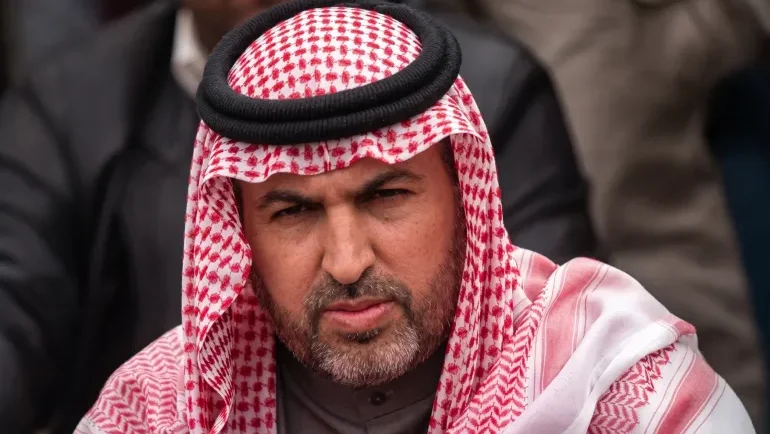
Former Iraqi lawmaker Ahmed al-Alwani, who was found dead in Beirut in November 2026.
Lebanon denies its security chief tied Alwani killing to honor
BAGHDAD — Lebanon’s General Security directorate on Saturday denied reports that its director general had told the authorities or Iraqi politicians that the killing of former Iraqi lawmaker Ahmed al-Alwani in Beirut was over “moral reasons” or “honor.”
The directorate denied in full the claims, which it said had circulated on social media and media platforms, that Maj. Gen. Hassan Choucair had given such an explanation.
“These allegations are entirely false and have no basis in reality,” the directorate said in the statement, which it also posted on X. It urged everyone to be accurate and to rely on approved official sources before passing on any information or untrue rumors.
The statement did not say how Alwani died, give a motive or disclose any findings from the investigation into his killing.
Choucair was the official who told Iraq’s ambassador to Lebanon, Mohammed Reda al-Husseini, on Nov. 10 that an unidentified body had been found in an apartment in Beirut’s Tariq al-Jdideh district, according to Iraq’s chief security spokesperson, Lt. Gen. Saad Maan. Early information suggested the dead man was Syrian, because a Syrian had rented the apartment, Maan said.
Alwani had flown to Beirut from Erbil on Nov. 5. Lebanon’s judiciary opened an investigation and assigned a special judge to the case, and Lebanon’s top prosecutor ordered a DNA test because the body had decomposed.
On Thursday, Maan said Alwani checked out of a Beirut hotel less than an hour after arriving and left in a white Range Rover with people who spoke with Syrian accents, citing the hotel’s owners. Alwani’s media office has given a different account, saying he did not stay at any hotel on the day he arrived.
President Nizar Amedi pressed Lebanese Prime Minister Nawaf Salam for an urgent investigation on Wednesday to identify the killers. Parliament Speaker Haibat al-Halbousi also called for the investigations to be completed, with Iraqi and Lebanese authorities working together.
The director of Alwani’s media office, Bashar al-Dulaimi, told the Saudi newspaper Okaz that he ruled out a criminal or personal motive. He accused unnamed international parties of planning the killing to derail a reform project Alwani was working on, and offered no evidence. Sovereignty Alliance leader Khamis al-Khanjar blamed “militias wreaking havoc in Iraq.”
On Saturday, Alwani’s body arrived at Baghdad International Airport on a private plane from Beirut, after DNA tests matched samples from his son, Talha al-Alwani. He was buried in Ramadi, Anbar’s capital, the same day after a funeral procession from his tribe’s guesthouse.
The Iraqi Embassy in Beirut said a Lebanese forensic report “showed the causes of death,” but it did not disclose them and said a copy would go to the family.
Alwani, a Sunni former MP from Anbar, played a prominent role in the 2012-2013 protests against the government of Nouri al-Maliki, then prime minister. He was arrested in December 2013, sentenced to death in 2014 and freed in 2025 under Iraq’s General Amnesty Law.
The embassy has said it is closely following the investigation, which judicial and security agencies in both countries are conducting together. Lebanese authorities have not publicly named any suspect or given a motive for the killing.