
Border dispute escalates
Zaidi orders probe of Maysan council head over disobedience threat
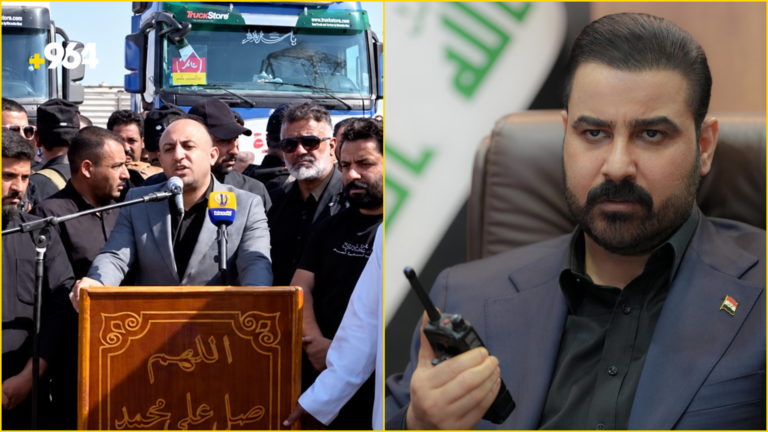
BAGHDAD — Iraqi Prime Minister Ali al-Zaidi on Monday ordered an investigation into the chairman of Maysan Provincial Council, who threatened civil disobedience and road blockades unless the government reopens the al-Sheib border crossing with Iran.
The order follows remarks Mustafa Idair al-Muhammadawi made on Sunday, the prime minister’s media office said in a statement. They included his threat to cut Maysan’s transport links with the rest of Iraq and what the office called “inappropriate language,” though it did not say which words it meant.
Officials must abide by the law and follow constitutional and administrative procedures when handling service and administrative disputes, the statement said. It left any legal responsibility arising from the remarks to “the relevant authorities,” without naming them.
Muhammadawi joined dozens of truck drivers at Sunday’s protest at the crossing to demand that it reopen. He gave Baghdad until Thursday, Oct. 29, warning that residents would declare civil disobedience and block the roads linking Maysan to other governorates if the crossing stayed shut.
He told the protest he had joined as a Maysan resident rather than as council chairman. He accused the government of threatening the livelihoods of families who depend on cross-border trade.
“Four thousand citizens depend on this crossing for their livelihoods. What will these families do without an alternative?” he asked.
Muhammadawi, an Asaib Ahl al-Haq leader, was elected council chairman in February 2024. Asaib, an Iran-aligned armed faction, is part of Zaidi’s government through its political wing, Sadiqoun.
Al-Sheib, in Maysan governorate in the southeast, closed to goods and travelers at 6 a.m. on Wednesday, Oct. 21, on Zaidi’s instructions, until further notice. Truck drivers first protested on Thursday, calling the crossing a lifeline for Maysan’s economy and asking why it had been singled out while other crossings with Iran stayed open.
The government has given differing reasons for the closure. Government spokesperson Haider al-Aboudi said the crossing’s technical and logistical facilities needed upgrading, while government adviser Abdul Amir Taiban said the aim was to stop drugs and counterfeit currency from entering Iraq.
Iran’s embassy in Baghdad on Saturday rejected Taiban’s smuggling claims as false and urged Iraqi authorities to respond. Iran’s Interior Ministry has said Tehran got no advance notice of the closure, which a bilateral agreement requires for shutdowns of more than one day. Aboudi called that account “inaccurate,” saying Iran had been notified through approved channels.
Muhammadawi said Sunday that Maysan’s members of parliament had agreed to pursue the dispute through the legislature, and he hoped for a solution before Thursday’s deadline.