
End to Iran and US interference in Iraq is Tishreen’s top demand, says party head
BAGHDAD — Ending Iranian and American interference in Iraq is the central demand of the Tishreen protests, Hussein al-Ghurabi, secretary-general of the National Home Party, said Sunday, welcoming Prime Minister Ali al-Zaidi’s move to receive protesters’ demands.
Speaking in an interview with Al-Fallujah TV, Ghurabi said the demands submitted to the government also included ending sectarian power-sharing, prosecuting those responsible for killing demonstrators in 2019, pursuing senior officials accused of corruption and addressing Iraq’s economic difficulties.
“It’s a good step by Mr. al-Zaidi to receive the demands of the Tishreen protesters, and we hope this becomes a strategy rather than a symbolic measure,” said Ghurabi, whose party emerged from the protest movement.
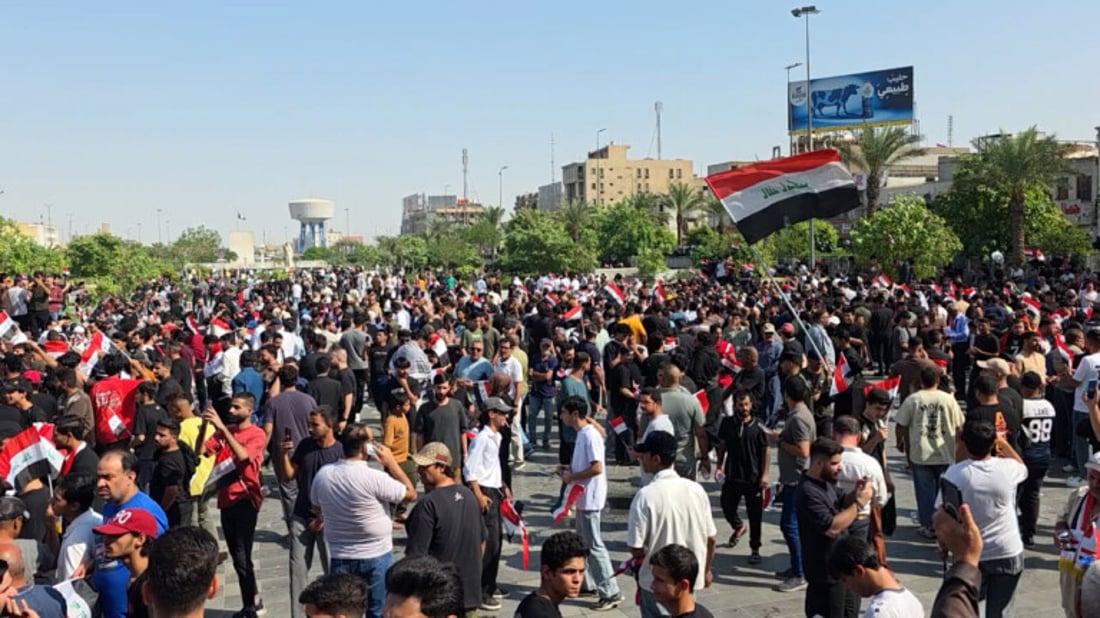
A delegation led by Lt. Gen. Saad Maan, head of the Security Media Cell, visited Baghdad’s Tahrir Square on Sunday, where hundreds of demonstrators gathered to mark the seventh anniversary of the 2019 anti-government protests. They handed over demands including prosecuting corrupt officials, restricting weapons to state control and bringing those who killed protesters to justice.
The protesters gave the delegation one month to act on the demands, an official source told 964media. Zaidi thanked peaceful protesters on Sunday evening for their cooperation with security forces and said their demands had reached him. He pledged to review them and work to meet them, and said the government’s doors would remain open to dialogue.
Foreign influence, particularly from Tehran and Washington, had weakened Iraq’s political independence, Ghurabi said, adding that Gulf countries had also interfered at times. Iraq should not be “a backyard for any country in the world,” he said.
“We want our decisions to be in our own hands,” he said, arguing that outside interference had damaged Iraq’s domestic industries and its political, security and social stability.
He said the movement wanted the government to press on with its Dawn Strike anti-corruption campaign and to ease the financial pressure on Iraqi households.
The campaign began on June 28 with raids in Baghdad’s Green Zone on current and former officials and lawmakers accused of corruption. Some leaders of the Coordination Framework, the Shiite alliance behind the government, criticized Zaidi over the raids’ secrecy and the use of tanks. He later said they had told him there were “no red lines” protecting anyone accused of corruption.
Ghurabi also urged Zaidi to communicate directly with the families of protesters killed in 2019, suggesting he appoint a liaison to stay in contact with them, and to make accountability a central part of his government’s program.
“The crimes committed against the young people of Tishreen will not be subject to a statute of limitations,” he said.
He also criticized Maysan Provincial Council Chairman Mustafa Idair al-Muhammadawi, an Asaib Ahl al-Haq leader, who threatened Sunday to declare civil disobedience unless the government reopens the al-Sheib border crossing with Iran.
“When will you be statesmen?” Ghurabi asked, urging local officials to drop an opposition mindset and build an economy that serves Iraqi citizens rather than political parties.
Muhammadawi gave the government until Thursday, Oct. 29, warning that residents would block the roads linking Maysan to other governorates, and said about 4,000 people depended on the crossing for their livelihoods. The crossing has been closed since Wednesday, Oct. 21, on Zaidi’s instructions.
Zaidi on Monday ordered an investigation into Muhammadawi’s remarks, citing the threat and what the prime minister’s media office called “inappropriate language.”
The anniversary also brought demonstrations to Hillah, Najaf and Nasiriyah. In Basra’s Abdul Karim Qasim Square, activists called for prosecuting those responsible for protest deaths, ending sectarian power-sharing, restricting weapons to state control, electoral reform and laws on political parties and the Federal Supreme Court.
The Tishreen protests began on Oct. 1, 2019, over corruption, unemployment and poor public services, then resumed on a larger scale on Oct. 25 and spread across Baghdad and the southern governorates. Hundreds of protesters were killed and thousands wounded, and the unrest led to the resignation of Prime Minister Adel Abdul-Mahdi.
Iraqi courts opened 2,700 criminal investigations into the violence against protesters, issued 10 arrest warrants and handed down seven convictions, Amnesty International said in 2024, citing data the Supreme Judicial Council shared that August.
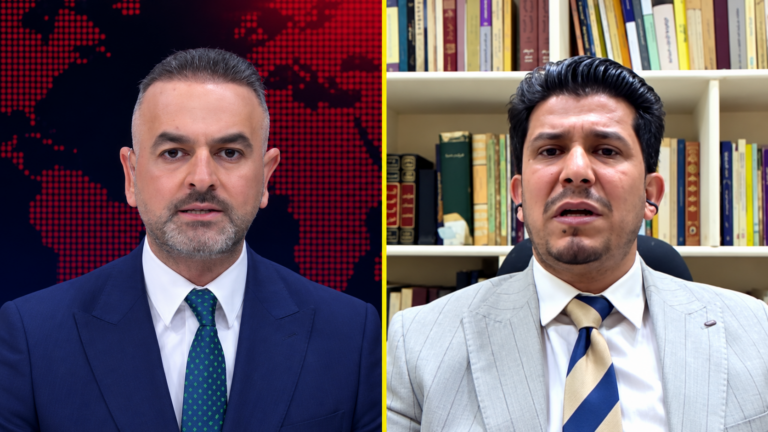
Al-Fallujah TV journalist Ali Farhan (left) interviews Hussein al-Ghurabi, secretary-general of Iraq’s National Home Party, about the Tishreen protests and their demands