
Mount Sinjar to Baghdad
Sinjar’s Yazidi armed groups to merge 4,165 fighters into Iraqi forces
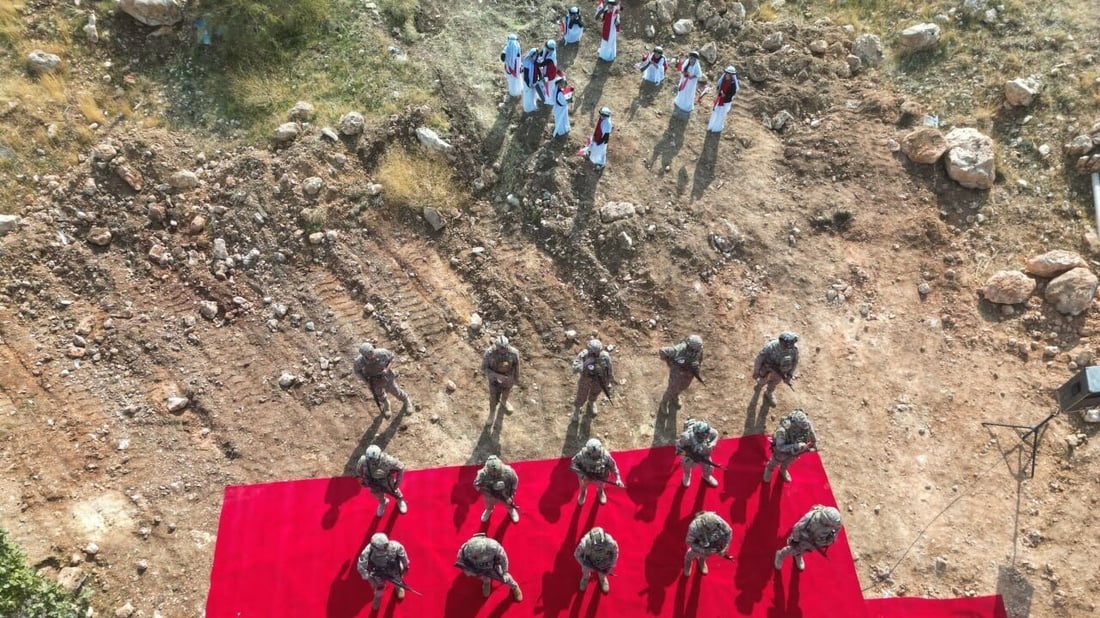
BAGHDAD — Two Yazidi armed groups in Sinjar said Monday they had agreed with the federal government to merge their 4,165 fighters into Iraq’s official security forces, ending their separate military status as Baghdad brings weapons under state control.
The fighters, men and women, belong to the Sinjar Resistance Units and their women’s wing, the Sinjar Women’s Units. The Sinjar Resistance Units are a Yazidi-majority force with ties to the Kurdistan Workers’ Party, or PKK.
In a joint statement, the two groups said the agreement would place their members under federal security institutions while protecting the fighters’ rights and the Yazidi community’s security and identity.
The government said the same day that federal authorities would take over security on Mount Sinjar, west of Mosul in Nineveh governorate, under the supervision of Prime Minister Ali al-Zaidi.
Sabah al-Numan, spokesperson for the commander-in-chief of the armed forces, said the government was going ahead with the groups’ “military disengagement,” dissolving their separate military command and merging their members into official security institutions.
The two groups said the agreement was meant to strengthen Iraqi sovereignty and set up a new security framework for Sinjar, provided the commitments on their members’ rights were kept.
Their forces were formed after the Islamic State group’s genocide against Yazidis in August 2014 and fought to defend and retake the area, the statement said. It said 530 of their fighters were killed and hundreds wounded in those years.
Joining state institutions would not diminish their members’ sacrifices, the groups said, calling for guarantees covering the fighters’ legal status, the rights of the wounded and the families of those killed. They thanked Zaidi and the government, security, political and community representatives involved in the negotiations.
They also urged the authorities to determine the fate of missing Yazidis, compensate victims’ families, help displaced residents return and speed up reconstruction. Of the 6,417 Yazidis ISIS abducted in 2014, 2,823 were still unaccounted for as of May, according to the Kurdistan Region’s Office for Rescuing Kidnapped Yazidis.
The federal government said it would take responsibility for protecting the rights of Yazidis who fought ISIS, compensating victims of terrorist attacks and rebuilding Sinjar. It said the integration would follow the constitution, which bans armed formations outside the official security forces.
Neither side gave a timetable for completing the integration or said how the fighters would be divided among the security forces. Zaidi said in an interview with state-run Al-Iraqiya TV on Friday that they would join the Popular Mobilization Forces, a state umbrella of armed groups formed in 2014 to fight ISIS, some of them closely tied to Iran.
Monday’s agreement follows Zaidi’s announcement on Sept. 11, after meeting Yazidi leaders in Baghdad, that Sinjar’s armed groups would begin handing over their weapons and that Mount Sinjar would come under full federal security and administrative authority. He told officials to arrange for eligible fighters to join state institutions and set up a committee to assess the district’s security, reconstruction and public service needs.
Lt. Gen. Qasim al-Muhammadi, commander of the Iraqi army’s Ground Forces, said on Sept. 22 that armed groups operating outside state authority would no longer be allowed on Mount Sinjar. He called on foreign fighters to leave the area and said eligible Iraqi fighters would be brought into official security formations.
Iraq also agreed with Turkey on Sept. 23 to establish full state authority in Sinjar and end the presence of banned foreign armed groups there, and Turkey agreed to gradually hand its Bashiqa-Zilkan base, northeast of Mosul, to the federal government.
Ankara regards the Sinjar Resistance Units as a PKK affiliate and has long opposed their presence in Sinjar. The PKK said in May 2025 it would dissolve itself.
Baghdad and Erbil signed the UN-backed Sinjar Agreement on Oct. 9, 2020, to restore local administration in Sinjar, the Yazidi homeland, hand security to official forces and remove armed groups operating outside state control. Its implementation stalled, and the Kurdistan Regional Government said in October 2025 that none of its security or administrative provisions had been carried out.