
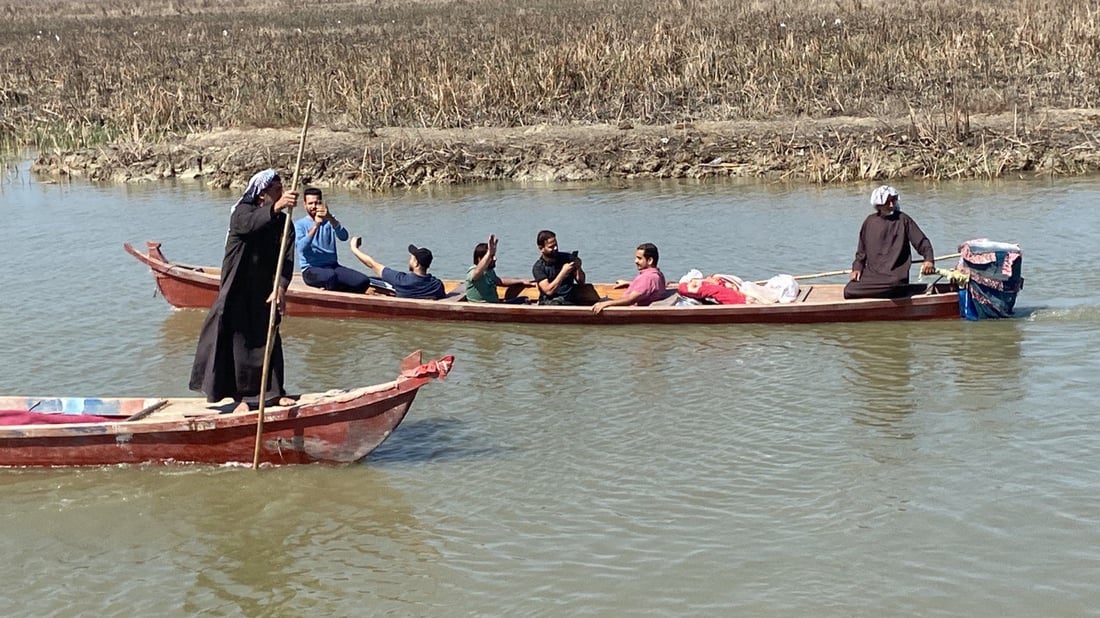
Men travel by traditional wooden boats through the marshes in southern Iraq. (Photo: 964media)
Ministry: marshes recover after five years of drought, but some areas still dry
BAGHDAD — Water levels in Iraq’s southern marshes have improved after five years of drought, but some areas are still short of water because of reduced inflows and climate change, the Water Resources Ministry said.
“The marshland areas have recorded an improvement in their water conditions after periods of drought over the past five years, as a result of the ministry’s efforts to make use of rainfall during the spring of this year,” ministry spokesperson Khalid Shamal told the state-run Iraqi News Agency. Departments had cracked down on unauthorized water use, controlled consumption along the channels feeding the marshes and cleared waterways so water reaches local communities, he said. “Some areas of the marshlands are still suffering from drought due to reduced water inflows and the consequences of climate change.”
The ministry allocates water under seasonal plans based on available supply, balancing agriculture, the marshes and other needs across governorates, Shamal said. It is assessing how much water each area needs, regulating distribution, maintaining infrastructure and clearing blockages, with field teams from the Center for the Restoration of Iraqi Marshes and Wetlands monitoring flows, levels and quality. “Our efforts are not limited to restoring areas covered by water, but also include protecting biodiversity, fish stocks and reeds, as well as preserving the way of life and livelihoods of marshland residents,” he said.
The marshes, between the Tigris and Euphrates in southern Iraq, were designated a UNESCO World Heritage Site in 2016.
Iraq’s water reserves stood at more than 31 billion cubic meters on Sept. 15, enough to meet planned agricultural needs, the ministry said, after it put storage at about 34 billion in late July, nearly seven times the level a year earlier. More than 70% of Iraq’s water comes from neighboring countries, mainly Turkey, followed by Iran and Syria; Turkish dams cut flows downstream, and Iran has dammed and diverted Tigris tributaries. This year’s recovery followed a wetter-than-normal winter that refilled reservoirs, lakes and parts of the marshes after officials warned of the worst shortage in decades, a partial restoration that does not resolve the country’s structural scarcity.