
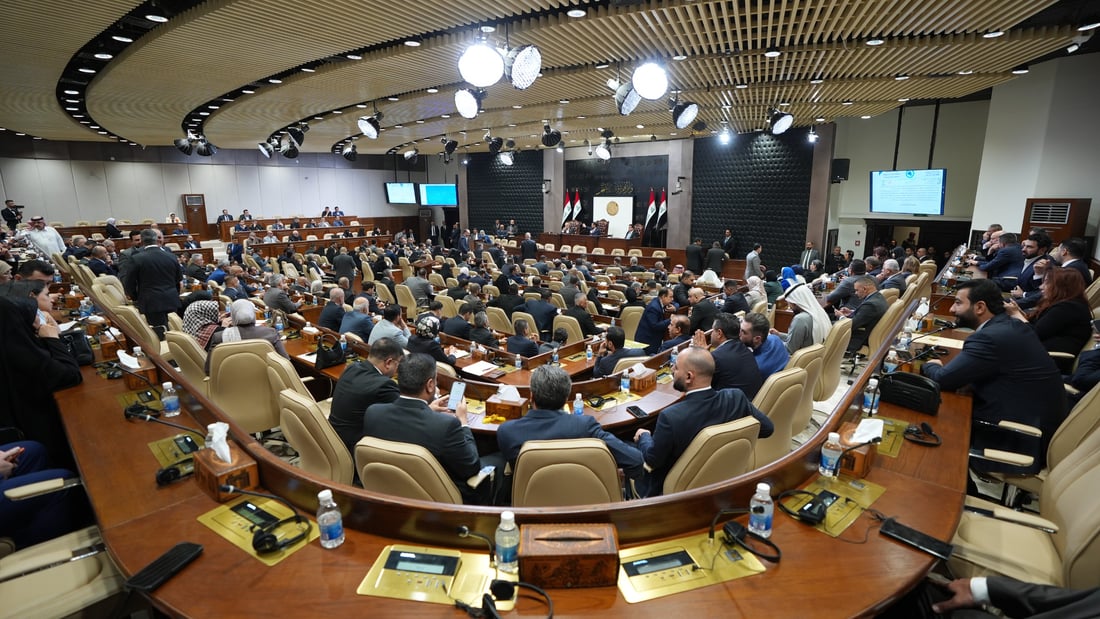
An Iraqi parliamentary session
Iraq finishes 2027 budget draft as MP expects it in parliament ‘soon’
BAGHDAD — Iraq’s Finance Ministry said Thursday it had finished preparing the 2027 budget, which would move more than 500,000 contract employees and daily wage workers onto the permanent state payroll.
The ministry gave no total for the budget and did not mention the Kurdistan Region’s share, which Baghdad and Erbil have disputed for months. The two governments have announced no final agreement on it.
The government will likely send the budget to parliament soon, Nasser Turki, a member of parliament’s Finance Committee, told the state-run Iraqi News Agency on Friday. He said an initiative by Supreme Judicial Council President Faiq Zaidan for dialogue between Baghdad and Erbil had helped speed it up. Some parts of the budget have been agreed and others are still being negotiated, he said. As in past years, those parts would be settled in parliament after the Finance Committee discussed them.
“Delaying the budget does not serve citizens’ interests under the current economic conditions,” Turki said.
The draft also includes more than 120,000 posts and lifts the share of non-oil revenue to 18%, the ministry said in a statement. It sets aside 5 trillion dinars (about $3.3 billion at the official rate) for the governorates and 1 trillion dinars (about $660 million) for the Generations Fund, a sovereign wealth fund to save part of Iraq’s oil revenue.
“The budget’s provisions were not written in normal circumstances, but amid the war, the closure of the Strait of Hormuz and the decline in oil exports,” the statement said.
The 18% figure is lower than the one the government gave nine days earlier. Government spokesperson Haider al-Aboudi said on Nov. 17 that the draft put non-oil revenue at no less than 19% of total revenue, the highest share in Iraq’s history. The figures that economist Nabil al-Marsoumi cited from the unpublished draft on Nov. 1 put it at about 17%. The government has not published the draft’s figures.
Prime Minister Ali al-Zaidi ordered on Oct. 24 that all contract and daily wage workers be made permanent and that 120,000 new contract posts be created in the 2027 budget: 50,000 in the security services and 70,000 in ministries and governorates. Finance Minister Falih al-Sari said on Nov. 16 that the workers’ earlier years of service would be counted. The ministry did not say whether the 120,000 posts in Thursday’s statement are the ones Zaidi ordered, or what the hiring would cost.
The Kurdistan Regional Government wants the Region’s share based on 14.14%, its share of Iraq’s population in the 2024 census. Baghdad’s draft sets it at about 12.7%, calculated after sovereign spending is deducted. Sovereign spending covers the items Baghdad holds centrally before the Region’s share is worked out. The KRG cabinet rejected a federal figure of 12.68% in September.
The two sides reached a preliminary understanding in September. Since then, disputes over several key provisions have deepened and held up the bill’s approval and its referral to parliament. Under the Financial Management Law, the draft was due in parliament by Oct. 15. Finance Committee chair Uday Awad said in October that it would reach parliament on Nov. 15.
Relations between Baghdad and Erbil worsened this week. On Tuesday, Kurdish leaders closed ranks against Zaidi’s orders to put the Region’s border crossings and its oil under federal control. The Federal Supreme Court ruled the next day that the measures were constitutional.
On Wednesday, at a meeting of the country’s top leaders, Zaidan proposed a national dialogue set for Dec. 1 to bring together the parties to the crisis between the federal government and the KRG. The KDP and the Patriotic Union of Kurdistan have said they are ready to take part.
The cabinet has not announced a vote on the draft. It must approve the bill before it goes to parliament.