
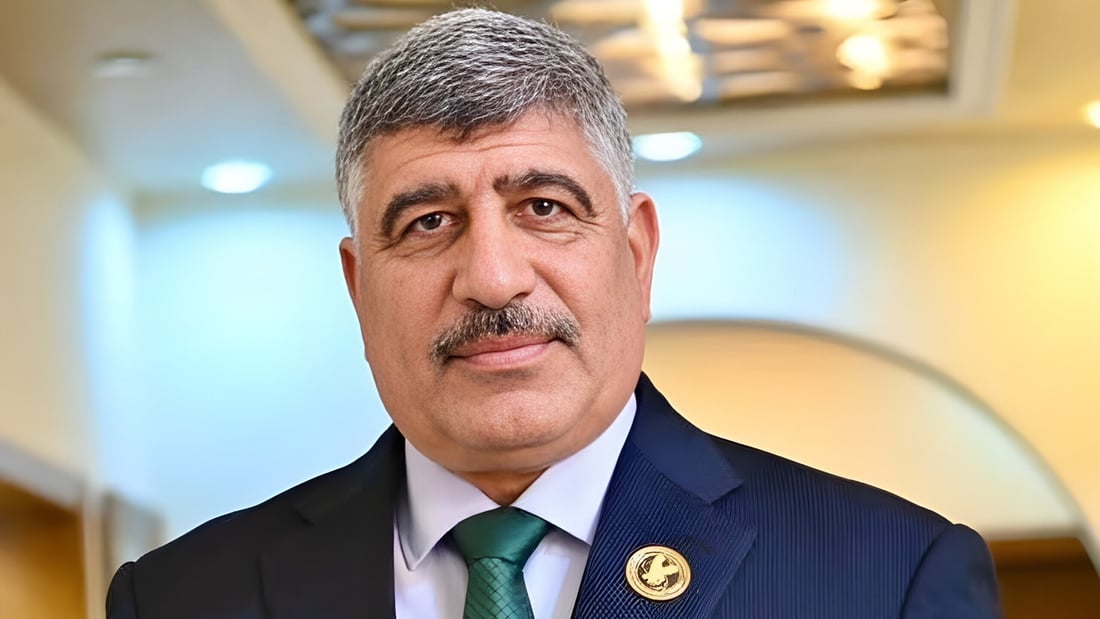
Sabah al-Numan, spokesperson for the commander-in-chief of the armed forces
Iraq to implement urgent security plan after US-Saudi strikes, spokesperson says
BAGHDAD — Iraq will implement an urgent plan to close security gaps and keep security decisions under state control after what the government called an unjustified U.S.-Saudi attack, the military spokesperson for the PM said Wednesday, while demanding that the countries accusing Iraq of hosting attacks produce evidence.
Sabah al-Numan told the state-run Iraqiya channel that the attack was “unjustified, unilateral and far removed from all international norms and the principles of good neighborly relations and partnerships that bind us with our brothers,” and that it had cut across Iraqi efforts to investigate the allegations. He said the government had formed technical committees and approached the relevant parties for information supporting the claim that attacks were launched from Iraq, and that none had provided proof. “We call on the countries and parties claiming attacks originated from Iraq to provide evidence, proof and information to Iraq,” he said.
Numan said the Ministerial Council for National Security held an expanded emergency meeting on Wednesday at which Prime Minister Ali al-Zaidi, as commander-in-chief, ordered a security plan to close security gaps, redistribute areas of responsibility and intensify intelligence efforts, ready for immediate implementation. “The blood of Iraqis is a red line. We will not allow violations of Iraq’s sovereignty, nor will we allow any compromise involving the lives of our citizens, whether civilians or members of the security forces,” he said.
That call for evidence sat alongside his own account of Iraq’s security failings. Numan said Iraq had been subjected to bombings and attacks by militants entering from neighboring countries on a daily basis, while seeking strategic relations with those states. “We have not accused any country despite our knowledge, and despite the fact that many terrorists arrested held known nationalities,” he said.
He said the government had told “individual parties” that security decisions rest with the Iraqi state and the commander-in-chief, that Iraq would not permit attacks on neighboring countries to be launched from its territory and would not accept attacks originating from them, and that the strikes would not alter the coalition withdrawal timetable or the policy of restricting weapons to state control. There would be no need for weapons outside state authority after the withdrawal, he said. He added that Iraq remained committed to expanding cooperation with regional countries and the international community, and that Zaidi viewed regional security as interconnected.
The PMF said the strikes hit its headquarters in Baghdad, Wasit, Nineveh, Basra, Kirkuk, Karbala and Diyala, killing at least 20 members and wounding 32 in a preliminary toll. U.S. Central Command said it and Saudi forces struck weapons-storage and logistical sites linked to Iran-backed groups after more than 30 drone attacks it attributed to Iran’s Revolutionary Guard. Saudi Arabia said the targets were connected to attacks on its energy facilities, and its Defense Ministry said earlier this week that air defenses had intercepted drones targeting petroleum facilities in the Eastern Province and Riyadh which it said were launched from Iraqi territory by Iran-backed militias. It did not name a faction.
The Islamic Resistance in Iraq gave the government until early August to show it can defend Iraqi sovereignty without armed factions, and said it would respond to the strikes itself after the Arbaeen pilgrimage. The security council said earlier Wednesday that responding was “the exclusive responsibility of the Iraqi government and its constitutional state institutions.”
Asaib Ahl al-Haq, Saraya al-Salam and the Imam Ali Battalions have moved to comply with the weapons plan; Kataib Hezbollah, Harakat al-Nujaba and Kataib Sayyid al-Shuhada have refused while U.S. forces remain in Iraq.