
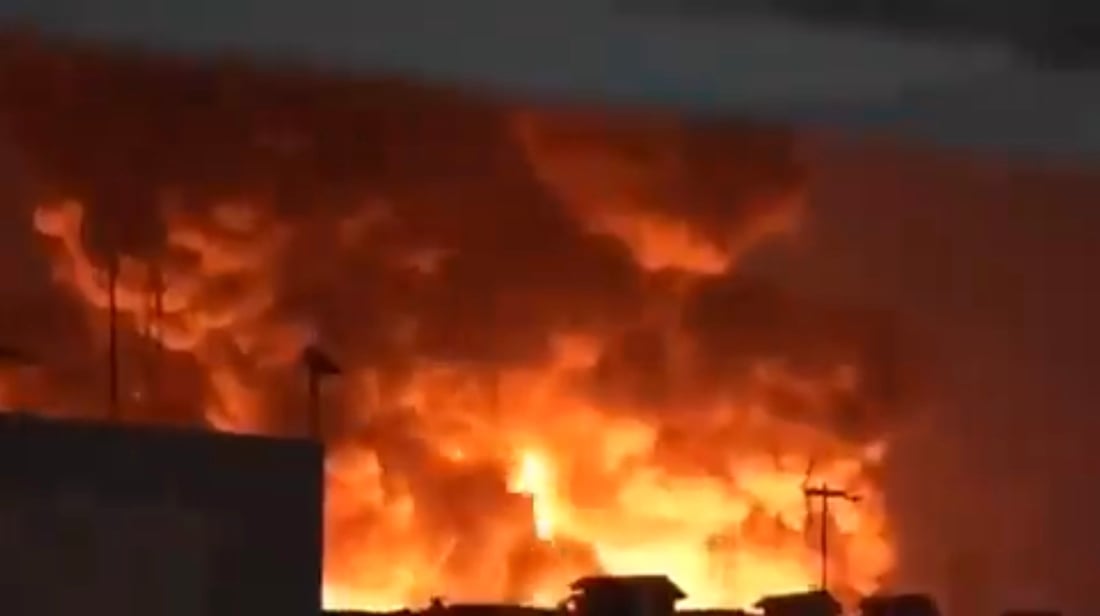
Screenshot
PMF says at least 20 killed in US-Saudi strikes as Iraqi PM convenes emergency meeting
BAGHDAD — Prime Minister Ali al-Zaidi called an emergency meeting of the Ministerial Council for National Security on Wednesday after U.S. and Saudi aircraft struck Popular Mobilization Forces sites across seven Iraqi governorates before dawn, in what the PMF said killed at least 20 of its members and wounded 32.
It is the first acknowledged Saudi military operation inside Iraq.
The Security Media Cell said Zaidi ordered the council to convene “based on developments in the security situation and the airstrikes that targeted the country at dawn today,” and that “a detailed statement on the course of events and the decisions taken will be issued following this meeting.”
The PMF, which are officially part of the country’s security forces and ostensibly report to the commander-in-chief, issued two statements. The first called the strikes “a highly dangerous escalation, a violation of Iraq’s sovereignty, and an attack on its official security institutions,” reporting casualties and damage without figures. The second put the toll at at least 20 killed and 32 wounded, describing it as preliminary and subject to rise as assessment teams complete their work, and called the operation a joint U.S.-Saudi aggression.
The force said its headquarters were struck in Baghdad, Wasit, Nineveh, Basra, Kirkuk, Karbala and Diyala, damaging buildings, military vehicles and equipment. Witnesses told 964media that strikes hit locations in those seven governorates.
Its Nineveh Operations Command said seven strikes hit the fourth regiment of Brigade 30 and the Directorate of Armored Combat in the Nineveh Plains at 3:20 a.m., killing eight members of Brigade 30 and two from the armored directorate and wounding six, with figures that could change as field work continued. It said the attacks “will not deter” its members and would leave them “more steadfast, resilient and determined in defending Iraq and preserving its sovereignty.” In Basra, the PMF Operations Command said its headquarters was struck at 2 a.m. and two personnel were wounded, that forces had moved to secure the sites and strengthen protection. The PMF has not published breakdowns for the other five governorates.
U.S. Central Command said earlier Wednesday that it and Saudi forces had struck weapons storage and logistical supply sites in eastern Iraq, in response to more than 30 drone attacks it said Iran’s Revolutionary Guard directed over the previous 72 hours. It did not identify the locations. “The IRGC and its terrorist proxies must cease these attacks to avoid further U.S. military response,” the statement read.
The Saudi Defense Ministry confirmed its participation, saying it had coordinated with CENTCOM against militia targets linked to attacks on oil facilities in the Eastern Province and Riyadh, and that the kingdom does not seek escalation but will respond to any aggression against it.
The strikes came hours after Iran fired missiles at U.S. forces in Jordan, five of which Jordanian air defenses shot down, according to Jordan’s state news agency. It also comes after several days of Saudi accusations. On Monday and Tuesday Saudi Arabia said it had intercepted and destroyed drones targeting oil facilities in the Eastern Province and the Riyadh region, alleging they were launched from Iraqi territory by “Iran-affiliated terrorist militias,” and reserved the right to respond “at the appropriate time and place.” Its Foreign Ministry condemned the drone attacks and called on the Iraqi government to prevent its territory being used to launch attacks against the kingdom.
Zaidi ordered security agencies to investigate the Saudi allegations. A senior Joint Operations Command official said a committee of representatives from the Defense and Interior ministries and the National Intelligence Service had begun work, that Iraq had asked Saudi Arabia to provide evidence including aerial imagery, diagrams or debris from the intercepted drones, and that Saudi officials had been offered the opportunity to take part in the inquiry.
The Islamic Resistance in Iraq denied responsibility for the attacks on Saudi Arabia, calling the accusations fabrications and an attempt to justify an inability to answer strikes from Yemen, and warned that “any foolish Saudi action” would be met with a “harsh response.”
This article has been updated