
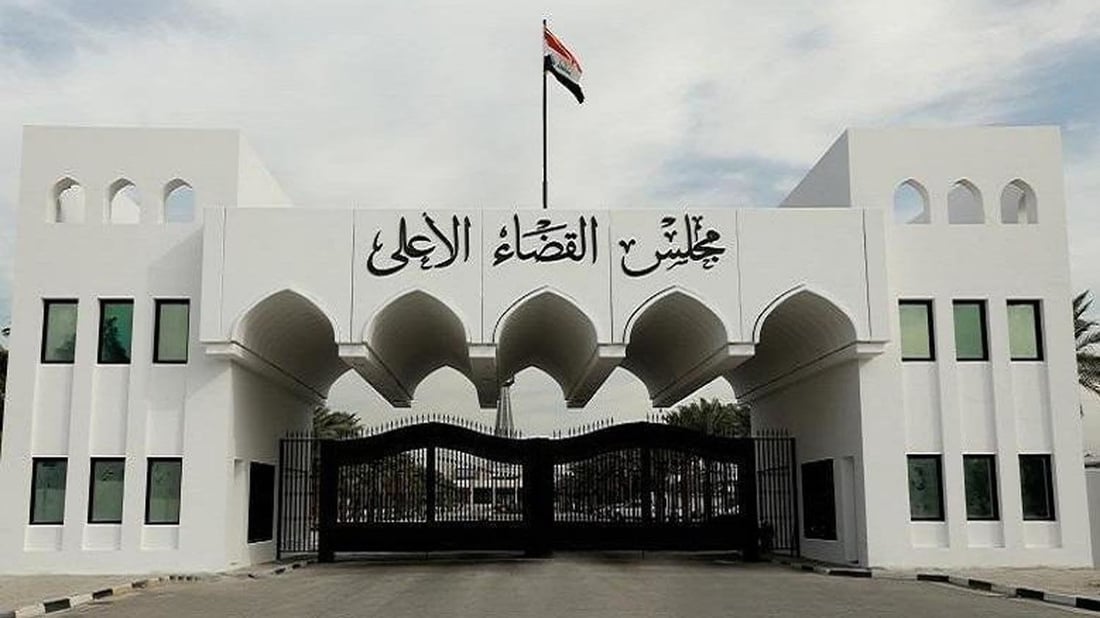
The entrance of Iraq’s Supreme Judicial Council building in Baghdad.
Court cancels 20% levy on cellular credit, ruling it an unconstitutional tax
BAGHDAD — Iraq’s Supreme Judicial Council has cancelled a Communications and Media Commission decision imposing 20% charges on cellular recharge cards and electronic applications, ruling the fees were effectively a tax that only parliament has the constitutional authority to impose.
Judge Iyad Mohsen Damad, head of the appeals panel, said “the amounts imposed at a rate of 20% on recharge cards and electronic applications constitute in reality a ‘sales tax,’ not ‘service fees,'” and that imposing taxes “is an exclusive jurisdiction of the legislative authority according to Article 28/First of the Iraqi Constitution, which prohibits imposing them except by law.”
Damad also said the commission had based its decision on a directive issued by a caretaker government, which “does not possess the legal authority to issue decisions that impose new financial burdens on citizens.” The ruling was issued unanimously and is final.
The issue has a long history. Iraq’s parliament first imposed a 20% tax on mobile recharge cards in 2015 during a financial crisis caused by falling oil prices. The Sudani government cancelled it in 2022 to ease pressure on citizens, but the Council of Ministers reimposed 20% charges on December 24, 2025, describing the measure as aimed at “maximizing state resources.” The decision faced broad public and political opposition. The Communications and Media Commission reaffirmed the charges as recently as April 28, 2026.
The cancellation ruling followed an appeal filed by the director of Athir Telecommunications Iraq Limited.