
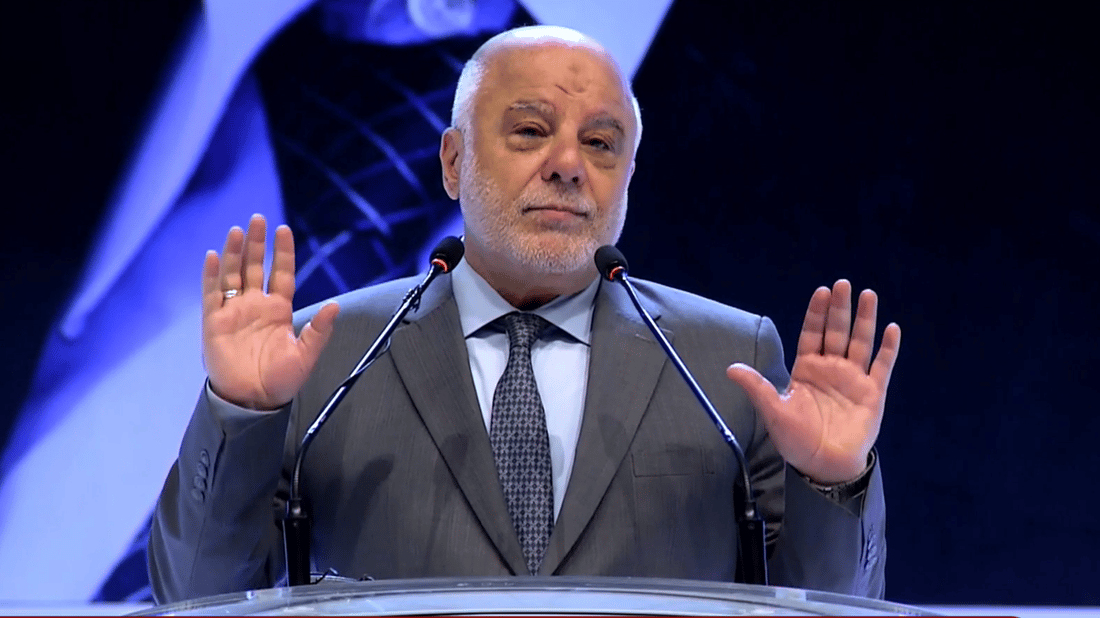
Iraq should have pulled weapons from its cities after Isis fell, Abadi says
BAGHDAD — Iraq should have moved weapons out of its cities and set a deadline for handing them to the state right after defeating the Islamic State group in December 2017, former Prime Minister Haider al-Abadi said in an interview published Wednesday.
“The most important decision, which we worked on but time did not allow us to make, is weapons,” Abadi, who was prime minister from 2014 to 2018 and now heads the Nasr Coalition, told Al Jazeera’s Arabic news site.
Registration for the 2018 parliamentary elections opened a month after victory was declared, he said, and politicians turned to bargaining. Abadi declared the end of the war against Isis on Dec. 9, 2017, and stayed in office until October 2018.
“We should have settled, immediately and before the election season, the removal of weapons from the cities and their placement in depots away from people, with a set deadline for handing them over in full to the state,” he said.
Abadi said groups that got weapons to fight terrorism later used them outside state control for electoral gain after 2018. He did not name the groups. “We saw that in Basra,” he said.
He said social reconciliation was the other missed step. “The unity that the victory created is still fragile, and we should have built on it before it was lost in sectional election messages.”
“I say this knowing that I did not hold the decision alone, but had we settled the weapons issue, we would not later have reached the danger of being a state of warlords,” Abadi said.
Asked whether the factions would hand over their weapons by June 30, 2027, the deadline set by Prime Minister Ali al-Zaidi’s government, Abadi said no one could give a definite answer, repeating what he said in September. In May, as Zaidi was forming his cabinet, Abadi advised him against a direct confrontation with the factions and urged dialogue instead.
In the May 12, 2018, election, Abadi’s Nasr Coalition came third with 42 seats. The Fatah Alliance, an electoral list built around Hadi al-Amiri’s Badr Organization and other armed groups that fought Isis, came second with 47.
In September 2018, protests in Basra over water, electricity and jobs turned violent. Protesters set fire to the Iranian consulate and to the offices of parties and armed factions. Adel Abdul-Mahdi succeeded Abadi as prime minister the next month.
Zaidi’s timetable sets a 90-day halt to attacks from Sept. 30, followed by a six-month handover of weapons. The Coordination Framework, Iraq’s ruling alliance of Shiite parties, reaffirmed the June 2027 deadline on Oct. 19. Kataib Hezbollah, an Iran-aligned armed faction, and Harakat al-Nujaba have refused to give up their weapons.