
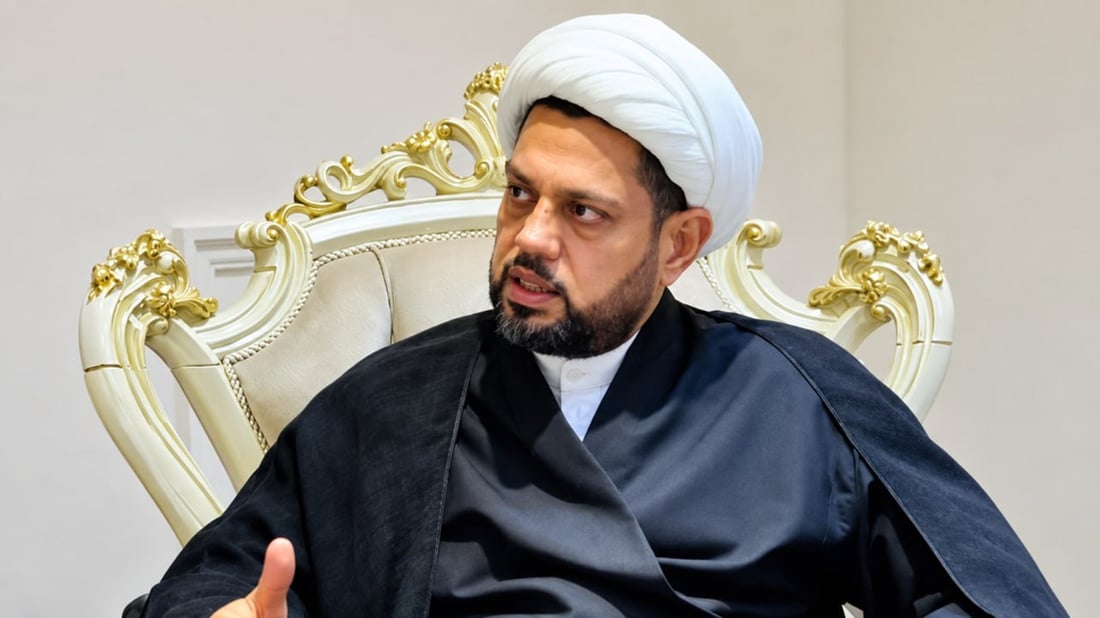
Photo: Ali Al-Asadi, head of the political council of the Harakat Al-Nujaba
Media Monitor
Nujaba says Framework dropped ‘restricting’ weapons for ‘regulating’ them
BAGHDAD — Harakat al-Nujaba says the Coordination Framework softened its demand during talks, dropping the call to restrict weapons to the state in favour of regulating them.
“What we agreed on in our meeting with the Framework delegation was regulating weapons, after the proposal before the round had been to restrict weapons,” said Ali al-Asadi, head of the movement’s political council, in a televised interview. He said the delegation included Nouri al-Maliki, Qais al-Khazali, Humam Hammoudi and Hadi al-Amiri — the leaders of State of Law, Asaib Ahl al-Haq, the Islamic Supreme Council and Badr.
Sept. 30 would be “the beginning of the dialogue, and it may extend for months because the issue is not simple but concerns the fate of a nation,” Asadi said. “We will not reach confrontation because we sensed wisdom and a high sense of responsibility from the Coordination Framework delegation.” He said the delegation had arrived expecting something else: “The Framework delegation expected that we were fighters and would not negotiate. One of the participating figures even told me: I thought Nujaba was only about weapons, but we found informed minds, culture and a high level of discourse.”
He said the negotiators had also given undertakings on the economy. “The negotiators promised us and reassured us that the Iraqi economy will be freed from America, and we trust them,” he said. “This is an important point, and they must put pressure on the enemy to free our economy from it.” He questioned American concern about the factions’ weapons: “We only have two bullets, and they turned the world upside down because of them. I don’t know why the United States is so afraid of us.”
The change in vocabulary is not new. Maliki said this month that the term disarmament was not being used because describing the other side as disarmed “has a psychological and practical effect,” and that the better term was regulating or containing weapons. Prime Minister Ali al-Zaidi said in Washington in July that there would be no justification for armed factions after Sept. 30, and his security adviser Qasim al-Araji said in late August that the date marks the start of talks rather than a deadline.
Asaib Ahl al-Haq, Saraya al-Salam and the Imam Ali Battalions have moved to comply; Kataib Hezbollah, Harakat al-Nujaba and Kataib Sayyid al-Shuhada have refused while U.S. forces remain. Kataib Sayyid al-Shuhada leader Abu Alaa al-Walaei attacked American economic control of Iraq in mid-August, and Nujaba leader Akram al-Kaabi called days earlier for Iraq to take oil revenues directly from buyers and said confronting U.S. investments was a duty for the armed groups. Iraqi agencies and companies signed 48 agreements with U.S. firms during Zaidi’s July visit to Washington, with deals worth about $60 billion announced at a business event during the trip.