
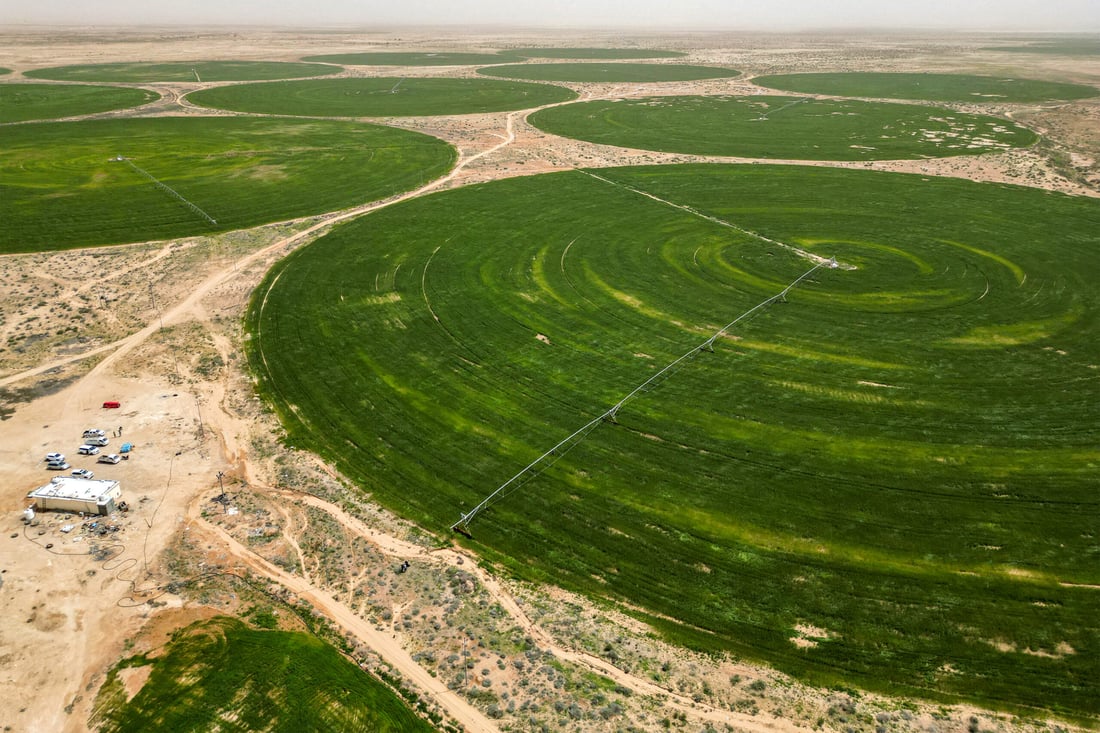
FILES: Wheat grows in circular fields irrigated with groundwater near Iraq's central city of Karbala. (Photo by Mohammed SAWAF/AFP)
Karbala wheat deliveries reach record 365,000 tons in 2025–26 season
KARBALA — Karbala’s Agriculture Directorate announced Monday the completion of wheat marketing operations for the 2025–26 agricultural season, reporting a record total of 365,000 tons delivered.
The directorate said in a statement that local farmers marketed 285,000 tons of wheat cultivated under the government agricultural plan. An additional 80,000 tons were delivered from areas planted outside the plan, bringing total marketed production to 365,000 tons, the highest amount recorded in Karbala’s agricultural history, according to the statement.
The total marks an increase of 60,000 tons compared with the previous season, when wheat deliveries reached 305,000 tons.
The directorate said Karbala has become an influential wheat-producing governorate whose output now meets local demand. It added that the governorate also contributes wheat supplies to other governorates for flour distribution.
Iraq has procured 3.194 million tons of wheat as of June 13 this season, the Trade Ministry said, with collection wrapping up across 10 governorates while operations continue in northern and western areas and the Kurdistan Region.
Iraq buys wheat from farmers at subsidized prices above market rates to support domestic production and food security. This season’s price is 700,000 dinars (about $535) per ton for quantities within the approved plan and 500,000 dinars (about $382) per ton for quantities outside it. Based on the government’s target of roughly 5 million tons, the program represents purchases worth up to 3.5 trillion dinars (about $2.7 billion), making it one of Iraq’s largest agricultural support programs.
The season comes after weeks of farmer unrest over reduced purchase prices and delayed payments. Farmers from several central and southern governorates staged repeated protests in Baghdad, including attempts to march on the Green Zone, after the government cut this season’s price from last year’s 850,000 dinars per ton to 700,000 dinars.
The government has continued to emphasize support for domestic production. Earlier this month, the Council of Ministers approved restrictions on wheat imports until the end of the marketing season, saying the measure would protect local farmers.