
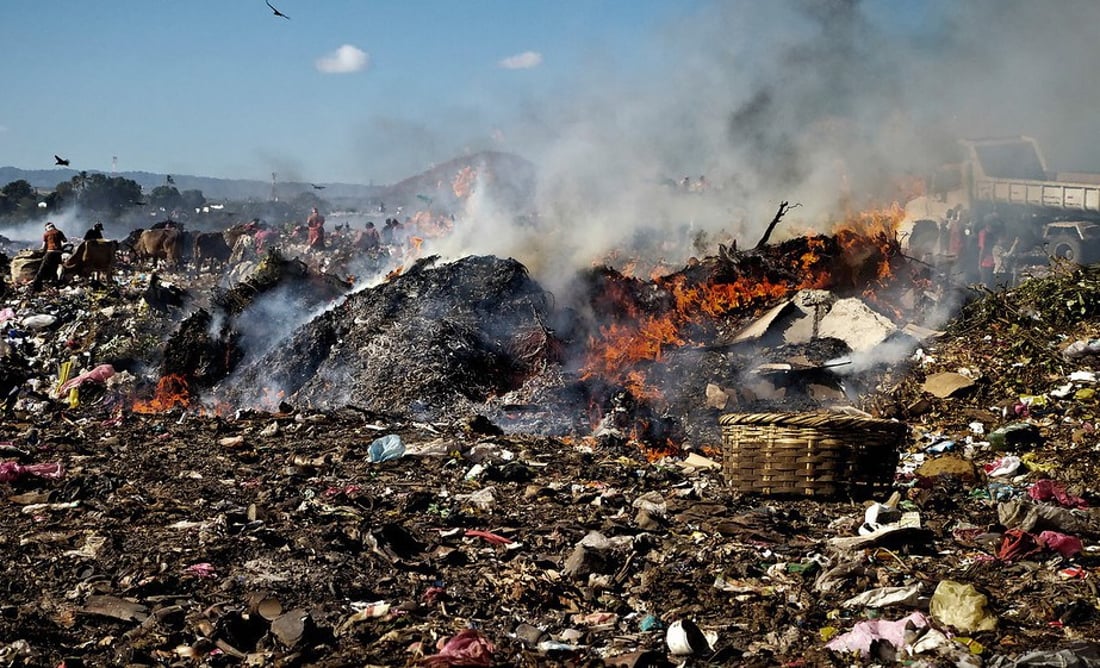
Burning waste at an open landfill
Much of Iraq’s medical waste escapes treatment, observatory says
BAGHDAD — Iraq produces an estimated 20 to 40 tonnes of hazardous medical waste a day while only 400 to 500 tonnes a month are officially treated and destroyed, the Iraq Green Observatory said, warning that the rest is dumped, burned or flushed into sewers.
On those figures the shortfall is wide but imprecise: daily production of 20 tonnes would mean about 600 tonnes a month against up to 500 treated, while 40 tonnes a day would mean 1,200 against as little as 400. Private clinics and laboratories generate an estimated 30% to 40% of medical waste in major cities, the observatory said, often with no separate collection.
Hazardous waste leaves the system by two main routes, according to the statement: dumping and open burning at unlicensed landfill sites where it is mixed with ordinary rubbish, or discharge of liquid medical and chemical waste into sewage networks and waterways. The observatory said those practices have contributed to pollution in the Tigris and Euphrates and linked them to rising cases of kidney failure and cancer, without providing data establishing that connection.
Burning medical waste releases dioxins and sulfur dioxide, it said, while sanitation workers and informal waste pickers risk exposure to contaminated scalpels and syringes carrying viral hepatitis and HIV.
Iraq sends about 19.7 million tonnes of municipal and solid waste to landfill each year and recycles no more than 0.1%, or under 20,000 tonnes.
The observatory called for public funding to build an integrated treatment and recycling system, for older incinerators to be replaced with shredding and heat and pressure sterilisation, for tighter controls on private clinics and laboratories, and for unlicensed landfill sites to be closed and replaced with regulated transfer stations and sealed sanitary landfills.