
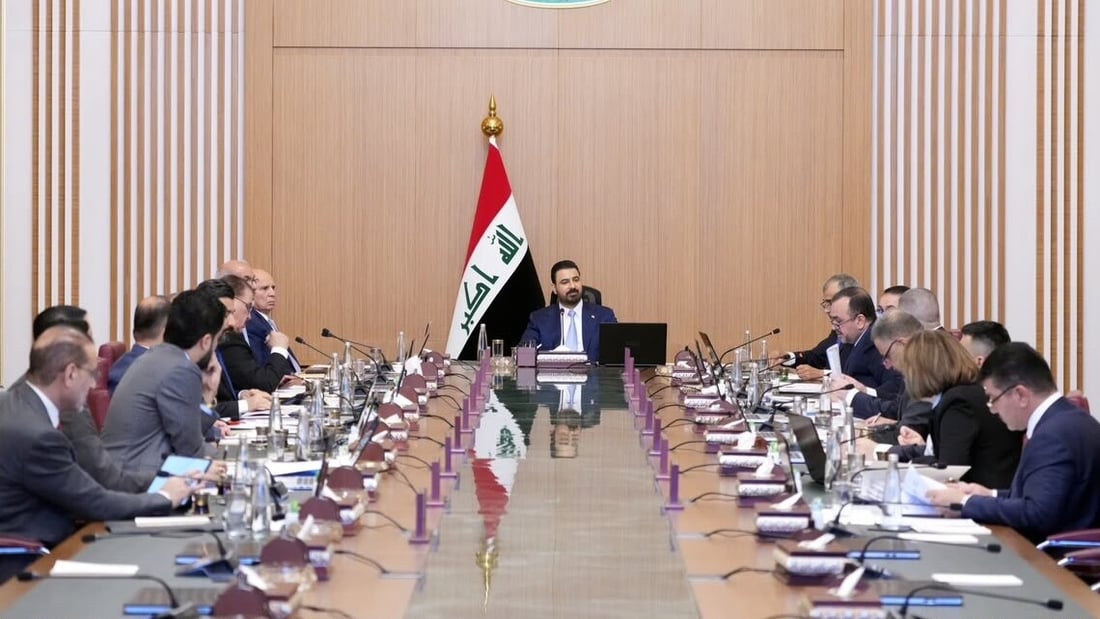
Prime Minister Ali al-Zaidi chairs a Cabinet meeting in Baghdad.
Iraq bans wheat imports until end of season to support local farmers
BAGHDAD — Iraq’s Council of Ministers has decided to ban wheat imports until the end of the current marketing season as part of measures to support domestic agricultural production.
The decision was announced after the Cabinet’s sixth regular session Saturday, chaired by Prime Minister Ali al-Zaidi. The Cabinet approved a recommendation from the Ministerial Council for the Economy under which any wheat imports will be permitted only if the importer proves a purchase from the Trade Ministry’s General Company for Grain Trade equal to at least 50% of the amount requested, and provided the imports are not for blending. The Cabinet also decided to prevent imports of the product until the end of the marketing season.
The move comes as Iraq continues its annual wheat procurement campaign, under which the government buys wheat from local farmers at subsidized prices to support production and food security. The Trade Ministry said Saturday that Iraq had procured 3.194 million tons of wheat so far this season, with collection concluded in nine southern governorates and Baghdad and continuing in northern and western governorates including Kirkuk, Nineveh and the three Kurdistan Region governorates.
This season the government is paying 700,000 dinars (about $535) per ton for quantities within the approved plan and 500,000 dinars (about $382) per ton for quantities outside it, against a procurement target of about 5 million tons. The season follows weeks of protests by farmers in several central and southern governorates over reduced purchase prices and delayed payments, after the government lowered the price from 850,000 dinars per ton last year to 700,000.