
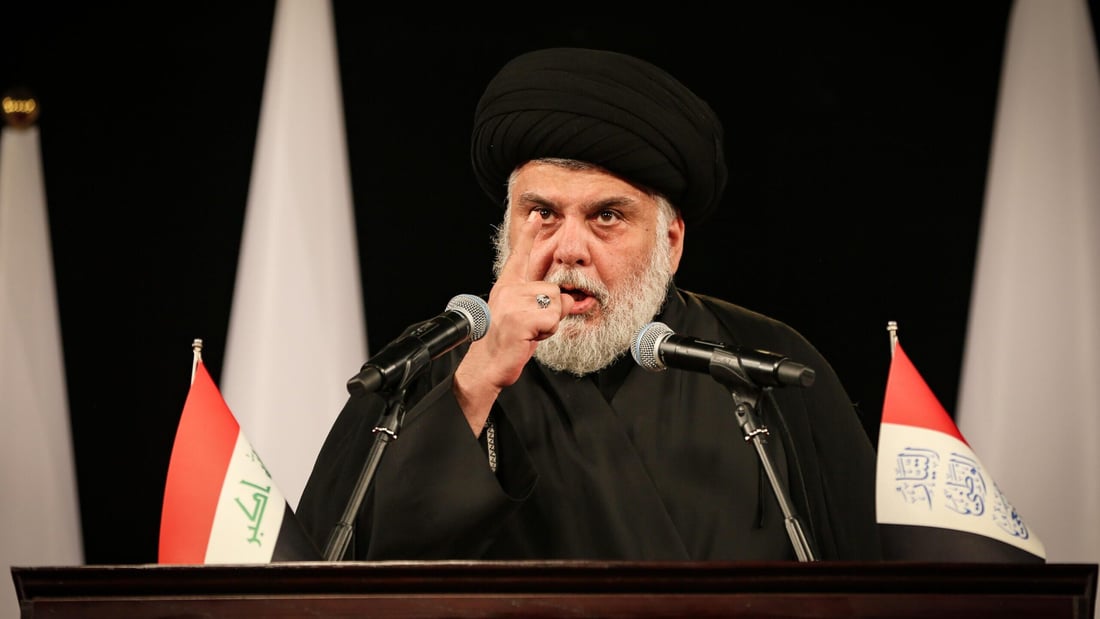
Sadrist movement leader Muqtada Al-Sadr
'Internal crime'
Sadr spox calls for probe into alleged failure to evacuate PMF sites before strikes
NAJAF — Salah Al-Obaidi, spokesperson for Muqtada Al-Sadr, called Monday for an investigation into whether Iraqi officials received advance warning to evacuate Popular Mobilization Forces sites before U.S.-Saudi strikes hit them in late July.
Al-Obaidi described the alleged failure to pass on a warning as an “internal crime” and called for those responsible for not evacuating the sites to be held accountable. “After the attack on Iraq and the targeting of PMF headquarters, in which a number of people were martyred, a campaign began to distort the picture on the one hand and cover up a crime that occurred — an internal crime, separate from the external crime of the attack,” Al-Obaidi said in a statement.
U.S. and Saudi aircraft struck PMF sites in Baghdad, Wasit, Nineveh, Basra, Kirkuk, Karbala and Diyala in late July, killing at least 20 members and wounding 32, according to the force.
“An internal crime occurred, which is that officials responsible for these headquarters were informed — supposedly through the top of the political hierarchy down to the top of the administrative hierarchy in the PMF — that these headquarters should be evacuated, but they were not informed,” he said. “As a result, the blood of another group of oppressed Iraqis was spilled in vain.”
The Popular Mobilization Forces denied Sunday that Chairman Faleh al-Fayyadh knew in advance of last month’s U.S.-Saudi airstrikes and failed to warn units, while disclosing that all forces had been told two days beforehand to take maximum precautions and that one regiment did not comply. The 4th Regiment of the 30th Brigade failed to implement the required measures and took the largest number of casualties, the PMF said, adding that Fayyadh had ordered an investigation into the unit’s commanders “to determine the circumstances surrounding this negligence and establish responsibility.”
The denial answered Asaib Ahl al-Haq, which alleged that U.S. envoy Tom Barrack told Baghdad about the strikes three hours in advance and that Fayyadh was informed but did not order positions evacuated. Ahmed Adnan, of the political bureau of Sadiqoun, the group’s political wing, said parliament was preparing to question Fayyadh.
Al-Obaidi said those responsible for the alleged failure to evacuate the sites should face legal consequences. “Legally, administratively and judicially, whoever failed to evacuate these headquarters should be punished and held accountable for the blood that was sacrificed,” he said.
He also alleged that a campaign against Sadrists, including Muqtada Al-Sadr. “In order to cover up this crime, my dear brothers, a campaign began against the Sadrists, against Sayyid Al-Shahid Al-Sadr in particular, and against Sayyid Muqtada Al-Sadr,” Al-Obaidi said. “It is an organized campaign, meaning it did not come from the mood or preference of one person, two, five or 10 people. Rather, it is organized by a media decision in order to close the door on identifying who is responsible for this crime.”
Al-Obaidi said such methods had been used previously, saying, “This method, which is sacrificing blood in order to confuse the situation, has been used before, and this is not the first time they have done it.”
Minutes after Al-Obaidi issued his statement about what he described as a media campaign against the Sadrist leader aimed at covering up the issue surrounding the strikes on PMF sites, an account associated with Sadr, published a brief post calling on the Sadrist Movement to “remain calm.”
On July 29, Muqtada al-Sadr called on Iran, Iraqi armed groups and Gulf states to stop drawing Iraq into the regional conflict, hours after U.S. and Saudi aircraft struck PMF sites across seven governorates. Sadr later blamed Iraqi armed factions rather than the United States or Saudi Arabia for the deaths of PMF personnel in the airstrikes, and renewed his call for weapons to be held only by the state.
Sadr led the Mahdi Army, which fought U.S. and Iraqi government forces after 2003 and was implicated in the 2006-08 civil war. He disbanded it in 2008. Saraya al-Salam, the armed wing he formed in 2014 to fight the Islamic State group, operates within the PMF and is among the factions that have moved to comply with the government’s weapons-control plan.
Iran-aligned factions said Friday they had postponed an attack on Saudi Arabia and U.S. military bases planned for that day, standing it down after an appeal from Badr Organization leader Hadi al-Amiri.