
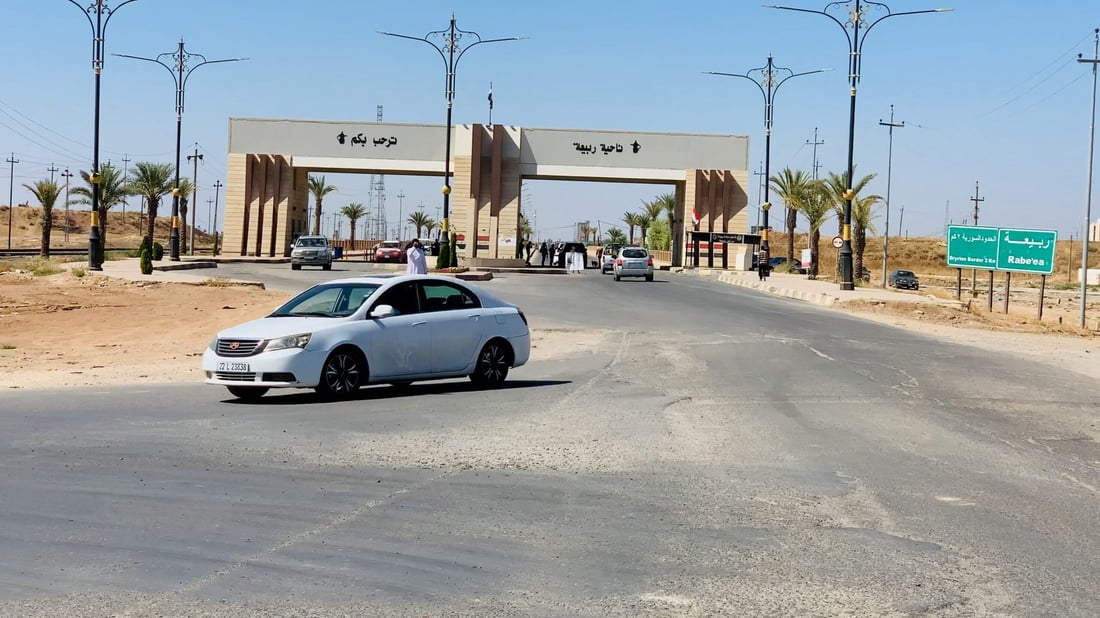
FILES: Vehicles pass through the Rabia district gate in Nineveh governorate, near the Iraqi-Syrian border.
Trade routes expand
Iraq reopens Rabia border crossing with Syria after more than a decade
RABIA — Iraqi authorities began reopening the Rabia border crossing with Syria on Monday after a closure lasting more than a decade, with the Border Ports Commission head leading a delegation to complete procedures as final steps were awaited from the Syrian side.
Commission head Omar al-Waeli stressed the crossing’s importance for trade exchange between Iraq and Syria and its direct economic impact on both countries. Iraq’s General Customs Authority said it had completed preparations and fully automated the crossing within 24 hours as part of a broader digital transformation push.
The reopening was announced earlier this month by al-Waeli, who said the crossing would handle transit traffic, travelers, goods and oil exports and would employ local workers. Its location in Nineveh near the Turkish border adds strategic value — local officials note that trucks can cover the distance between Turkey and Mosul along this route in significantly shorter distances than alternatives.
With Rabia’s reopening, Iraq now has three active land crossings with Syria. Al-Qaim in Anbar remains the busiest for passengers and goods, while al-Waleed, also in Anbar, reopened earlier this month after more than a decade and is currently used primarily for energy transport, with Iraqi crude oil tankers already moving through it toward Syria’s Baniyas refinery.
The expansion of western crossings is part of a broader Iraqi strategy to diversify trade and transit routes following disruptions to southern shipping lanes through the Strait of Hormuz during the regional conflict, which exposed the country’s vulnerability to relying on a single export corridor.