
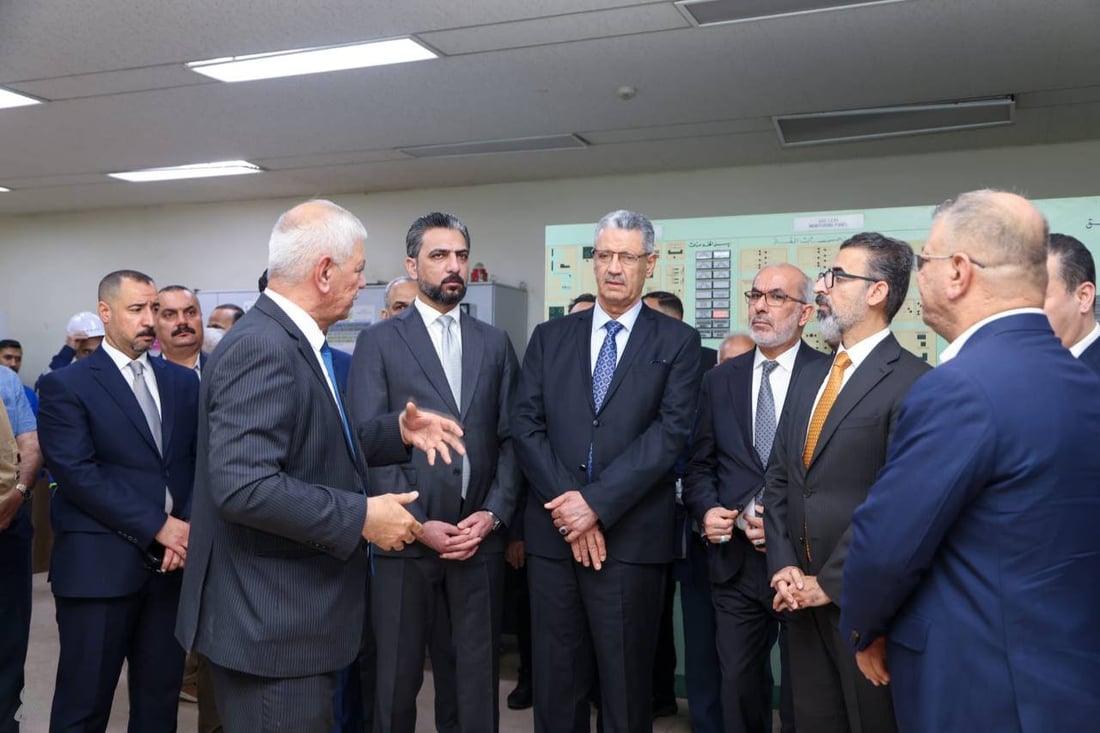
Iraq’s Oil Minister Hayan Abdulghani speaks with officials during a visit to the Northern Oil Company in Kirkuk on August 6, where he announced that oil exports through Turkey’s Ceyhan port will resume within days.
'Today or tomorrow'
Oil minister says Kurdistan Region crude exports through Turkey to resume ‘within days’
KIRKUK — Iraq’s Oil Minister Hayan Abdulghani said Wednesday that crude oil exports from the Kurdistan Region through Turkey’s Ceyhan port will resume “today or tomorrow,” marking a major step toward restoring a flow that has been suspended for more than two years.
“Today or tomorrow, we will resume oil exports through Turkey’s Ceyhan port,” Abdulghani said during a visit to the Northern Oil Company in Kirkuk. He said current daily production in the Kurdistan Region stands at 130,000 barrels, with 50,000 used domestically and 80,000 now slated for export under a recent agreement with the Kurdistan Regional Government.
Exports from the region were halted on March 25, 2023, following a ruling by the International Chamber of Commerce that Turkey had breached a long-standing pipeline agreement by allowing the Kurdistan Regional Government to export oil independently of Baghdad. The ruling led Ankara to shut down the Iraq-Turkey Pipeline, which had been transporting around 450,000 barrels per day to international markets.
Efforts to restart flows have been hindered by disputes over legal authority, revenue-sharing, and contract recognition. Under Iraq’s constitution and federal budget law, all oil must be sold through the State Oil Marketing Organization. The KRG, however, maintains that its production-sharing contracts with international oil companies, signed under its 2007 oil and gas law, remain valid and enforceable under international law.
This is not the first time Iraq’s oil minister has promised a resumption of exports. In February, he stated that crude shipments from the Kurdistan Region to Turkey would restart “within a week,” but that did not happen.
On July 17, Erbil and Baghdad reached a new deal under which the KRG would deliver 230,000 barrels per day to SOMO and transfer 120 billion dinars per month in non-oil revenue. In return, the federal government agreed to resume monthly budget transfers and public sector salary payments, which had been frozen since May amid accusations that the KRG exceeded its allocated share and failed to submit financial data. The KRG has denied the allegations.
Implementation has been inconsistent. On Aug. 5, SOMO Director General Alaa Nizar Faeq told state media that “the region has not delivered any quantity of its oil so far,” despite SOMO being fully prepared to receive and market shipments.
International oil companies operating in the Kurdistan Region have called for written guarantees before resuming exports. The Association of the Petroleum Industry of Kurdistan, which represents several of those companies, said on July 14 that its members would only move forward once legally binding agreements are signed. “APIKUR member companies stand ready to resume exports as soon as written agreements are executed that honor our existing contracts which are governed by international law,” spokesperson Myles B. Caggins III said at the time.
Recent drone strikes targeting oil infrastructure have also delayed efforts to restore production. Nearly 20 such attacks have been reported in recent weeks, temporarily disrupting operations at several sites. A joint committee between Baghdad and Erbil is investigating the incidents.
“We know where the drones are made, how they are launched, and what their targets are,” said KRG Interior Minister Rebar Ahmed, adding that the regional government is awaiting results of the investigation before releasing further information.
Despite ongoing challenges, Abdulghani said technical preparations for resuming exports via Ceyhan have been completed and coordination with Erbil is continuing. “We have reached an agreement with our brothers in the Kurdistan Region,” he said. “Shipments will resume shortly.”