
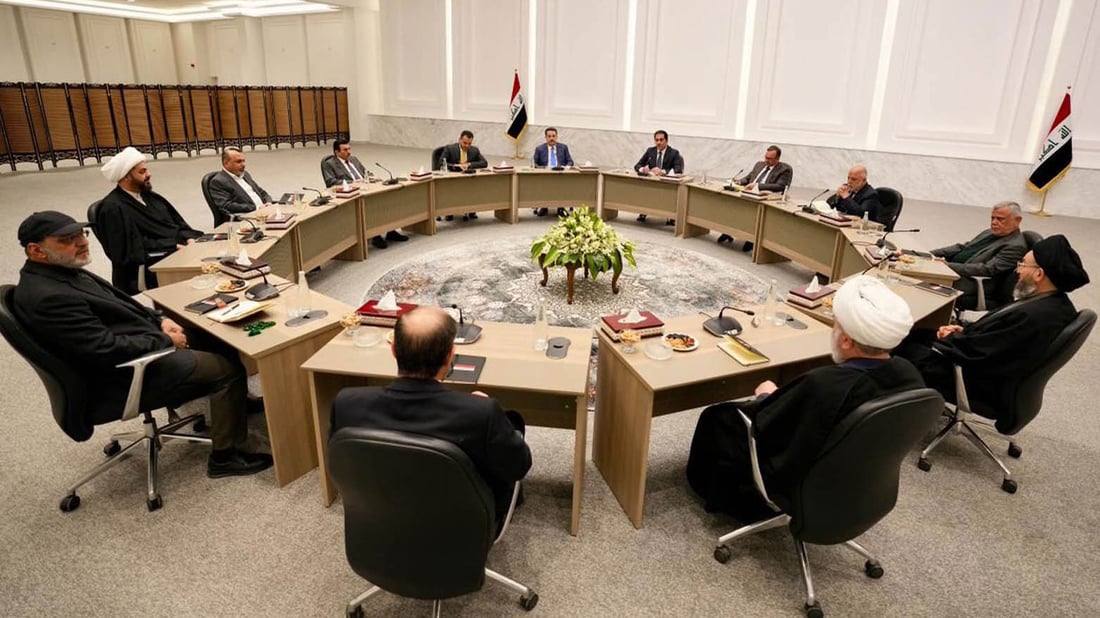
FILES: Leaders of Iraq’s Coordination Framework meet in Baghdad
Framework delays PM nominee decision for sixth time as internal criticism mounts
BAGHDAD — The Coordination Framework postponed a meeting scheduled for Saturday at the office of State of Law Coalition leader Nouri al-Maliki until Sunday, marking the sixth delay of what has been described as a decisive gathering over the past two weeks, reflecting a lack of consensus and ongoing disputes over potential candidates.
The repeated failures have drawn rare internal criticism. The Services Alliance, led by Shibl al-Zaidi and part of the Shiite bloc, warned that the process is moving in a “destructive, flawed, and unprecedented direction,” saying the prime ministerial post is no longer merely discussed in a “bazaar” but subject to a repeated operation aimed at “seeking acceptance and approval for candidate names” — with delegations visiting regional and international embassies as part of the effort.
Zaidi had earlier posted on social media warning of “contacts involving real destruction, a dangerous precedent, and complete submission” to regional and international actors.
Hussam al-Rubaie, the alliance’s spokesperson, described what he called “the political bazaar for offering the position of the next prime minister, which has become a cheap market in which internal affairs are presented to foreign states, in a development that has become dangerous for interference in the sovereignty of national political decision-making in the country.”
He referred to both a regional and an international party — without naming either — in connection with “seeking acceptance and approval for the names of candidates for the premiership from external parties, both regional and international, as well as discussing those names in the corridors of other countries’ embassies and making that a criterion for selection or recycling previous candidates.” He called the situation “shameful and unworthy of our political system, which has been nourished by sacrifices, the blood of martyrs, and the patience of the Iraqi people who are waiting for someone to solve the crises standing at the door of the next government.”
The framework has been deadlocked since the 2025 elections. The Dawa Party maintains Maliki remains its official nominee, while rival factions say eight blocs back incumbent Prime Minister Mohammed Shia al-Sudani against four for Maliki. Basim al-Badri, head of the Accountability and Justice Commission, and Ihsan al-Awadi, director of Sudani’s office, remain under consideration as alternatives.
External pressures have compounded the stalemate. A lawmaker allied with the framework claimed U.S. opposition, initially directed at Maliki, has extended to Sudani — a claim not independently verified. Previous U.S. warnings included the possibility of reconsidering support for Iraq if Maliki returned to power, with Iraqi officials citing an “explicit hint” of sanctions. Some political figures have also said leaders delayed a recent meeting not only due to internal disputes but to await the outcome of U.S.-Iran negotiations, arguing that reliance on external signals has increasingly shaped decision-making within the bloc.
President Nizar Amedi has 15 days from his April 12 inauguration under Article 76 to task the largest bloc’s nominee with forming a government. Parliament has called on the framework to meet the deadline and urged that any prime minister-designate present a cabinet lineup and government program 48 hours before a confidence vote. Amedi has also pressed political leaders to complete “constitutional requirements within the specified timelines” and nominate a candidate promptly.