
Gas shortage forces Anbar restaurants back to wood fires as prices soar
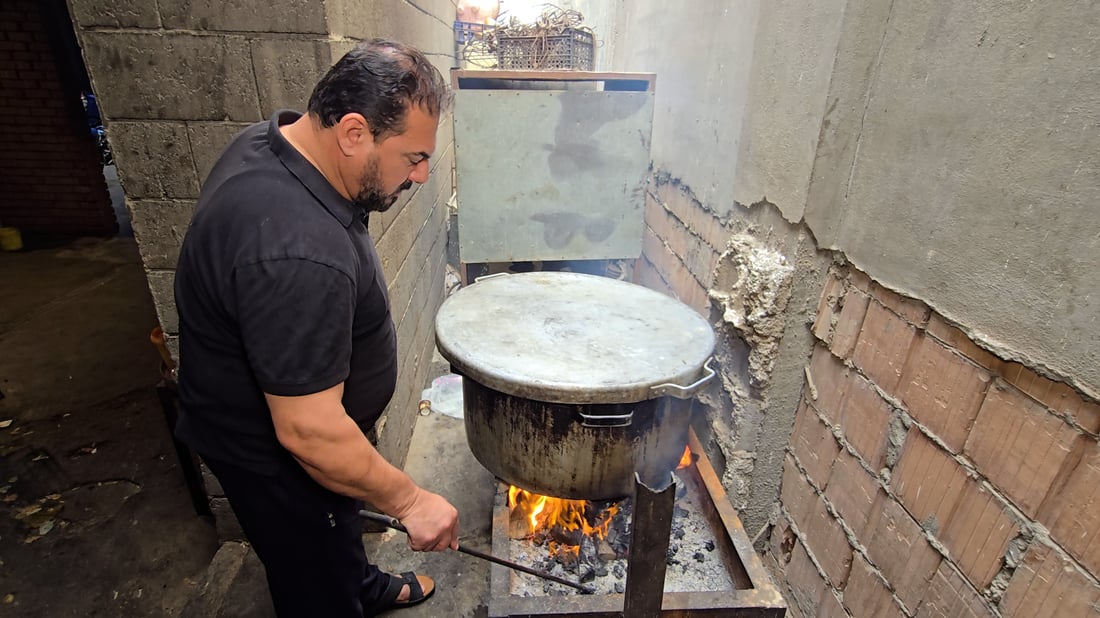
ANBAR — A cooking gas shortage has forced many restaurants in Anbar governorate to return to wood-fired cooking, as soaring cylinder prices strain owners and push some businesses to shut down.
At restaurants across Ramadi, cooks have resumed grilling over burning logs, reviving traditional methods that many say improve flavor even as the practice adds to workers’ hardship.
Falah Hassan, owner of the Satoor Restaurant on 20 Street in Ramadi, told 964media that cylinder prices reached 25,000 to 30,000 dinars ($16.34 to $19.61) at the peak of the crisis, against a normal price of 7,000 dinars ($4.58). His restaurant requires at least 25 cylinders a day. “Some people obtain 50 to 100 cylinders through personal connections and store them in homes, then resell them to restaurant owners at doubled prices,” he said. He said many restaurants had closed and that he had been forced to dismiss 15 of his 25 workers after rising gas, generator fuel and meat costs left no profits.
Anbar Provincial Council member Adnan al-Kubaisi told 964media that local authorities had introduced a coupon-based distribution system to regulate supplies and prevent exploitation. Mobile distributors now receive 50 cylinders per day, with 40 allocated to households at one cylinder every ten days and 10 reserved for restaurants, cafes and bakeries. Restaurant owners must submit official applications and operating permits to receive allocations. “We want to reassure citizens that the crisis has started to ease,” Kubaisi said, adding that supplies from Baghdad would increase during the week and the coupon system would be scrapped once the crisis ends.
Iraq has faced repeated cooking gas shortages in recent months, prompting the Oil Ministry in April to launch a fuel card system allocating two LPG cylinders per family monthly as disruptions spread across at least 13 governorates. The shortages have coincided with declining domestic gas production and reduced Iranian gas imports following regional tensions around the Strait of Hormuz, with Iranian deliveries falling to less than a third of required levels.