
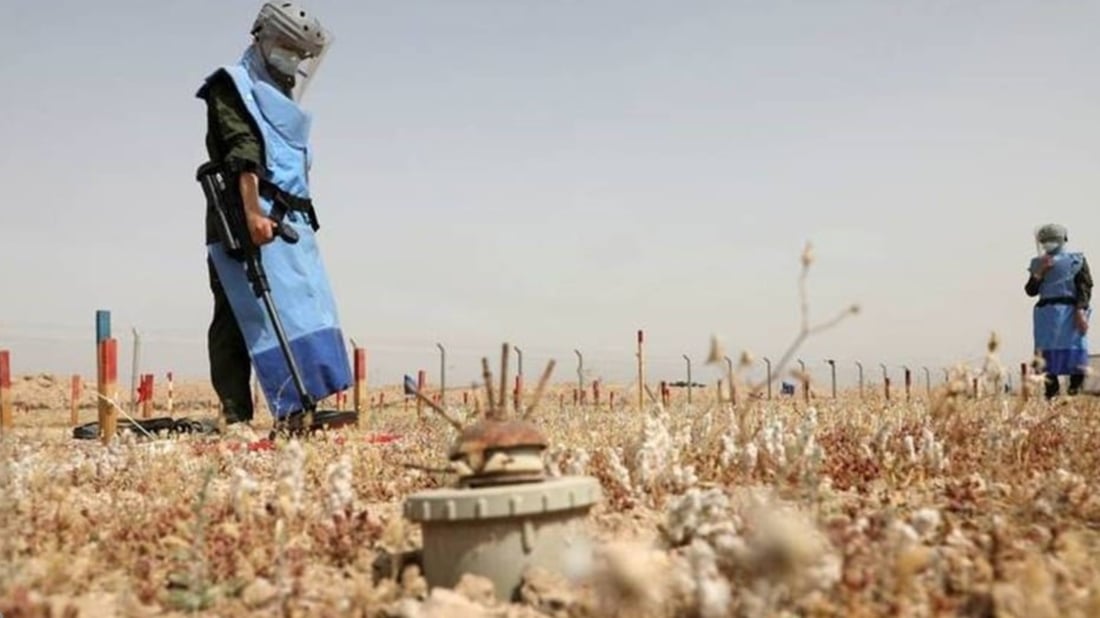
Iraq clears more than 4,000 square kilometers of mine-contaminated land
BAGHDAD — Iraq has cleared more than 4,000 square kilometers of land contaminated by mines since 2003, leaving about 2,738 square kilometers still requiring clearance, the Ministry of Environment said Tuesday, while denying reports that it has contracted companies to carry out demining work.
Mustafa Hamid Majeed, director of the Awareness and Media Section at the ministry’s Mine Affairs Directorate, told the Iraqi News Agency that Iraq’s total mine-contaminated area since the directorate was established in 2003 measured about 6,793 square kilometers, with 2,738 square kilometers remaining.
Majeed said nearly half of the remaining contaminated land is located in Basra governorate.
He also rejected figures circulating on social media and in some media reports regarding mine victims, saying the official number recorded by the directorate is 35,413, not 50,000 as has been widely reported.
Addressing reports of demining contracts, Majeed said claims that the Mine Affairs Directorate has agreements with local or foreign companies are inaccurate.
“The directorate does not conclude any contracts,” he said, explaining that its role is limited to supervising and monitoring mine clearance operations in accordance with national standards, while beneficiary institutions such as the ministries of oil, electricity and transport contract directly for clearance work.
Majeed called on media outlets and the public to verify information related to Iraq’s mine contamination, urging “accuracy and objectivity” because of the issue’s humanitarian sensitivity.
Iraq’s landmine and unexploded ordnance contamination is the legacy of decades of conflict, including the Iran-Iraq War, the 1991 Gulf War, the 2003 U.S.-led invasion and the war against ISIS. The heaviest contamination is concentrated in Basra and other southern governorates, along the Iranian border and in parts of the Kurdistan Region, while areas liberated from ISIS, including Nineveh, Anbar, Salah al-Din and Diyala, continue to face widespread explosive hazards.
About 8.5 million people live in areas affected by explosive remnants of war, with nearly 35,000 Iraqis killed or injured by landmines, unexploded ordnance and improvised explosive devices by the end of 2022. Iraq has adopted a national mine action strategy aimed at expanding clearance operations, restoring contaminated land for housing, agriculture and infrastructure projects, and enabling the safe return of displaced communities.