
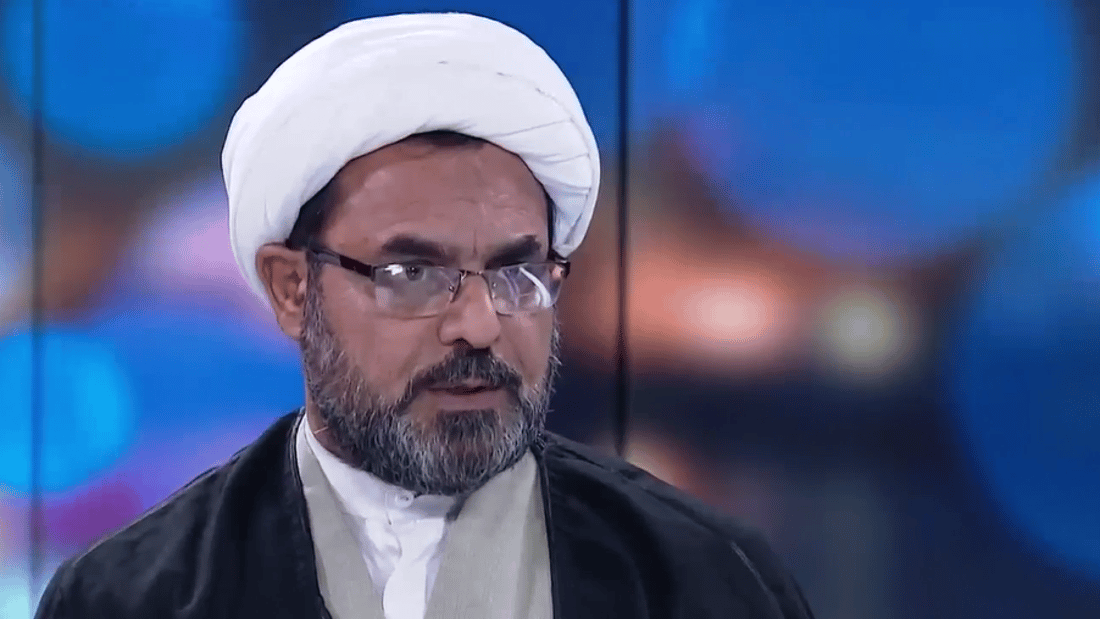
The spokesperson for the Kata'ib Sayyid Al-Shuhada, Kazem Al-Fartousi
Media Monitor
Faction spokesman accuses government of selective corruption crackdown
BAGHDAD — The spokesman for Kataib Sayyid al-Shuhada, one of the Iran-aligned armed factions that has rejected the government’s plan to bring weapons under state control, broadly criticized the anti-corruption campaign in a televised interview Monday, accusing authorities of pursuing cases selectively.
Speaking on Alawla TV, spokesman Kadhim al-Fartousi said the campaign was applying the law selectively rather than uniformly. He argued that finding cash or gold in someone’s possession should not automatically be treated as evidence of corruption, and that systemic problems such as political patronage and sectarian power-sharing were more serious forms of corruption.
Fartousi also criticized what he called the public display of seized valuables. “They displayed gold underwear, which was shameful,” he said. “They embarrassed us before the world and made it appear that members of parliament possess trillions of dinars. These figures are incorrect.”
He questioned remarks he attributed to Prime Minister Ali al-Zaidi about financial settlements in corruption cases, arguing that only legislation, not executive authority, could permit suspects to retain any disputed funds. “Who gave the prime minister the right to forgive 10% of the money in exchange for a settlement?” he said. “There is no provision in Iraqi law that allows such a settlement.”
The remarks come after the Supreme Judicial Council said Friday it is working with al-Zaidi to build a legal framework that would prioritize recovering misappropriated state funds while allowing reduced legal measures for suspects who voluntarily return the money. The council said the plan is not a blanket amnesty but an arrangement, developed jointly by the executive and judicial authorities, under which suspects would return money and property in exchange for reduced penalties or release.
Kataib Sayyid al-Shuhada is among the factions that have refused to disarm under the weapons-restriction initiative, arguing their arms remain necessary while U.S. forces are in Iraq. Its criticism of the corruption campaign comes as the government pursues both that campaign and the drive to place faction weapons under state control.
Iraq’s Central Anti-Corruption Criminal Court said Monday that authorities had recovered 358 kilograms of gold in the investigation into detained Deputy Oil Minister for Refining Affairs Adnan al-Jumaili, in a joint operation with authorities in the Kurdistan Region. Another 17 kilograms came from a separate operation, bringing the total to 375 kilograms.
Jumaili served as deputy oil minister for refining affairs after previously leading the state-owned North Oil Company and North Refineries Company. He was dismissed in late May and arrested in Salah al-Din governorate on allegations of receiving large commissions and wasting public funds through oil refining contracts.
Security sources familiar with the investigation have said interviews with Jumaili produced more than 100 names, though not all face arrest warrants or proceedings. The inquiry formed the basis for “Dawn Strike,” the operation inside Baghdad’s Green Zone in which Counter Terrorism Service units and army forces carried out coordinated raids on current and former officials. Al-Zaidi has described the campaign as the first phase of a broader effort.