
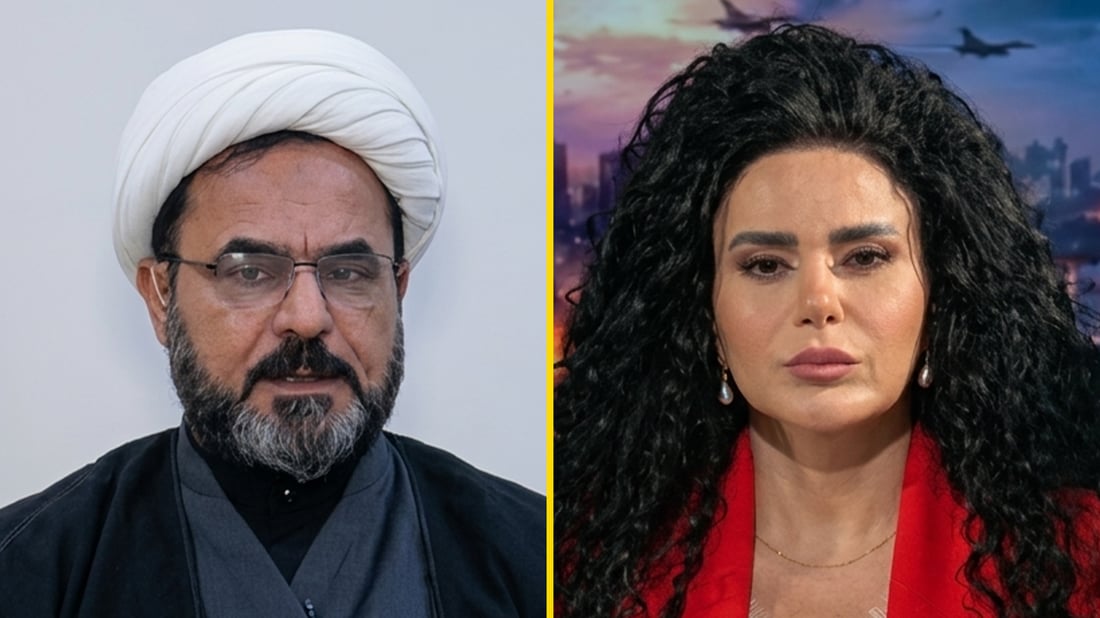
Kazem al-Fartousi, spokesman for Kataib Sayyid al-Shuhada, speaks during an interview with Al-Rabia TV journalist Salma al-Hajj.
Media Monitor
Kataib Sayyid al-Shuhada rejects calls to surrender weapons
BAGHDAD — Kataib Sayyid al-Shuhada has renewed its opposition to placing all weapons under state control, with spokesman Kadhim al-Fartousi telling Al-Rabia TV the group would not surrender its arsenal despite a government-backed initiative to bring armed factions under state authority.
Al-Fartousi described the group’s weapons as beyond the scope of government. “The weapons of the resistance are greater than being a subject for discussion by an Iraqi government,” he said, adding that the group would not respond to calls stemming from government policy or external pressure, and that the arsenal existed solely to secure the departure of what he called occupying forces.
He said the group respects al-Zaidi’s government but would not comply with demands to disarm. “We respect Zaidi’s government as a government representing the Iraqi people, but we do not accept the demand to surrender our weapons and we reject it completely,” he said, citing repeated ‘violations’ of Iraqi sovereignty.
Al-Fartousi dismissed suggestions that the planned withdrawal of U.S. forces in September would remove the need for armed factions. “There are many bases surrounding Iraq today that target Iraqi sovereignty, whether from Kuwait, Saudi Arabia or elsewhere,” he said, arguing that weapons should not be relinquished until the threats end and the state is able to confront them. He also rejected characterizations of the United States as friendly to Iraq, saying the threat from Washington remains despite the withdrawal plan.
His remarks come as Iraq pursues its initiative to bring weapons under state control. Earlier this month, the Coordination Framework endorsed a government-led plan to regulate armed groups and place heavy weapons under state supervision, which officials have framed as part of broader efforts to strengthen state institutions and reduce regional tensions.
The initiative has drawn varying responses. Saraya al-Salam transferred security responsibilities in Samarra to Iraqi forces, while Asaib Ahl al-Haq and Kataib al-Imam Ali announced plans to place their weapons under state authority and engage with the government committee overseeing the process. Kataib Hezbollah has rejected disarmament, arguing that armed resistance remains necessary. Other factions have yet to clarify their positions, leaving the initiative’s ultimate scope uncertain.