
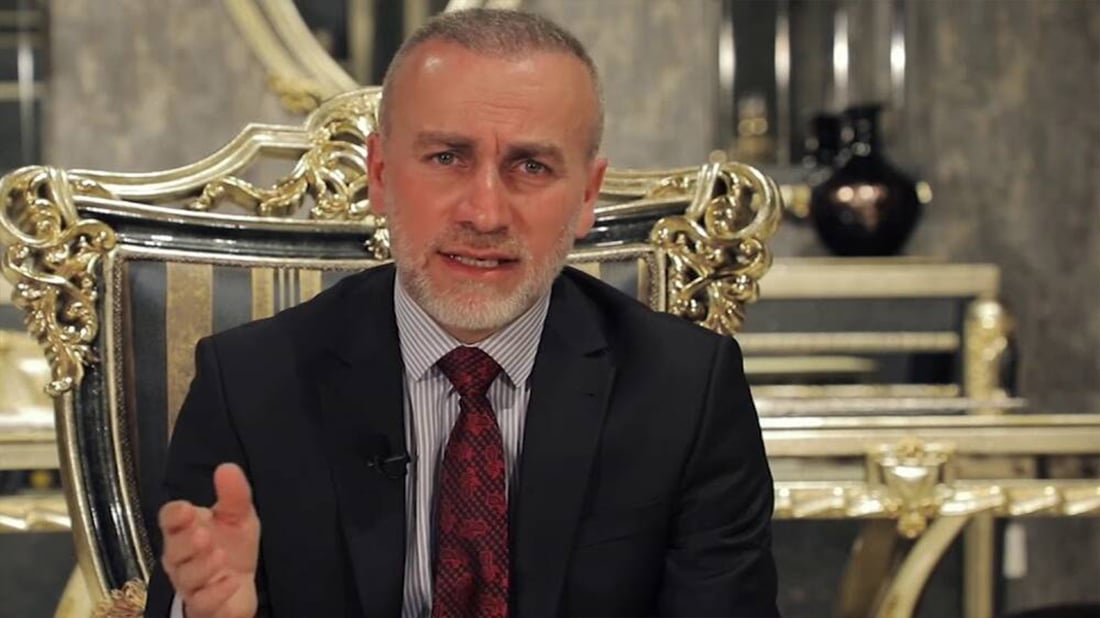
Jamal Kocher, a member of the Iraqi parliament’s Finance Committee
Lawmaker urges more central bank money creation as Iraq runs without a budget
BAGHDAD — A member of parliament’s Finance Committee has called for the Central Bank to create more money to cover public salaries, months after the foreign minister disclosed that Iraq had already issued 25 trillion dinars to meet its cash needs.
Jamal Kocher told the state newspaper Al-Sabah that the government requires about 7.8 trillion dinars a month to meet its obligations while oil exports remain constrained. “The current financial crisis was expected, and there are limits on oil exports, which are restricted to small quantities through the region,” he said. He called issuing currency “the fastest measure that can provide the liquidity needed to secure salaries and government spending,” and said raising the dollar exchange rate would not work under current conditions.
The constraint he referred to is the Strait of Hormuz. The great majority of Iraq’s crude leaves through southern terminals near Basra and must pass through the strait, and shipping there has been disrupted since the war between Iran and the United States and Israel. Exports averaged about 1.5 million barrels a day in the first half of the year, against roughly 3.3 million before the war, and fell further to about 526,000 a day in May and June. That has left the northern pipeline to Ceyhan, which carries crude from Kirkuk and the Kurdistan Region, as the only route not dependent on the strait.
Kocher rejected proposals attributed to Finance Minister Faleh al-Sari to sell government real estate to repay debts. “The solutions proposed by the finance minister, including selling properties to repay debts, will not provide large amounts, as they do not exceed 7 trillion dinars, which is not enough to address the crisis,” he said, calling asset sales during a crisis “very dangerous” because property could go below its real value. On his own figures, such a sale would cover less than a month of obligations. He said the government should instead pursue corruption cases and recover stolen public funds.
Foreign Minister Fuad Hussein said in June that the state had issued 25 trillion dinars to cover expenditure, taking the money supply to about 125 trillion. Officials have disputed how to describe it. Economist Abdul Rahman al-Mashhadani said no new currency was created and that the Central Bank finances the government’s dinar needs against dollars held in the treasury, while then Central Bank Governor Ali al-Allaq said in May that salaries were secured and the deficit would be covered by internal and external borrowing.
Economists call the practice monetary financing, and it carries risks to the exchange rate. The dinar is pegged and the peg is underwritten by incoming oil dollars, so when the supply of dinars and the supply of dollars move apart, the street rate pulls away from the official one. That gap has brought people onto the streets before. In January 2023, after U.S. restrictions on dollar transfers cut the flow of hard currency into Iraq, the street rate reached about 1,610 against an official 1,470 and hundreds protested outside the Central Bank. The governor resigned and the cabinet revalued the official rate. Protesters returned that July when the street rate jumped again after Washington blacklisted 14 Iraqi banks. The official rate now stands at about 1,320 and the street rate near 1,500.
Iraq has no 2026 budget. Parliament is skipping it to concentrate on 2027, leaving spending governed by the one-twelfth rule, under which the government may spend a twelfth of the previous budget each month. The Finance Ministry recorded a deficit of about $5 billion in the first four months of the year, with spending of $28.2 billion against revenue of $23.2 billion. Civil servant wages accounted for $15.3 billion of that spending, or roughly 5 trillion dinars a month.
The government confirmed Thursday that Iraq is in a financial crisis and that public salary payments will be delayed. Spokesperson Haider al-Aboudi said payments would no longer follow their previous schedule. Health Minister Abdul Hussein al-Mousawi put the monthly salary bill at 10.8 trillion dinars and said the state drug importer Kimadia received barely 15% of its allocated funding last month, prompting suppliers to halt deliveries.
Iraq earned about $2.34 billion from 32.1 million barrels of crude and condensates exported in May and June, roughly $1.17 billion a month, according to Oil Ministry figures. Oil typically provides more than 90% of federal revenue. Iraq and Turkey signed a one-year agreement Saturday setting a minimum of 750,000 barrels a day through the pipeline to Ceyhan, above Iraq’s entire average export rate over those two months.