
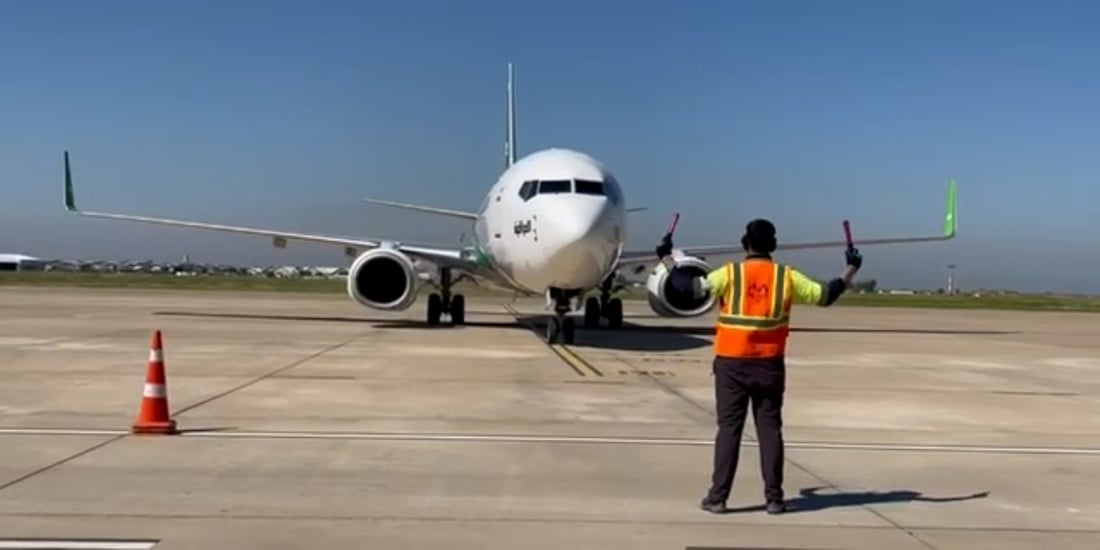
An aircraft is guided on the runway at Kirkuk International Airport.
Aviation traffic expands
Flights over Iraq up 31% since restricted airspace reopened
BAGHDAD — Air traffic crossing Iraqi airspace has risen by an average of 31% since authorities reopened previously restricted corridors on Sept. 18, and is still growing, the Transport Ministry said Sunday.
“The average number of aircraft transiting Iraqi airspace increased by about 31% compared with the period before these areas were reopened to civilian aviation,” said Ehab Saad Karim, director general of the General Company for Airports and Air Navigation Management. Growth since then had outpaced the first days after the reopening, he said, giving airlines more route options and Iraq more flexibility in managing its airspace. Operating conditions and regional developments also played a part, he said, but traffic was still trending upward.
On Sept. 18, Iraq returned large parts of its western airspace to civilian control after nine years of military restrictions imposed in 2016 and 2017 during the war against ISIS, covering western Iraq from north to south. Officials said the change could shorten commercial routes, attract more overflights and raise air navigation revenue.
Iraqi aviation has been repeatedly disrupted by the regional war. Iraq closed its airspace on Feb. 28 after U.S. and Israeli strikes on Iran, reopening it on April 8 after stranding thousands of travelers, and closed it again on June 7 after renewed exchanges between Iran and Israel, reopening the next day.