
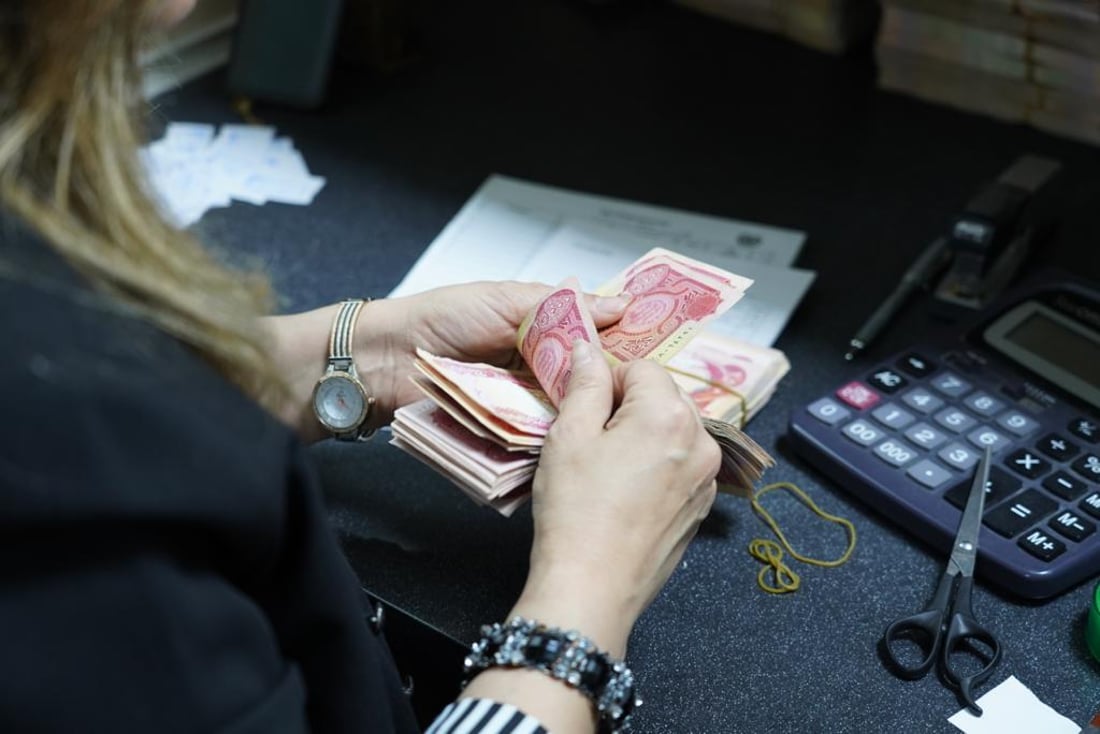
A bank employee counts Iraqi dinar notes at a financial institution in Baghdad.
Spending Cuts Proposed
Badr lawmaker backs 100,000 dinar deduction from higher public salaries
BAGHDAD — A Badr lawmaker has backed deducting 100,000 dinars (about $66 at the official rate) a month from public employees earning 2 million dinars (about $1,316) or more, as the government looks for savings after devaluing the dinar.
“I agree with the view that solutions are needed to reduce government spending,” Qusay Abbas told Al-Rasheed TV, citing the deduction proposal. Parliament has no say over monetary policy but could block budget provisions that hurt low-income households, he said. The draft budget had not yet reached parliament, he said, but based on details circulating in the media he expected tough negotiations.
Abbas criticized the devaluation. “The trader who previously obtained $100 for 132,000 dinars will now pay 152,000 dinars for the same amount, which will automatically raise commodity prices,” he said, warning that a wide gap between the official and parallel rates would add to the pressure on consumers. The parallel market passed 170,000 dinars per $100 in Baghdad and 180,000 in Erbil after the change and stood at 163,000 to 164,000 on Sunday, having already been above the new official rate before it.
Prime Minister Ali al-Zaidi told the parliament speaker and committee chairs on Thursday that the government had considered compulsory deductions from salaries, paying public employees every 45 days and more borrowing before choosing devaluation, which he said was needed to keep paying salaries without more debt. He cited public debt of more than 208 trillion dinars and monthly obligations of 10 trillion. Abbas’s bloc leader, Mahdi Taqi al-Amirli, called on the government last week to reconsider the devaluation, saying employees, retirees and low-income households would bear the cost.
Revenues covered only 76% of salaries and welfare in the first seven months of the year, leaving a gap of about 29 trillion dinars, economist Nabil al-Marsoumi said. Oil provides more than 90% of federal revenue. Economists say the draft 2027 budget, not yet published or sent to parliament, plans spending of about 217 trillion dinars, which would be the largest in Iraq’s history.