
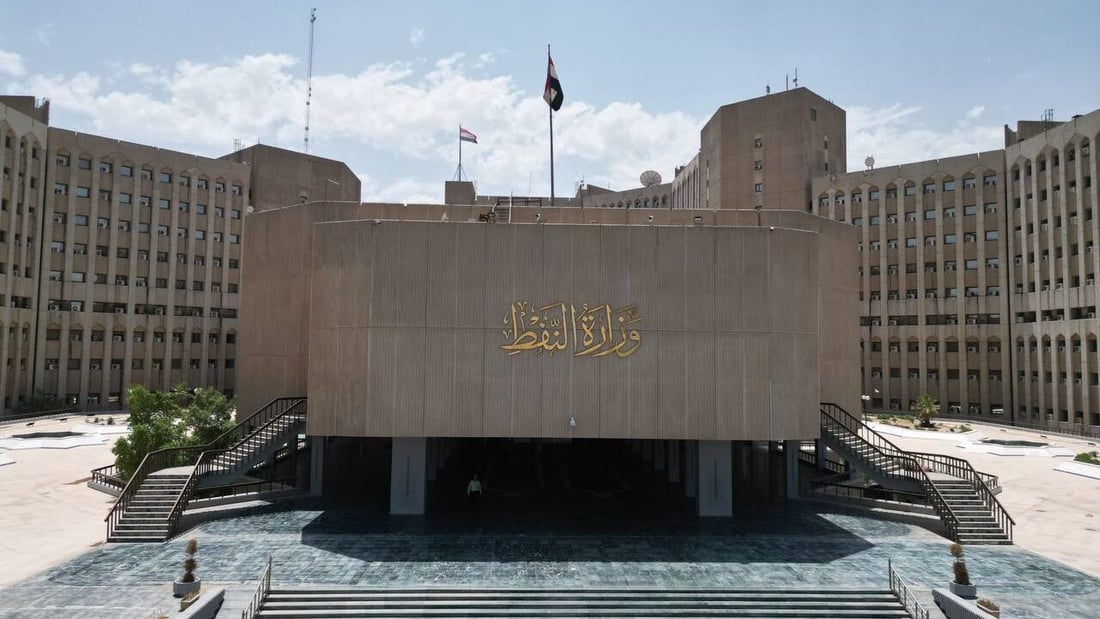
The Iraqi Ministry of Oil headquarters in Baghdad
Iraq, Turkey sign one-year Ceyhan oil export agreement
BAGHDAD — Iraq and Turkey signed a one-year agreement Saturday governing Iraqi crude exports through the Iraq-Turkey pipeline to the Turkish port of Ceyhan, with a minimum export volume of 750,000 barrels per day, Iraq’s Oil Ministry said.
In a post on X, Prime Minister Ali al-Zaidi described the agreement as “an important strategic milestone” to ensure the uninterrupted flow of Iraqi oil exports and strengthen economic cooperation with Turkey. He said Iraqi and Turkish companies would begin implementing the deal immediately while the two governments work toward a broader framework agreement covering oil, electricity, water resources and other areas of cooperation.
Iraqi Oil Minister Bassem Mohammed Khudair said the agreement will remain in force for one year while the two countries finalize a broader framework agreement covering multiple sectors, including oil, electricity and water resources. 964media reported earlier in the day that Khudair has traveled to Turkey for signing the agreement.
The agreement replaces the decades-old Iraq-Turkey pipeline arrangement, which expired at the end of July.
The ministry said the agreement establishes a minimum export volume of 750,000 barrels of Iraqi crude per day through the pipeline.
The Iraq-Turkey pipeline has historically served as Iraq’s primary northern export route, transporting crude from Kirkuk and, at times, the Kurdistan Region to the Mediterranean port of Ceyhan. Turkey closed it on March 25, 2023, after the International Chamber of Commerce in Paris ruled that Ankara had breached the 1973 transit agreement by allowing the KRG to export independently. It reopened in 2025 following a Sept. 25 agreement between Baghdad and the KRG, which both sides called a breakthrough after years of disputes over control of crude.
The signing ceremony was attended by senior Iraqi officials, including representatives from the Foreign Ministry, the Oil Ministry, the State Organization for Marketing of Oil or SOMO, North Oil Company and other government departments.
Oil accounts for more than 90% of Iraq’s federal revenue. The Ceyhan route complements Iraq’s southern export terminals and is intended to diversify the country’s crude export infrastructure.
The agreement follows Zaidi’s visit to Turkey last week, where Iraqi and Turkish officials discussed cooperation on energy, trade, transportation, water resources, security and infrastructure.
Iraq is also pursuing additional export routes. Last month, Baghdad signed a memorandum of understanding with Syria to study a pipeline linking Iraqi oil fields to the Mediterranean port of Baniyas as part of efforts to diversify crude export options beyond the Gulf.