
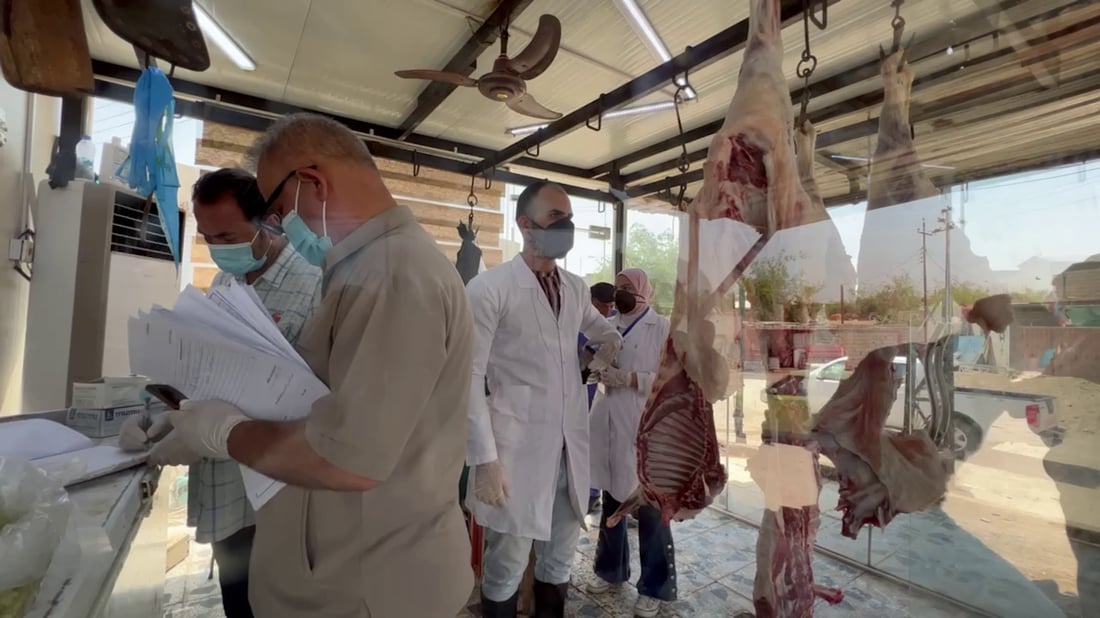
FILES: Health and veterinary teams inspect butcher shops as part of measures following confirmed cases of hemorrhagic fever.
Health Ministry reports
Iraq records 270 hemorrhagic fever cases and 17 deaths this year
BAGHDAD — Iraq’s Ministry of Health said Sunday it had recorded 270 laboratory-confirmed cases of hemorrhagic fever and 17 deaths nationwide since the start of 2026.
Health Ministry spokesman Saif al-Badr said the epidemiological report for week 28 recorded 26 new confirmed cases and no deaths. Basra reported the most new infections with 10, followed by Nineveh with five, Dhi Qar and Baghdad with three each, Maysan and Diyala with two each, and Diwaniyah with one.
Dhi Qar has the highest cumulative total, with 109 confirmed cases and eight deaths, followed by Basra with 24 cases and one death, Maysan with 21 cases, Muthanna with 19 cases and one death, Nineveh with 16, Diyala with 15 cases and one death, and Baghdad with 14 cases and one death. Wasit and Babil have recorded 13 cases each and two deaths each. The remaining governorates reported single-digit case counts.
Hemorrhagic fever is a recurring seasonal concern in Iraq, peaking in warmer months when livestock contact increases and animal trading and slaughtering become more frequent. By late September 2025, the cumulative toll for that year had reached 296 confirmed cases and 42 deaths.
Badr said the ministry continues daily monitoring through epidemiological surveillance teams and health institutions, in coordination with veterinary and regulatory authorities, alongside public awareness campaigns and efforts to strengthen early detection, diagnosis and treatment.
The ministry urged residents to buy meat only from licensed slaughterhouses, avoid unauthorized slaughtering and grazing in residential areas, wear protective clothing and gloves when handling animals or meat, control the ticks that transmit the disease, wash hands and disinfect equipment regularly, and freeze and thoroughly cook meat.
Early symptoms include fever, headache, body aches and fatigue, with some cases progressing to bleeding. Badr urged people, particularly butchers, livestock breeders and traders, to seek medical care immediately if symptoms develop.
He said that while the Health Ministry diagnoses cases, provides treatment and runs awareness campaigns, responsibility for tick control, managing infected animals and preventing unauthorized grazing and slaughter lies with the Agriculture Ministry and municipal and security authorities.
In early June, Iraq’s National Center for Crisis and Disaster Management declared a nationwide state of readiness to curb the spread of the disease, coordinating government institutions and health authorities. The center said its strategy aims to unify efforts across the Health Ministry and provincial crisis cells through a system able to react quickly to epidemiological developments, and that field operations would continue until authorities achieve full control of the outbreak.