
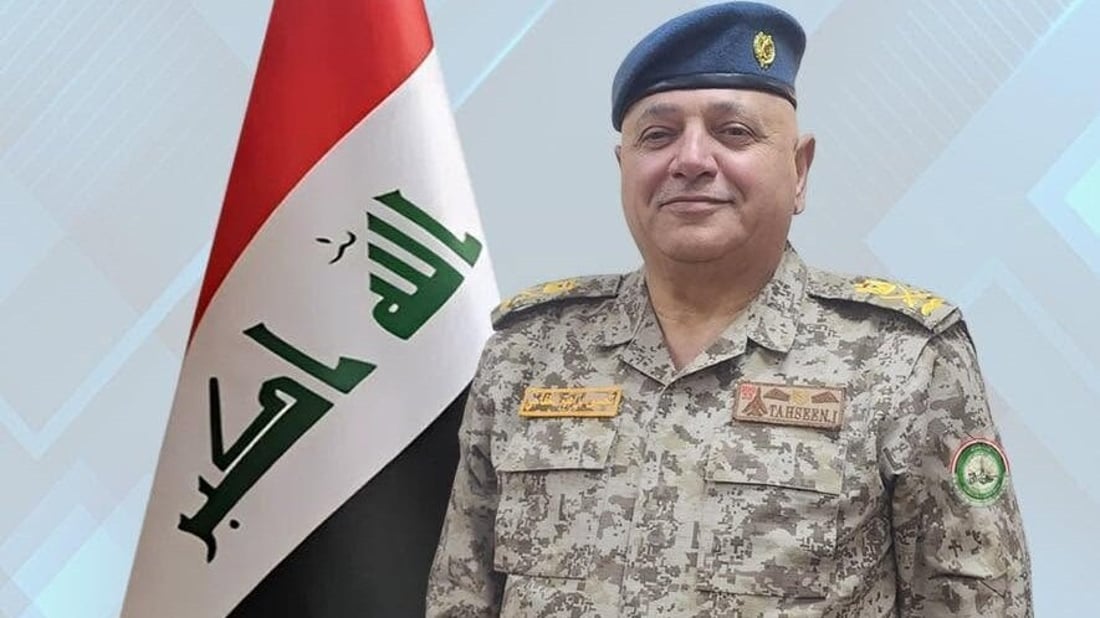
Maj. Gen. Tahseen Al-Khafaji, director of media and moral guidance at the ministry
Defense Ministry reports progress on bringing weapons under state control
BAGHDAD — Iraq’s Defense Ministry said Thursday it has recorded clear progress in the government’s effort to restrict weapons to state control, citing growing cooperation from participating groups and the rollout of mechanisms for receiving, transferring and distributing weapons.
Maj. Gen. Tahseen al-Khafaji, the ministry’s director of media and moral guidance, said the initiative remains a key government priority, carried out through a committee of military, legal and administrative officials. “The weapons control file is one of the important files,” he said, describing it as a major achievement for Prime Minister and Commander-in-Chief Ali al-Zaidi. He said there was no fixed timeline, with flexibility allowing authorities to manage a difficult and complex issue.
The initiative has administrative and military components, al-Khafaji said. The administrative side covers employment grades, salaries, pensions and the legal framework for transferring personnel into the Defense Ministry, Interior Ministry and other state formations. The weapons themselves are divided into three categories: light weapons can be handled through multiple channels, medium weapons may go to more than one institution, and heavy weapons will fall to the Defense Ministry and in some cases the Interior Ministry, which oversees the federal police, rapid response forces and emergency regiments. “When we talk about the military aspect, we mean weapons and heavy equipment that require special storage facilities and clear mechanisms for handover and receipt,” he said.
Al-Khafaji said the overseeing committee is chaired by the deputy commander of the Joint Operations Command, who also serves as military secretary to the prime minister, and includes legal advisers from the Defense and Interior ministries.
The comments come as Iraq implements a plan endorsed earlier this month by the Coordination Framework to place weapons under state authority. Responses from factions have been mixed. Saraya al-Salam formally began integration into the state security structure in Samarra after leader Muqtada al-Sadr announced in May that the group would come under state authority, while Asaib Ahl al-Haq and Kataib al-Imam Ali have expressed support for working with the government committee. Harakat al-Nujaba, Kataib Hezbollah and Kataib Sayyid al-Shuhada have rejected disarmament. Kataib Sayyid al-Shuhada spokesman Kadhim al-Fartousi said earlier this week the group respects al-Zaidi’s government “but we do not accept the demand to surrender our weapons and we reject it completely.”
Government spokesman Haider al-Aboudi said this week that restricting weapons to state control remains “an Iraqi file” handled through domestic political and procedural mechanisms, with the goal of ensuring “the Iraqi state’s security decision becomes unified.”