
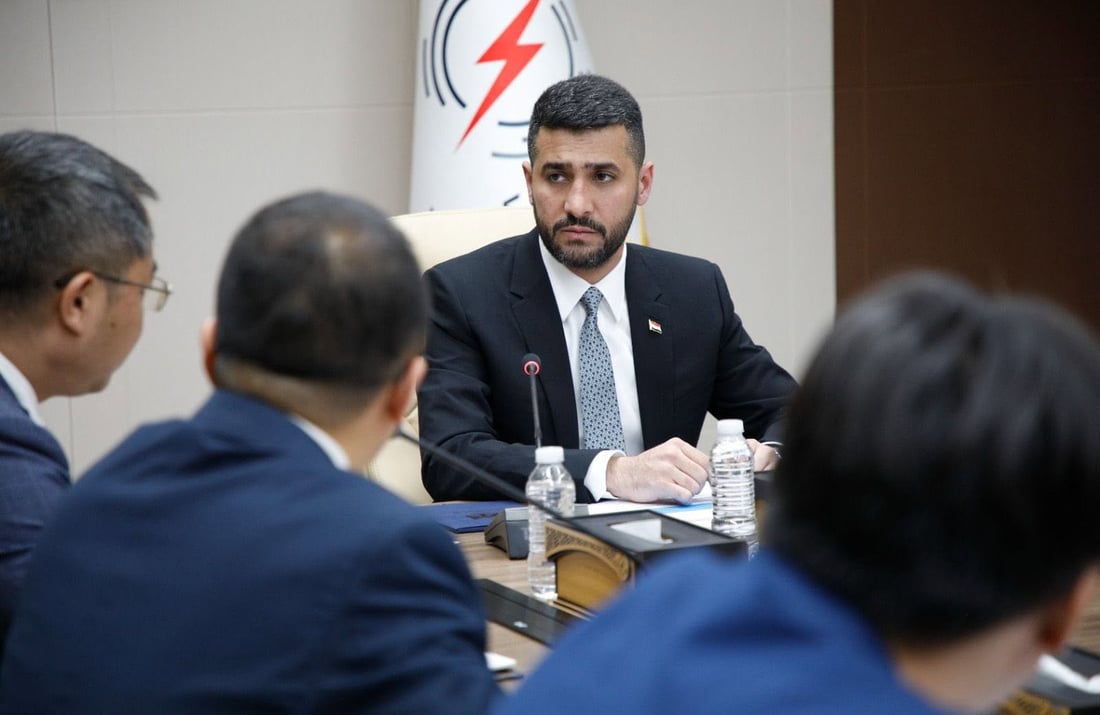
Electricity Minister Ziad Ali Fadhil
Iraq targets 35,000 megawatts by 2030 as power deficit persists
BAGHDAD — Iraq’s Electricity Ministry said Friday it plans to add about 7,000 MW of generating capacity and raise national output to 35,000 MW by 2030, a target which would still leave the country far short of demand.
Ministry spokesperson Ahmed Turki said the plan rests on five areas: building new stations, completing delayed projects, converting plants to combined-cycle systems, expanding solar and upgrading transmission and distribution networks to absorb new capacity and cut losses. “The ministry’s plan under the government program aims to add about 7,000 megawatts to the national grid, bringing production to 35,000 megawatts by 2030,” he told the state news agency.
However, current production has fallen to 22,000 MW, the electricity minister told parliament last week, according to lawmaker Amer Abdul Jabbar. Demand already exceeds 60,000 MW and will grow further by 2030.
Turki said the ministry is working on two tracks — capturing associated gas flared at oil fields instead of burning it, and diversifying imported fuel and gas supplies. Iraq has relied heavily on imported Iranian gas, and disruptions to those supplies have repeatedly cut generation.
Regional interconnection with Gulf states, Saudi Arabia, Jordan and Turkey is also part of the strategy. “Interconnection projects will provide greater flexibility to the electricity system and contribute to energy exchange during emergencies or peak demand,” Turki said, describing them as support for the grid rather than a substitute for domestic generation. Links with Turkey, Jordan and the Gulf that the ministry said in April would add 1,250 MW before summer have still not entered service.
Aging transmission and distribution networks, illegal connections, theft and weak fee collection also drive the shortfall, with former ministry officials estimating that a large share of generated power is lost before reaching consumers. Shortages have prompted protests in Basra, Najaf, Dhi Qar, Wasit and other governorates, and five people were reported injured when security forces dispersed a protest outside the Najaf governorate headquarters in July.