
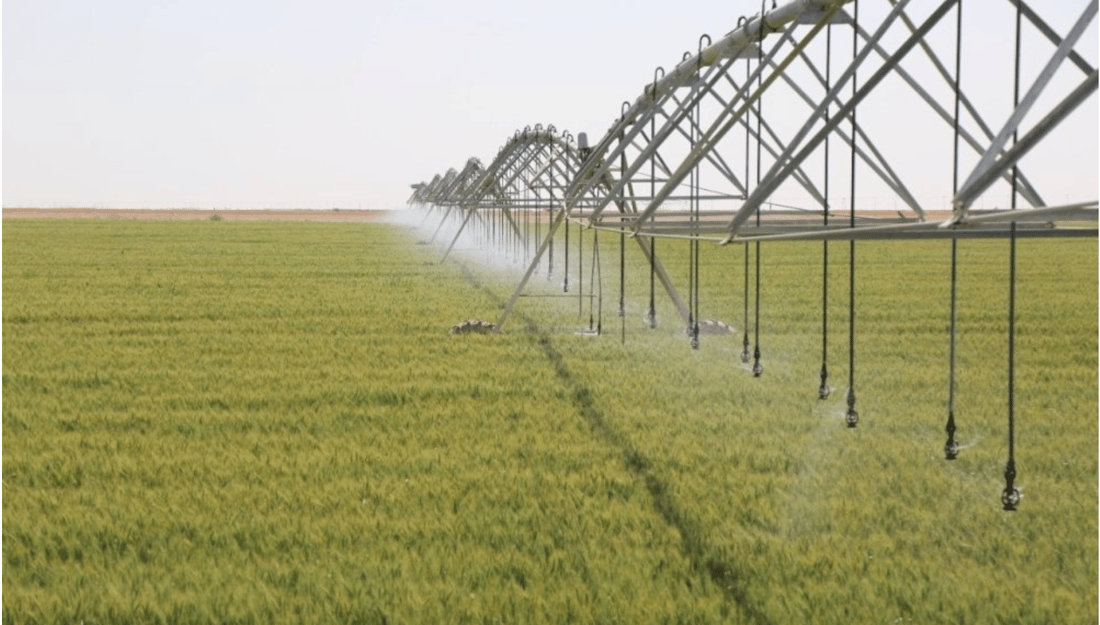
A modern pivot irrigation system waters farmland in Iraq.
Iraq’s water minister targets 90% irrigation efficiency, from about 35% now
BAGHDAD — Iraq plans to raise irrigation efficiency from 35% to 90% through projects backed by its new agreement with Turkey, Water Resources Minister Muthanna al-Tamimi said Thursday, a change that would cut the water withdrawn to grow the same crops by roughly 60%.
Tamimi told the Iraqi News Agency the ministry has prepared plans for numerous projects, particularly south of Baghdad, intended to reduce waste and raise agricultural output. He said many of Iraq’s irrigation systems remain outdated compared with those of neighboring countries, and that upstream states on the Tigris and Euphrates have argued Iraq has not modernized sufficiently. He said the ministry is working with parliament’s Finance Committee on funding.
His starting figure matches independent estimates of 30% to 40%. The losses come from unlined earthen canals that leak and evaporate, and from flood irrigation, still the standard method, in which fields are inundated and much of the water is lost before crops use it. Agriculture consumes the great majority of Iraq’s water.
The lofty target is at the outer edge of what irrigation achieves anywhere in the world, requiring drip or sprinkler systems across almost all irrigated land.
Under the framework activated during Prime Minister Ali al-Zaidi’s visit to Ankara this week, Turkish companies approved by Iraq will help develop irrigation networks, rehabilitate canals and introduce modern techniques. The projects will be financed by Iraq through its budget or a joint Iraq-Turkey funding mechanism.
More than 70% of Iraq’s water inflows originate outside its borders. The ministry said this week that storage had recovered to about 34 billion cubic meters after a wet winter, while forecasting it will enter next winter with just over 20 billion.