
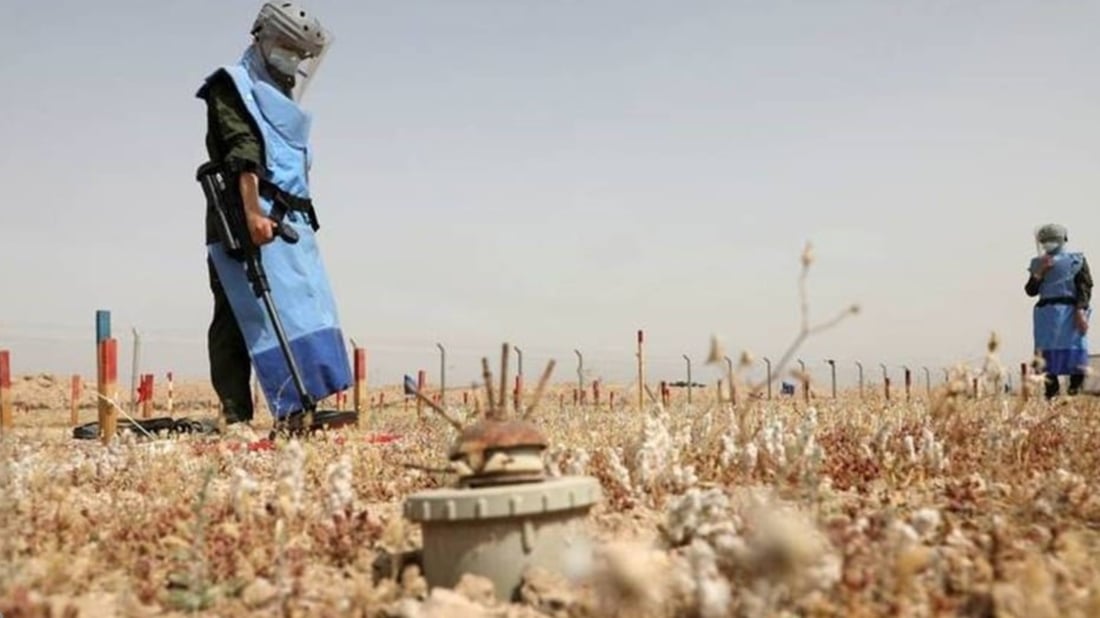
Iraq prepares national landmine clearance plan as 8.5 million still live under threat
BAGHDAD — Iraq’s Ministry of Environment has prepared what it calls a comprehensive national strategic plan to address landmines and unexploded ordnance using modern technologies, as the country remains among the world’s most heavily contaminated, with nearly 35,000 Iraqis killed or injured by explosive remnants by the end of 2022 and around 8.5 million people still living under some level of threat.
Iktaa al-Hasnawi, administrative undersecretary of the ministry and director general of the Mine Affairs Department, told the Iraqi News Agency that the plan is based on humanitarian and development priorities with a focus on restoring life to affected areas and ensuring the safe return of citizens. Field surveys have been carried out “to determine the scale and type of contamination and establish accurate databases for areas contaminated with mines and unexploded ordnance, with the aim of facilitating clearance operations and directing efforts according to levels of danger and population density.”
Clearance operations follow a phased process beginning with non-technical surveys drawing on testimony from local residents, security agencies and local authorities to identify dangerous sites, followed by specialized engineering teams carrying out technical surveys and removal operations using equipment and technologies “under approved procedures that guarantee the highest levels of safety.” Warning signs are placed around dangerous areas until clearance is complete.
Hasnawi said the department works according to “a multi-axis strategy based on strategic objectives to protect citizens and reduce human and material losses.” National clearance teams are being strengthened through training, qualification and the use of modern detection and removal technologies, while Iraq’s implementation of its obligations under the Ottawa Convention banning anti-personnel mines and the Convention on Cluster Munitions is being monitored.
Community awareness programs targeting children, school students, farmers and shepherds form a central part of the strategy, described as the groups most vulnerable to risk. Programs include field lectures, distribution of awareness leaflets and use of local media to explain how to identify suspicious objects and report them. Long-term plans include expanding media campaigns through television, radio and social media, integrating safety concepts and activities focused on dealing with suspicious objects into school curricula and training local volunteers in remote villages to serve as awareness ambassadors within their communities, in coordination with the ministries of education, higher education and youth and sports as well as civil society organizations.
Hasnawi said mine clearance operations support “social and economic stability by restoring agricultural land to service, securing infrastructure projects and enabling displaced families to return safely to their areas.”
The ministry coordinates with the United Nations Mine Action Service, international humanitarian organizations and specialized clearance companies, as well as Iraqi ministries of defense, interior, health and migration, local governments, security agencies and the Popular Mobilization Forces to facilitate field team movement and ensure operational safety. Cooperation with international partners includes technical support, training of national personnel, supply of modern equipment and exchange of expertise on managing contaminated areas.
Iraq’s contamination stems from the Iran-Iraq War, the Gulf War, the 2003 U.S.-led invasion and the conflict against Islamic State. Casualties continue to be reported each year, particularly in rural and mountainous areas where residents gather herbs, graze livestock or farm land near former conflict zones.