
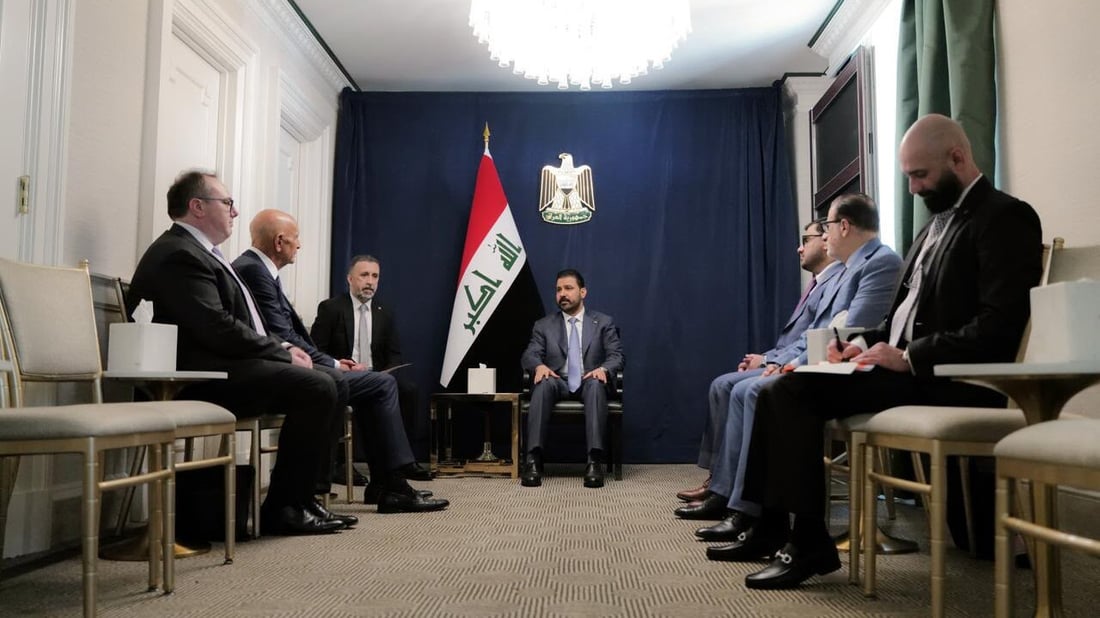
Prime Minister Ali al-Zaidi meets U.S. Special Presidential Envoy to Iraq Tom Barrack in Washington during his official visit to the United States.
Zaidi meets Barrack in Washington ahead of Trump talks
NEWSROOM — Prime Minister Ali al-Zaidi met U.S. Special Presidential Envoy to Iraq Tom Barrack in Washington on Monday, discussing expanded economic cooperation, bilateral partnerships and regional security a day before he is due to meet President Donald Trump, according to the prime minister’s office.
The meeting, at Zaidi’s residence, focused on prospects for Iraq-U.S. cooperation, with both sides reviewing economic relations, recent progress and ways to broaden the partnership, the office said. The talks also covered regional developments and the importance of reducing tensions, with the office citing Iraq’s role in promoting regional de-escalation.
Zaidi arrived in Washington at the head of a high-level delegation on his first foreign trip since taking office, a visit Iraqi officials say is meant to move bilateral relations beyond their traditional security focus toward long-term economic partnership. The prime minister’s office said the trip, at Trump’s invitation, aims to attract investment, expand the role of American companies in infrastructure, and develop the energy, oil and gas sectors, including increasing domestic production of refined products and petrochemicals.
Government spokesman Haider al-Aboudi said the delegation arrived carrying “strategic files in the fields of economy, investment and development,” and described the Trump talks as a step to move the partnership “from the stage of crisis management and the predominance of security into the sphere of the economy.”
Before leaving Baghdad, Zaidi said his delegation was seeking to turn political ties into practical cooperation. “We head today to Washington, leading a government and economic delegation, determined to translate the strength of Iraqi-American relations into real economic and investment partnerships that open wider horizons for cooperation in energy, technology, infrastructure, the digital economy and financing partnerships,” he wrote on X. He said the goal was “attracting investments, transferring expertise, diversifying the economy and creating job opportunities.”
The prime minister’s office said Zaidi would present U.S. officials and business leaders with a package of initiatives to reinforce the Strategic Framework Agreement, the 2008 accord governing U.S.-Iraq cooperation, on the basis of shared interests. Officials have said there will be no changes to the agreement and that planned memorandums of understanding will focus on economic cooperation, including oil and gas, to increase U.S. investment in Iraq.
The visit has drawn opposition at home. The Islamic Resistance in Iraq, a coalition of Iran-aligned armed factions, rejected the trip on Sunday, warning the government against signing agreements in Washington, renewing its call for a U.S. withdrawal and warning against “replacing military occupation with an economic occupation that is even more dangerous.”