
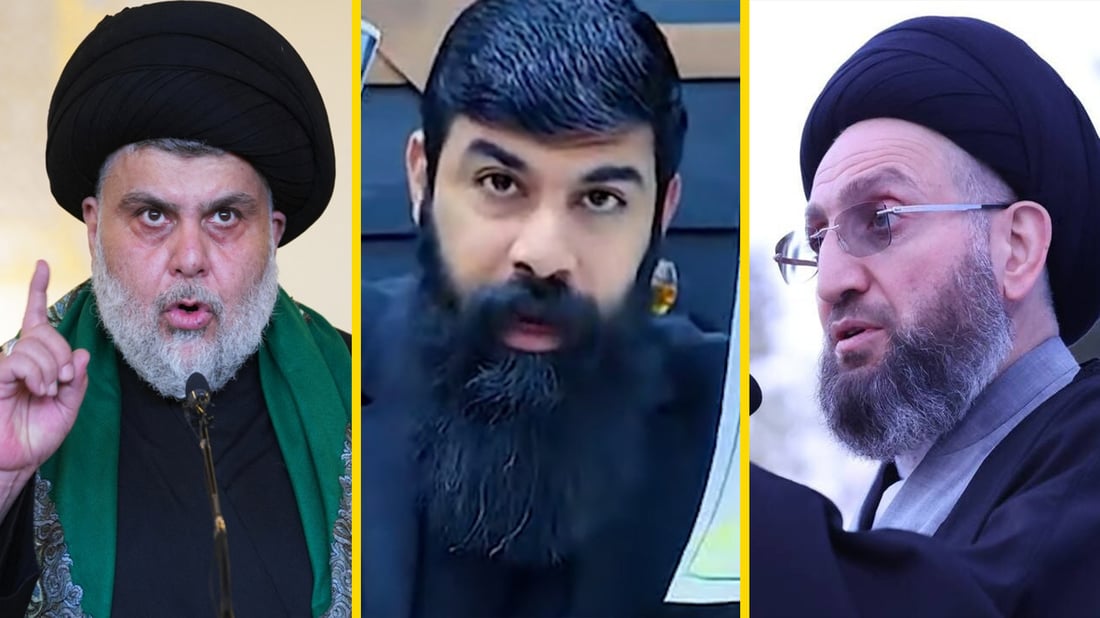
Land dispute in Najaf draws Sadrists and Hikma into online feud
NAJAF — A dispute over a land allocation in Najaf has escalated into an online feud between the Sadrist movement and the Hikma current, though tensions remain confined to statements, social media exchanges and competing allegations about public property.
The dispute began when Najaf governorate council member Akram Sharba, who heads the council’s municipal committee, sought to summon municipal director Karrar Mawash — considered close to Hikma — for questioning on April 21. Most council members boycotted the session, preventing a quorum. Mawash did not attend either.
Sharba said he had received “countless calls” urging him to cancel the session. When he insisted, more than half the council boycotted it. In a video, he criticized the council as “miserable,” accused members of yielding to pressure and said he preferred working outside it as he had previously done as a volunteer activist. Sarcastically addressing calls to back down, he asked: “Will you emigrate outside Iraq if we demand dismissal?” The council responded on April 23 by forming a three-member conduct and discipline committee to investigate his public statements.
Sharba then began publishing documents and allegations on social media, including a case involving a 3,000-square-meter plot he said was granted for around 10,000 dinars (about $6.45) despite being valued at roughly 30 billion dinars (about $19.35 million) — with the land located within the former public security directorate site, where the price per square meter stands at around 10 million dinars (about $6,450). He said the Martyr al-Mihrab Foundation, which he described as close to Hikma, obtained the land under Governor Yousef Kanawi and municipal director Mawash, both affiliated with the current, and called for it to remain public property designated for service projects.
Hikma responded that the land was granted free of charge because the foundation is a non-profit religious charitable institution caring for 250,000 orphans and supporting mosques, husseiniyas and religious processions. The statement said the foundation plans to build a museum documenting crimes committed during Saddam Hussein’s era against scholars and religious authorities in Najaf, an idea dating to 2003 that received prime ministerial approval in 2005 but was delayed by the continued presence of an Interior Ministry facility at the site — which has yet to be vacated after roughly 21 years. The statement concluded: “In whose interest is it to prevent the establishment of a museum documenting Saddam’s crimes against the people of Najaf and its scholars?”
Sharba said the 2005 letter did not include formal registration with real estate authorities and that previous objections had prevented implementation across multiple changes in leadership, including several governors and ten municipal directors. He said a specialized committee initially found financial damage to Najaf municipality before issuing a revised report stating it could not determine whether damage had occurred — a shift he said prompted objections from the Integrity Commission and raised questions about the protection of public funds. An internal investigation conducted under Governor Kanawi concluded there had been no pressure on the committee and that members changed their assessment voluntarily, though the matter remains unresolved.
The dispute widened after social media accounts circulated a document attributed to Council of Ministers Secretary-General Hamid al-Ghazi, affiliated with the Sadrist movement, detailing property transactions involving the Sadr Foundation in central Najaf, including debt settlements. The circulation prompted anger among Sadr’s supporters over the involvement of the Hananah headquarters in the dispute. An account associated with Sadr said the document referred to land partially donated by the Sadr Foundation to the Imam Ali shrine “by direct order from Muqtada al-Sadr,” adding that the property originally belonged to the office of Mohammed Mohammed Sadiq al-Sadr, while criticizing Hikma in a series of posts.
Sources said efforts are ongoing to contain the situation, with a mediator working to “clarify the situation and remove misunderstandings between the two sides.” Hikma has not published its latest statement on official platforms, distributing it instead directly to media outlets, while its channels have focused on coverage of a mourning ceremony held by Hakim’s office for the passing of Mohammed Hadi al-Sadr, a senior figure in the al-Sadr family.