
Zaidi to split Jurf al-Sakhar among army, police and PMF, documents show
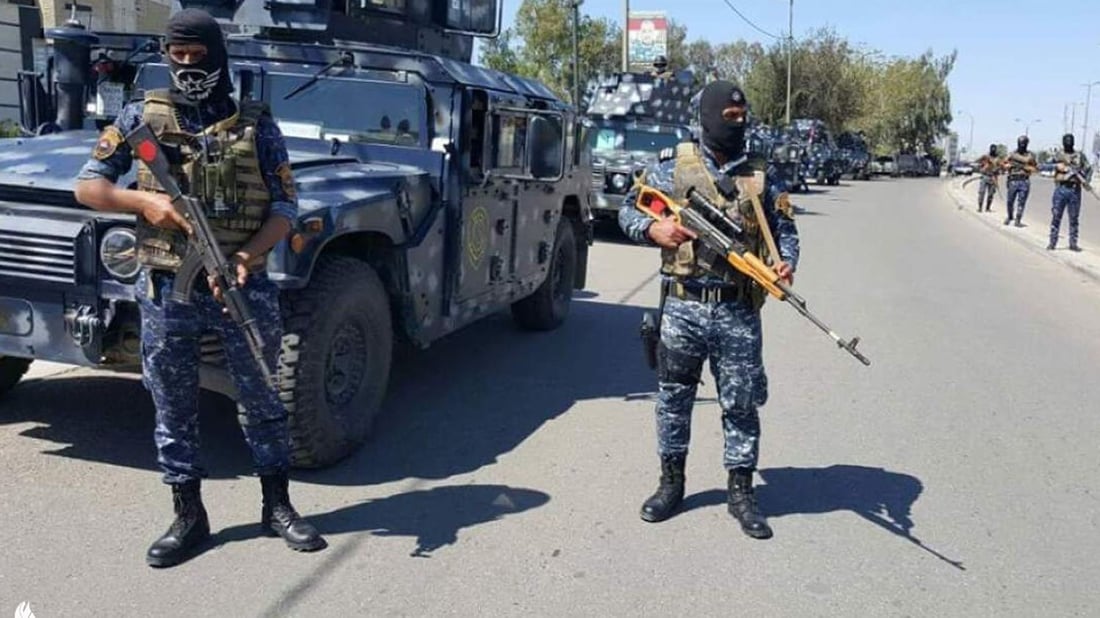
BAGHDAD — Prime Minister Ali al-Zaidi has ordered Jurf al-Sakhar divided among the army, Federal Police and Popular Mobilization Forces, setting aside the PMF chairman’s proposal to leave it to PMF units, documents obtained by 964media on Wednesday show.
The plan also sends the Energy Police, the Interior Ministry force that guards oil and power sites, to protect the pipelines at the center of the government’s oil smuggling investigation, and orders a road through the area reopened. It sets no date for the redeployment and does not say whether Kataib Hezbollah, the Iran-aligned faction that holds the northern Babil area, has agreed to it.
Zaidi approved the deployment after security agencies submitted proposals on Nov. 15 and 16, according to a document signed by Gen. Abdul Amir al-Shammari, director of the commander-in-chief’s office.
Under the plan, the army’s 38th Brigade, part of the 10th Division, takes the area from the Ya Hussein berm to the Fadhiliya intersection and the boundary of the Anbar Operations Command.
The Federal Police’s 17th Brigade takes central Jurf al-Sakhar, from the Euphrates in the east to the Musayyib-Fadhiliya road in the west. The PMF’s 72nd and 79th brigades take the sector from that road to the boundary of the Karbala Operations Command.
An Energy Police regiment will guard the pipelines that cross the area. The Babil Police Command will run a checkpoint near the Fadhiliya intersection on the Musayyib side, and the Anbar Police Command will run another facing Amiriyat al-Fallujah.
Authorities are to begin reopening the Musayyib-Bahbahani-Fadhiliya-Amiriyat al-Fallujah road to traffic. A Counter-Terrorism Service regiment at Garrison Camp will stay on standby as a reserve under the commander-in-chief for emergencies.
Falih al-Fayyadh, chairman of the Popular Mobilization Commission, the state body that runs the PMF, had proposed giving security across Jurf al-Sakhar to the 72nd and 79th brigades and a PMF special forces regiment, with the Energy Police guarding the pipelines, the second document shows. Zaidi’s plan keeps the two brigades but confines them to one sector and gives the rest of the area to the army and Federal Police.
Shammari also chaired a meeting of senior commanders on Wednesday that agreed to study proposals to redeploy forces in the area, redraw their sectors of responsibility and protect infrastructure, his office said in a statement. Those attending included the heads of the Counter-Terrorism Service and the Federal Police, the PMF’s director of operations and the Baghdad and Karbala operations commanders.
The plan came two days after government spokesperson Haider al-Aboudi said Zaidi had ordered the armed forces into Jurf al-Sakhar and given Kataib Hezbollah a short deadline to leave. He did not say when it expires.
A source in the Coordination Framework, the ruling alliance of Shiite parties, told 964media on Tuesday that its leaders had turned down Zaidi’s push for combat troops at a meeting Monday. They agreed instead to replace the force holding the area with other PMF units, to avoid a confrontation, the source said.
Also on Tuesday, Maj. Gen. Ali al-Hamdani, the PMF’s commander of Middle Euphrates operations, said Kataib Hezbollah was ready to let the Energy Police guard the pipelines and to dig along them to show they were intact. The Popular Mobilization Commission on Wednesday denied social media reports that Hamdani had been removed from his post.
The standoff began after a report by the Federal Intelligence and Investigations Agency, an Interior Ministry body, began circulating Nov. 9. It alleges that crude was drawn from pipelines in Jurf al-Sakhar and carried away in tanker trucks.
On Saturday, Zaidi relieved nine security and oil officials of their duties. His investigative committee had confirmed the report’s information, found refineries in the area and found cases of manipulation, said Sabah al-Numan, spokesperson for the commander-in-chief of the armed forces.
Kataib Hezbollah has denied smuggling oil and accused Zaidi’s office of spreading fabricated reports. At a news conference inside Jurf al-Sakhar on Tuesday, senior faction figure Abu Talib al-Saeedi accused the investigators of distorting the facts, said the faction had placed no restrictions on them and said it did not intend to clash with security forces. He told AFP the same day that the faction would not leave the area.
Lawmaker Ali Nuhair al-Saadi, a member of parliament’s Security and Defense Committee, said in a UTV interview late Tuesday that Kataib Hezbollah had barred investigators from two of six sites, telling them explosive devices had been planted there.
A judicial committee also entered Jurf al-Sakhar on Tuesday to inspect the suspected smuggling sites, an official source told the state-run Iraqi News Agency. Its findings have not been made public.
The PMF is the state-sanctioned umbrella of mostly Shiite armed groups formed in 2014 to fight the Islamic State group. Kataib Hezbollah has brigades in the PMF, and the United States designated it a terrorist organization in 2009.
Jurf al-Sakhar, officially renamed Jurf al-Nasr in 2014, was recaptured from Isis that year by Iraqi forces and allied armed groups. It has been closed since, and many of its displaced residents still cannot return.