
50 billion dinars
Basra MPs seek sovereign fund for reconstruction as sit-in protest at oil field goes on
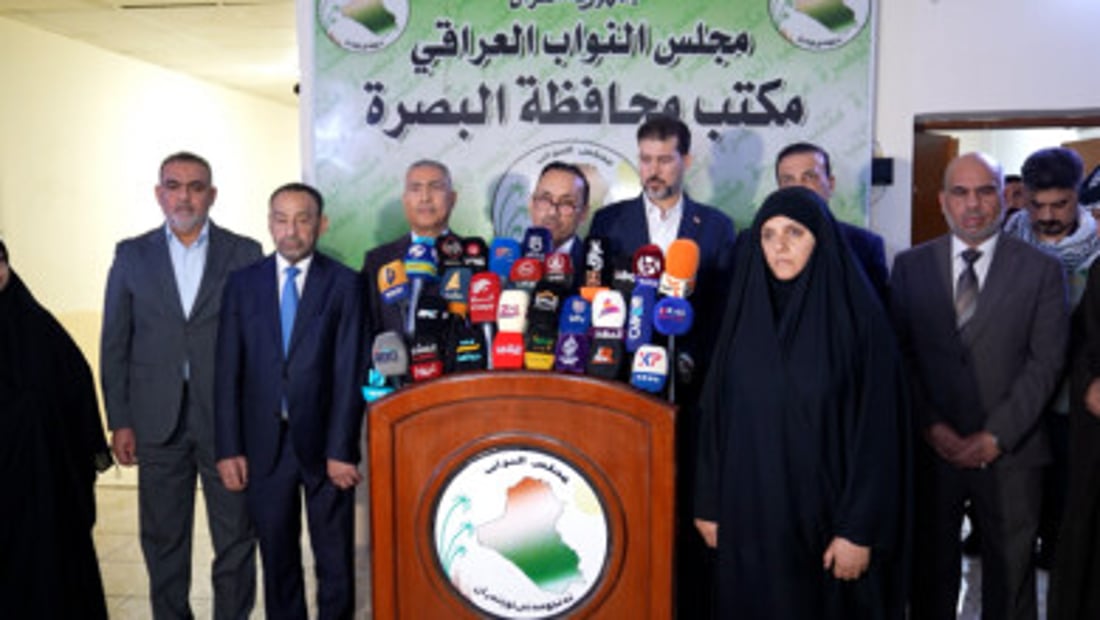
BASRA — Basra lawmakers on Wednesday called for a sovereign fund under parliament’s oversight to rebuild the governorate, and backed protests in its northern districts, including an open-ended sit-in in Sadiq district near the West Qurna 1 oil field.
At a news conference at parliament’s office in central Basra, the lawmakers called for a government delegation led by Prime Minister Ali al-Zaidi to meet residents and hear their demands. They also proposed a parliamentary committee to follow up on the protesters’ demands and hold officials to account for any failings.
The MPs demanded payment of Basra’s petrodollar funds, the per-barrel share of oil revenue that federal law sets aside for oil-producing governorates. They also demanded its social benefit funds, the money oil companies’ contracts set aside for projects in communities near the fields.
They called for jobs for graduates and young people and less reliance on foreign workers. They also called for an end to overcrowded schools and schools run out of portable cabins, and for the completion of stalled hospitals and infrastructure projects.
The lawmakers urged the Finance Ministry to settle salary payments for people hired into 19,000 public-sector posts, for contract employees in Sadiq district and for workers on contracts under a separate allocation of 10,000 posts.
“We attended the conference at the invitation of Basra’s MPs and reviewed the demands they pledged to convey to the prime minister’s office and parliament,” Alaa al-Mansouri, a representative of the Sadiq protest movement, told 964media.
Mansouri said the lawmakers had promised to make the demands of the northern protesters the focus of their remarks at parliament’s next session.
“We are open to dialogue with all political and government parties, and we have not broken with anyone,” Mansouri said. “But the sit-ins are continuing in the squares, alongside the negotiations and the delegations moving between Baghdad and Basra, and we will not end our protests until our demands are met.”
Raja Fadel, a member of parliament’s Education Committee, told 964media that Basra, “Iraq’s economic capital,” was asking for 50 trillion dinars (about $33 billion at the official rate) to address its problems. Fadel said it also wanted employment offices for its unemployed residents, particularly in oil areas where farmland had been damaged and farming and livestock herding had stopped.
The sum is nearly a quarter of the roughly 217 trillion dinars in spending that economists say the draft 2027 federal budget contains. The government has not published official figures for the draft.
“These demands were raised previously in official correspondence, and we have obtained approvals from the prime minister on some of them,” Fadel said. “We support the popular movement until residents secure their rights, and all government, parliamentary and local authorities must take up their responsibilities.”
Earlier on Wednesday, Basra Governor Asaad al-Eidani warned that protesters who enter oil fields could face arrest warrants and even terrorism charges. In a voice message, Eidani said the warning was meant to keep protesters safe and spare them the legal and security consequences, not to limit their demands. He said petrodollar payments to the governorate had stopped in September 2024.
On Tuesday, protesters from tribes and communities in Basra’s northern Qurna and Sadiq districts shut Station 8 at West Qurna 1. They gave the federal and local governments three days to meet their demands for services and jobs, and threatened to shut all the oil fields in the area if the deadline passed.
Residents of Sadiq have held a sit-in near the entrance to West Qurna 1 since Friday. Their demands include work on a bridge to Ezz al-Din Salim district, jobs for unemployed young people and the rebuilding of the Qurna-Basra road. On Tuesday, Basra lawmaker Uday Awad, who leads the Sadiqoun parliamentary bloc, urged Zaidi to visit Basra and meet the protest leaders.
West Qurna 1, one of Iraq’s largest oil fields, has been operated by China’s PetroChina since ExxonMobil left in early 2024.