
Diyala homeowners bring AI house designs that builders must adapt
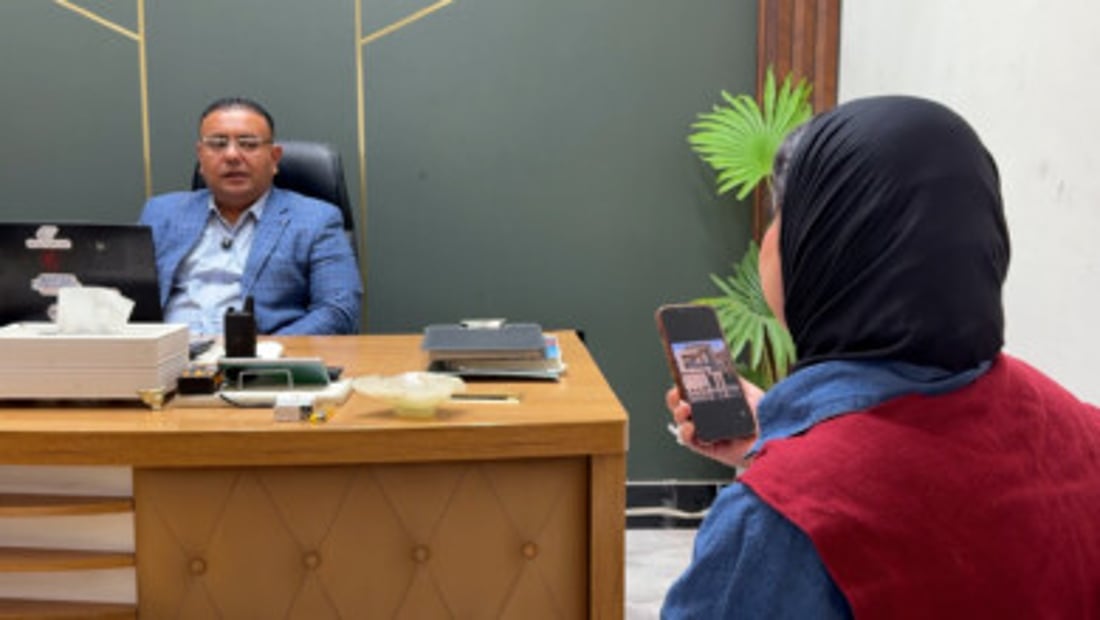
DIYALA — Homeowners in Diyala are arriving at decoration companies with house designs pulled from social media or generated by artificial intelligence, and designers in Baqubah say part of their job now is making those pictures work in a real house.
The tools let customers try out colors, materials and architectural details before they commit. But designers and contractors say an AI image seldom translates exactly to a real home, whose measurements, finishes and climate differ from what the software assumed.
The same shift is under way in the design trade worldwide. A survey of 468 designers released by the design marketplace 1stDibs in November 2025 found that 29% were using AI tools, up from 9% in 2023. A Houzz report on 722 U.S. design and construction firms, published that July, put the share of designers using AI at 31%. Most used it for emails and paperwork; about a third used it for early visuals and mood boards.
Tastes in Diyala are changing too. Homeowners are moving away from the costly, ornate faux-palace decor that has long filled Iraqi living rooms in favor of plain, modern interiors in white, off-white and beige.
Atheer Ghanem, an interior designer who manages al-Bayt al-Turki Company, told 964media that some of the designs customers bring simply don’t suit local conditions.
One family wanted to copy a glass-fronted house in Belgium. “We had to advise them because our climate conditions are different, particularly during the summer,” Ghanem said. “It was necessary to use glass professionally in a way that suits our hot summers, because its use affects thermal insulation.” The family accepted the company’s changes, he said.
Ghanem’s company now uses AI itself, mostly to sketch facades that don’t yet exist. “We use artificial intelligence to provide an instant image of the facade so the customer can visualize the idea and decide whether they like it,” he said.
That is how the largest firms use it as well. Patrik Schumacher, principal of the London-based Zaha Hadid Architects, told the architecture magazine Dezeen in 2023 that most of the firm’s projects were using image generators such as DALL-E and Midjourney for early concepts, with designers developing a small share of the results. Retailers have put similar tools in shoppers’ hands: IKEA’s Kreativ feature, launched in 2022, scans a room, erases the furniture and fills the picture with new pieces.
Getting from the picture to the finished room still takes a designer, Ghanem said, because each property needs its own technical solutions. “It is almost impossible to reproduce an image 100% in reality because measurements and details differ from one house to another, in addition to differences in materials and finishes,” he said. He added that customers now prefer a single uniform shade to rooms in several colors.
Yasser Abdul Karim, an exterior decoration contractor, told 964media that some customers want a photograph copied exactly, while others ask engineers to adapt it or use AI software to generate alternatives. “Artificial intelligence has helped us considerably, particularly in choosing colors, designs and other details,” Abdul Karim said. “Customers can now review several ideas before making a decision.”
Hussein Karim, an interior decoration contractor, said his workers rarely build a customer’s picture as it is. “We make sure to add our own touch to the design shown in the picture,” Karim told 964media. “We might add wall partitions or increase the number of lighting units so the final design differs slightly from the original image.”