
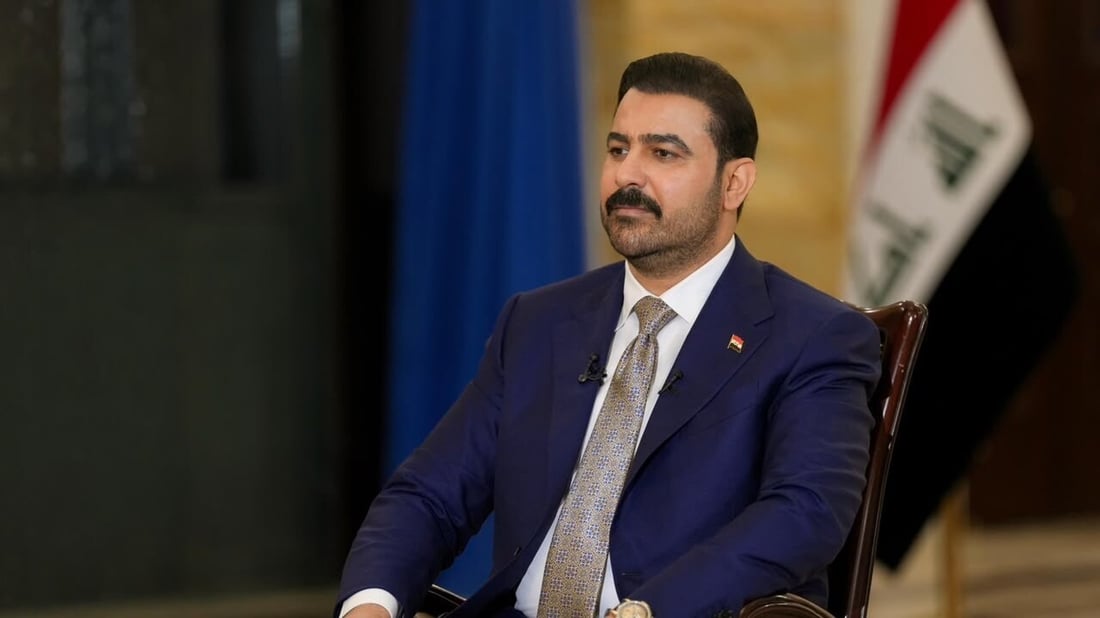
Iraqi Prime Minister Ali Al-Zaidi
Media Monitor
Iraq’s PM Zaidi plans reshuffle for over 50 posts, lawmaker says
BAGHDAD — Prime Minister Ali al-Zaidi is working to replace officials in 50 government posts and may extend the changes to the Popular Mobilization Forces, a lawmaker from former Prime Minister Mohammed Shia al-Sudani’s coalition said Tuesday.
“There are 50 posts that Zaidi is working to change,” Mansour al-Buaiji, a lawmaker from the Reconstruction and Development Coalition, said in an interview with journalist Samer Jawad on Iraq 24 TV. “I believe Zaidi has studied the situation and sees that these changes are in the interest of the Iraqi people and the government, and he knows best about this.”
The changes are continuing, Buaiji said, and will probably reach the Popular Mobilization Commission, the state body that runs the PMF, as well.
Zaidi on Monday removed Hamid al-Shatri as head of the Iraqi National Intelligence Service, the country’s main intelligence agency, according to an executive order seen by 964media. No successor has been named. The same day, Rashad Khalaf Hashim took over from Ihsan al-Awadi as Zaidi’s chief of staff, after the prime minister ended the contracts of 69 advisers and staff in his office.
Sudani appointed Shatri to lead the intelligence service, which reports to the prime minister, in December 2024. Shatri had earlier headed the National Security Service, a separate agency, until Sudani replaced him in July 2023.
In the same interview, Buaiji said every armed faction had joined the government and agreed to hand its weapons to the state on a set timetable, and that even the Iran-aligned Kataib Hezbollah might take part. The group said on Sept. 30 that it was not bound by any timetable for handing over weapons.
Buaiji also said the factions might not have launched the drones over Baghdad’s Green Zone on Tuesday, when security forces engaged an unidentified drone near the fortified area, and blamed intelligence services, particularly Israel’s. He gave no evidence.
Zaidi has replaced several security chiefs since his government took office in May. In June he named Qasim al-Aboudi national security adviser in place of Qasim al-Araji and replaced National Security Service chief Abdul Karim al-Basri. In July he appointed new heads of the Counter-Terrorism Service and the Federal Police.
The PMF was formed in 2014 after Grand Ayatollah Ali al-Sistani’s call to fight the Islamic State group and was recognized by law in 2016 as part of Iraq’s security forces under the commander-in-chief. It is an umbrella of dozens of brigades, some closely tied to Iran.