
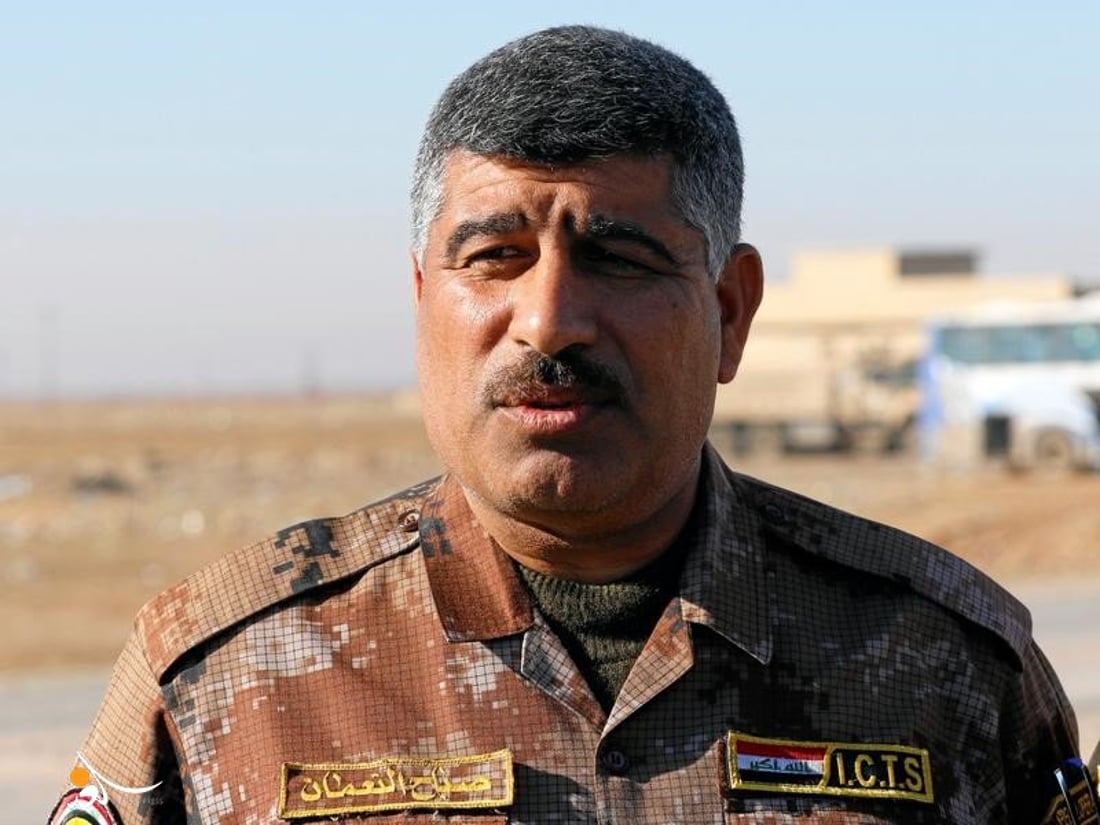
Sabah al-Numan, spokesperson for the commander-in-chief of the armed forces
Military spox: justification for weapons outside the state falls away on September 30
BAGHDAD — Any justification for armed action outside state authority disappears on Sept. 30, the spokesperson for the commander-in-chief said, a day after the prime minister’s security adviser said there was no timeframe at all for bringing weapons under state control.
The date is “a strategic turning point in the history of the military and security establishment,” Sabah al-Numan told the Iraqi News Agency, marking a move to “full self-reliance and the management of Iraq’s security environment by national hands,” with the armed forces solely responsible for protecting Iraqi territory and airspace “without the need for foreign umbrellas.”
“When the national leadership is the sole source of security decisions, any justification for acting outside the frameworks of the state falls away,” he said, adding that this would give security institutions a legal and public basis to pursue crime, remove unauthorised weapons and enforce the law equally.
Qasim al-Araji said the opposite on Friday. “There is no specified period for restricting weapons to the state,” he said, rejecting reports of a deadline for the committee handling the file, and said the terrorism framing would apply only once that committee completes its work — an event with no date attached. Both men speak for the prime minister, Araji as his security adviser and Numan for him in his capacity as commander-in-chief.
Prime Minister Ali al-Zaidi said in Washington in July that there would be no justification for armed factions after Sept. 30, and the governing coalition said in August that armed activity after that date could be treated under the Anti-Terrorism Law. Araji then said in late August that the date applied to the coalition’s departure and marked the start of talks rather than a handover deadline. Nouri al-Maliki said this month that disarmament was no longer the term being used, Harakat al-Nujaba said the Framework had dropped the call to restrict weapons in favour of regulating them, and a Hikma Movement spokesperson said the government would announce general principles in early October and implement them gradually, with the factions having submitted written demands.
The withdrawal follows the 2024 agreement between Baghdad and Washington to wind down the coalition set up in 2014. Advisers left bases and command headquarters in federal Iraq in January, including Ain al-Asad, while a presence in Erbil continued supporting operations against the Islamic State group in Syria. Zaidi ordered a committee during his July visit to negotiate bilateral arrangements covering counterterrorism, intelligence sharing, training and capabilities.