
Rice returns to Mishkhab after four years as families resume transplanting
AL-MISHKHAB — Farmers in Mishkhab are transplanting rice seedlings for the first time in four years, after water shortages drove cultivation in the home of Iraq’s aromatic Anbar rice to near collapse.
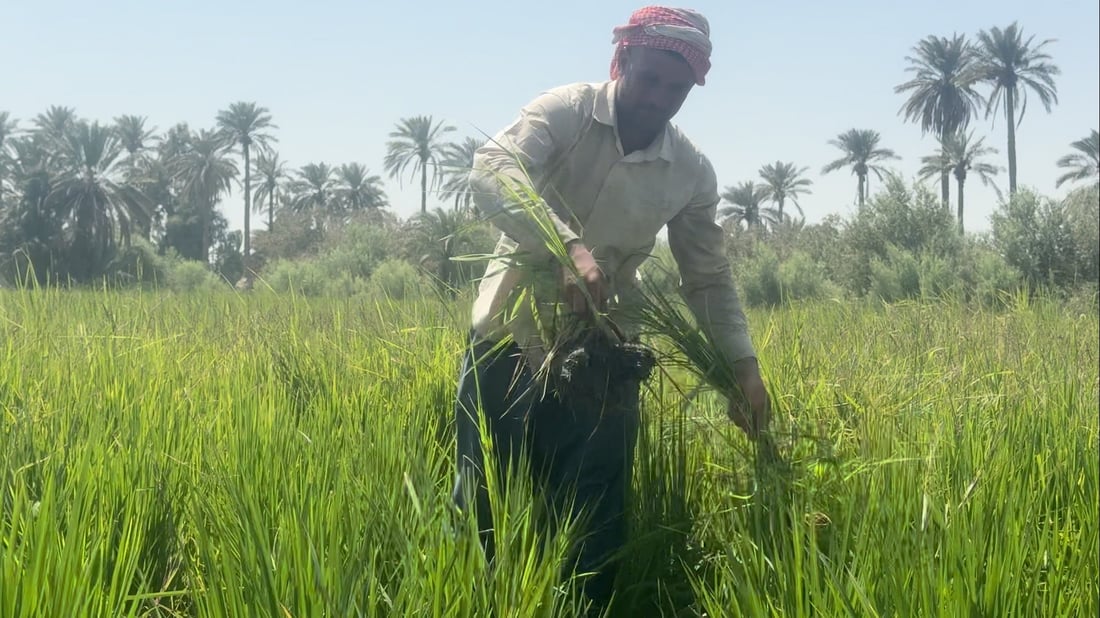
The work is salkhi, lifting seedlings from densely grown patches and replanting them where the field is thin, so growth is even and no part of the ground is wasted, said farmer Nizar al-Adhari. It runs from the second half of August into early September and needs a steady water supply as farmers move across the field deciding what to move where. Haider Nizar al-Adhari said the water returning this season had let him resume the work for the first time in four years.
Cultivation starts with levelling the land, sowing and flooding the fields to germinate the seed. Once the seedlings have two or three leaves, pesticide goes on, then fertiliser about a week later, with irrigation and the field’s internal channels maintained throughout, said Zaid al-Adhari. Completing salkhi by mid-September marks the last stage: a light application of fertiliser, then the wait for bakhank, the local word for the emergence of the panicles that become the grain heads.
Mishkhab’s collapse was severe. Cultivation there fell from about 35,000 dunams in 2010 to 466 in 2022 under water restrictions, with only around 200 dunams planted at a research station last year — roughly 1% of the 2010 area. Rainfall and snow in the 2025-26 season lifted national storage from 5 billion cubic metres at the end of last year to above 31 billion this month. Farmers in Diyala planted rice this season for the first time since 1997, using seed brought from Mishkhab.