
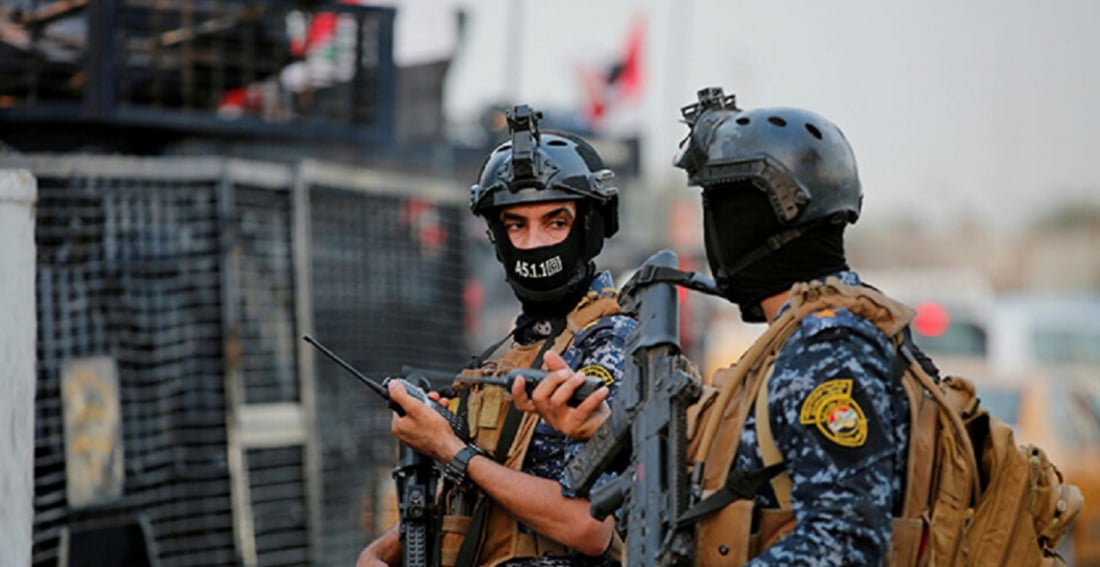
Members of Iraq's security forces
Gunmen attack army position and power towers near Baiji
SALAH AL-DIN — Gunmen attacked an Iraqi army position near Baiji late on Friday while approaching two main electricity transmission towers between Baiji and Haditha, a former Baiji district commissioner said. Security forces drove them off after a period of fighting and nobody was hurt.
“Security forces immediately responded to them, and after a period of clashes and confrontations, the gunmen fled to an unknown location,” Mohammed Mahmoud told 964media. “According to preliminary information, the attackers were remnants and sleeper cells of ISIS, and their aim was to target the two main electricity transmission towers in the area between Baiji and Haditha.” Forces have surrounded the area and a search was expected to begin within hours. No army or Security Media Cell statement had been issued.
Targeting transmission infrastructure would hit a grid already generating about half of what Iraq needs at peak, with more than half of what is produced lost before reaching a paying customer.
It follows a run of operations this month. Military intelligence arrested a man known as Abu Sahir in Kirkuk on Sept. 13, saying he held several posts in the group while it controlled parts of Anbar. A day earlier, Kurdistan Region forces arrested a man they described as an ISIS religious emir after an exchange of fire in Khurmal, part of operations in which 22 suspects were held over four days and two cells dismantled across Sulaymaniyah and Halabja, and Iraqi F-16s destroyed a hideout in Diyala with two missiles.
The coalition mission ends on Sept. 30 under the 2024 agreement between Baghdad and Washington. Coalition forces are leaving the Kurdistan Region daily and Iraq should avoid a security vacuum when they go, KRG Interior Minister Rebar Ahmed said, urging Baghdad to build bilateral security relationships to replace the mission.
The group seized Mosul and Tikrit in 2014 and became known for its brutality and attacks on minority communities. It was largely defeated by 2017, with remnants operating from remote areas since.