
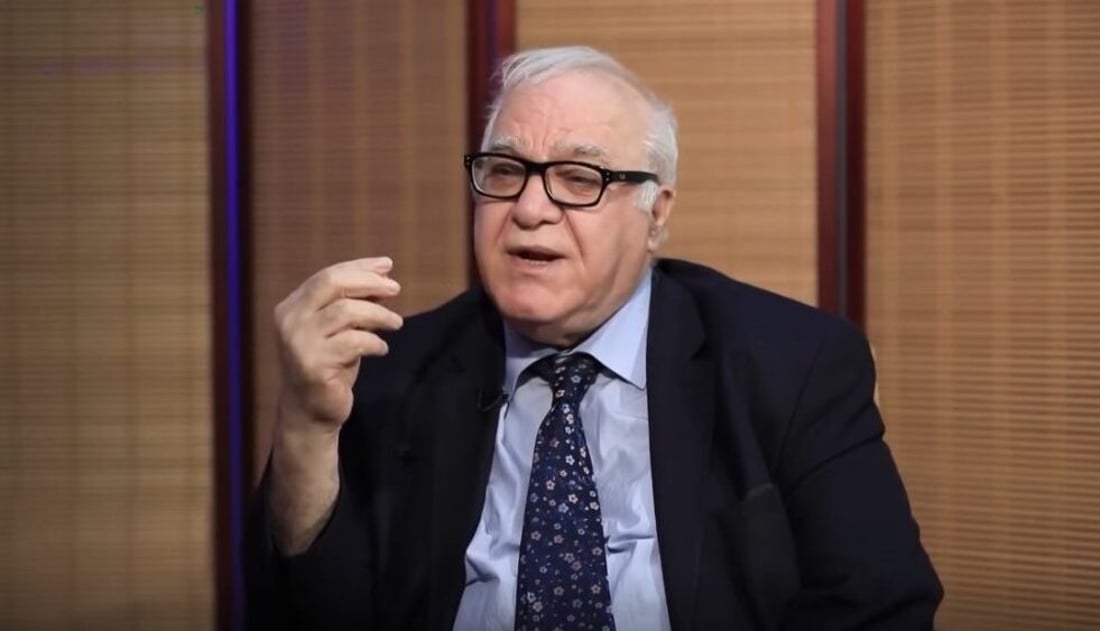
Mazhar Mohammad Saleh, financial adviser to the prime minister
Media Monitor
State salaries, payments benefit 40 million Iraqis at $5.88B monthly cost, adviser says
BAGHDAD — Iraq needs 7.7 trillion dinars ($5.88 billion at the official exchange rate) each month to cover government-funded salaries and payments that benefit an estimated 40 million people, Prime Minister’s financial adviser Mazhar Mohammed Saleh said.
Saleh told the state-run Al-Iraqiya News channel’s “Al-Muhayed” program that around 10 million Iraqis receive government-funded payments, including public employees, pensioners and social protection beneficiaries.
“Every salary paid by the state is considered to support and affect four family members or beneficiaries, and therefore around 40 million Iraqi citizens benefit from state salaries,” Saleh said. He said Iraq ranks fourth globally in terms of state involvement in economic activity because of the rentier nature of its economy. “The government salary bill reaches 7.7 trillion Iraqi dinars per month, and securing it is an obligatory matter,” Saleh said.
On the federal budget, Saleh said the oil price used in the budget would be between $50 and $60 per barrel. Iraqi Parliament Speaker Haibat Al-Halbousi met Finance Minister Falih Al-Sari on Wednesday to discuss mechanisms for preparing the 2027 federal general budget bill. Iraq has no 2026 budget, with parliament skipping the year to concentrate on 2027 and spending governed by the one-twelfth rule. Iraq’s last budget law covered 2023, 2024 and 2025 and expired at the end of last year.
Saleh said Iraqi oil production currently exceeds 3 million barrels per day, with 1 million barrels going to local refineries and more than 2 million barrels allocated for exports and storage. He said Iraq’s oil exports had remained stable for 10 days at more than 1.5 million barrels per day.
The government confirmed in late July that Iraq is in a fiscal crisis and that salaries would no longer follow their previous schedule. July pay went out in stages from July 28. Iraq exported 32.1 million barrels of crude and condensates in May and June for about $2.34 billion, roughly $1.17 billion a month — about 526,000 barrels a day against roughly 3.3 million before the war. Oil provides more than 90% of federal revenue.
On energy imports and trade with Iran, Saleh said Iraq imports 18 million cubic meters of Iranian gas, which supports 4,500 megawatts of electricity generation. He said there are no banking relations between Iraq and Iran and no electronic payment transactions between the two countries, adding that there had been no dollar payments since 2011. Saleh said U.S. sanctions on Iran did not cover imports of vegetables and food products provided payments were not made in dollars.
Iraq’s foreign currency reserves stand at $78 billion, Saleh said. He said Iraq was not currently borrowing externally to support the budget but could need external borrowing if it came with low costs and long repayment periods. “The total amount the state has borrowed domestically during the crisis ranges between 12 trillion and 14 trillion dinars,” Saleh said.