
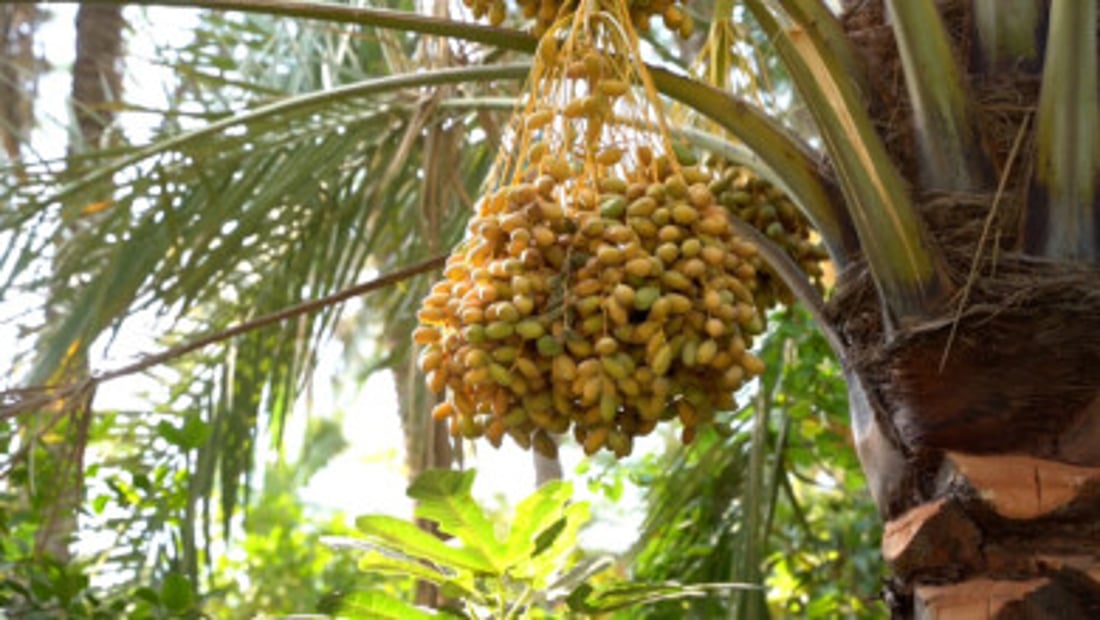
Wasit’s date harvest starts late as a cool spring pushes ripening back
WASIT — Date growers in Hay, in southern Wasit, have started picking the season’s first rutab, with the Usta Omran variety ripening earliest and the local Jamali reaching market at about 5,000 dinars a kilogram, or $3.30.
Hay’s season runs 15 to 20 days behind Basra’s because of the temperature difference, orchard owner Mustafa Saad Karim told 964media, and “lower summer temperatures this year compared with previous years have also delayed ripening and harvesting.” Iraq had a wetter than normal winter in 2025-26, its biggest recovery in water storage in years, followed by unusually mild spells in April and May.
The later season lets Hay keep producing into October. As supplies from Basra and Nasiriyah run out, Hay growers send fruit to markets there, though most of the current crop goes to Kut.
Jamali, grown across Wasit and known elsewhere as yellow Shuwaithi, competes with Barhi, Karim said. It opens at about 5,000 dinars a kilogram and falls to around 1,250 by the end of the season as supply builds — a drop of three quarters.
Among those picking is Yaqoub Youssef, a lagout, the local word for a man who climbs the palms. He moved from Basra to Hay in the 1980s, bringing a trade he learned at 10. Work starts at 5:30 a.m. and stops at the noon call to prayer, he said. Climbers earn 25,000 dinars a day, about $16 — the price of five kilograms of early Jamali.
The delay is not confined to Wasit. The rains that gave Basra its best crop in years also cooled the spring enough to hold back ripening, leaving orchards north of the city heavy with fruit not ready to sell. Alaa al-Jazaeri, head of the agriculture division in Madina district, said ripening turns on heat accumulated since the palms flowered rather than current temperatures. “The cooler weather at the start of the season had a cumulative effect that delayed the natural ripening cycle,” he said.