
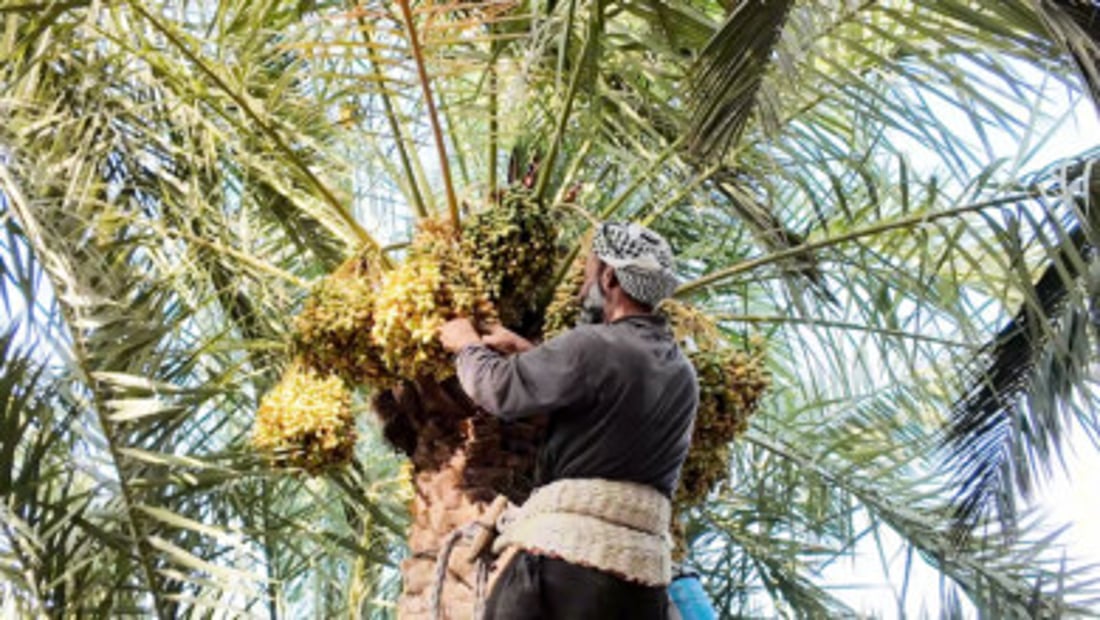
(Photo: 964media)
Wet winter gives Basra a big date crop that will not ripen on time
BASRA — The rains that gave Basra’s date growers their best crop in years also cooled the spring enough to delay ripening, leaving orchards north of the city heavy with fruit that is not ready to sell and a harvest that could run into winter.
“This season has been characterized by abundant production compared with last year,” farmer Muayyad Yassin told 964media, crediting the winter and spring rain and the absence of crop disease for both yield and quality.
But growers who would normally be selling large quantities of fresh dates by now are not. Farmer Majid al-Hassani said sales have stayed limited because the fruit has not ripened, which he put down to cooler temperatures than last year and palm blossoms emerging late in the cool spring. He is picking small amounts of Sayer, Khadrawi and Halawi, selling at up to 2,500 dinars (about $1.60) a kilogram. Barhi and Bream mature later anyway, he said.
Alaa al-Jazaeri, head of the agriculture division in Madina district, said ripening depends on heat accumulated since the palms flowered rather than on the temperature now. “Fruit ripening depends less on current temperatures than on the accumulated heat units since the beginning of growth,” he said. “The cooler weather at the start of the season had a cumulative effect that delayed the natural ripening cycle.”
The delay is sharpest in orchards north of Basra and lighter closer to the Gulf, farmers and officials said. The governorate’s central date market opened a month ago.
Iraq had a wetter-than-normal winter in 2025-26 and its biggest recovery in water storage in years, followed by unusually mild spells in April and May.
Basra had more than 2.63 million palms as of December 2024, according to the governorate’s agriculture directorate. Iraq was once known as the land of 30 million palms, with dates its second-largest export after oil, before decades of war and environmental damage thinned the groves, with the 1980-88 war with Iran destroying large plantations around Basra.