
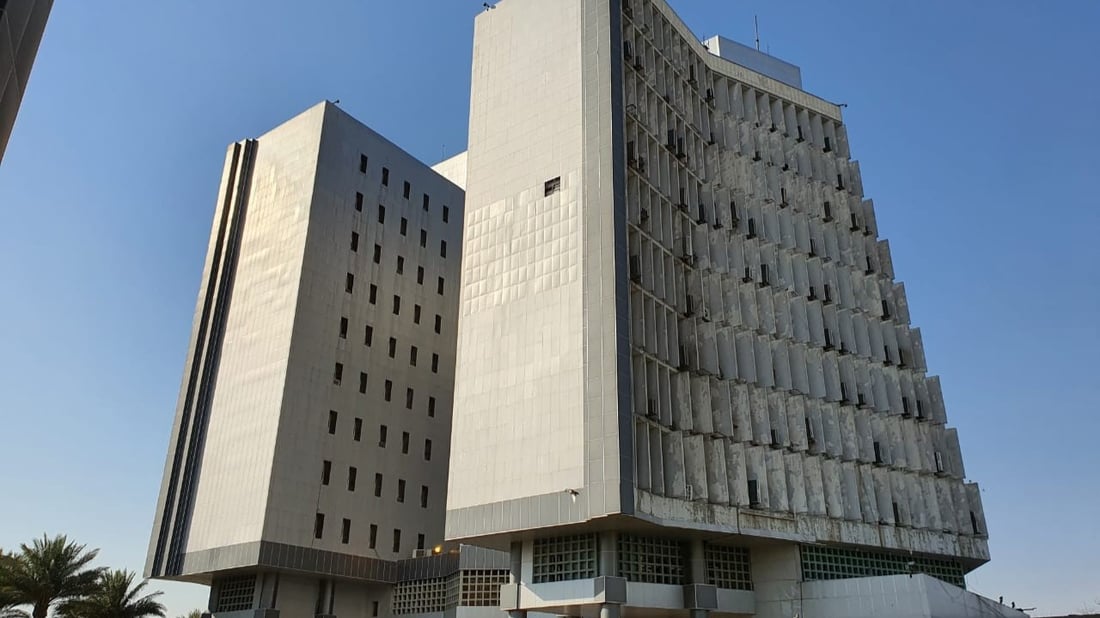
Finance Ministry says amnesty decisions rest with judiciary
BAGHDAD — Iraq’s Finance Ministry said Saturday its role in corruption cases is limited to financial matters and recovering money owed to the state treasury, stressing that decisions on judicial procedures and amnesty requests fall exclusively to the judiciary.
The statement came after Friday’s announcement by the Supreme Judicial Council, which said it is working with Prime Minister Ali al-Zaidi on a legal framework that would let some corruption suspects receive reduced legal measures or lighter sentences after voluntarily returning misappropriated state funds.
The ministry said its responsibility “is limited to financial aspects and recovering treasury rights,” and that any mechanism for repaying money owed by convicted defendants “must ensure the full recovery of public treasury rights and be binding and enforceable.” Judicial procedures and amnesty requests submitted to the courts, it said, “fall within the exclusive jurisdiction of the judicial authority.” It added that it remains committed to working with the judiciary and oversight bodies to protect public funds under the law.
On Friday, the Supreme Judicial Council said consultations between al-Zaidi and Council President Faiq Zaidan were being translated into a roadmap for suspects detained in the June 28 anti-corruption campaign, including former Deputy Oil Minister Adnan al-Jumaili and several current and former members of parliament linked to the North Refineries Company case.
The council said the proposal is not a blanket amnesty but a legal arrangement letting suspects voluntarily return money and property in exchange for reduced legal measures or lighter penalties where permitted under Iraq’s amended General Amnesty Law.
The judiciary said the approach builds on the tax-deposits case known in Iraq as the “Theft of the Century,” in which businessman Nur Zuheir was released under a repayment agreement that recovered 365 billion dinars (about $277 million at the official rate) before he left Iraq and repayments stopped. He was later sentenced in absentia to 10 years in prison.
The council said Zuheir subsequently sought to benefit from the amnesty law by offering to complete repayment. The judiciary said the request remains pending because it asked the Finance Ministry, as the affected government body, to approve the repayment mechanism the law requires, and has not received a response.
The council also said 12 employees of the General Commission for Taxes are serving sentences for helping process the improper withdrawals in that case and could become eligible under the amnesty law after paying compensation set by the Finance Ministry.
On the North Refineries investigation, the judiciary said the same approach could apply to offenses committed before the amnesty law took effect if defendants repay what they owe the affected ministry. Alleged crimes committed after the law entered into force, it said, would be handled under different procedures, prompting the discussions with the prime minister on a roadmap focused on recovering state funds while reducing legal measures for those who voluntarily repay.