
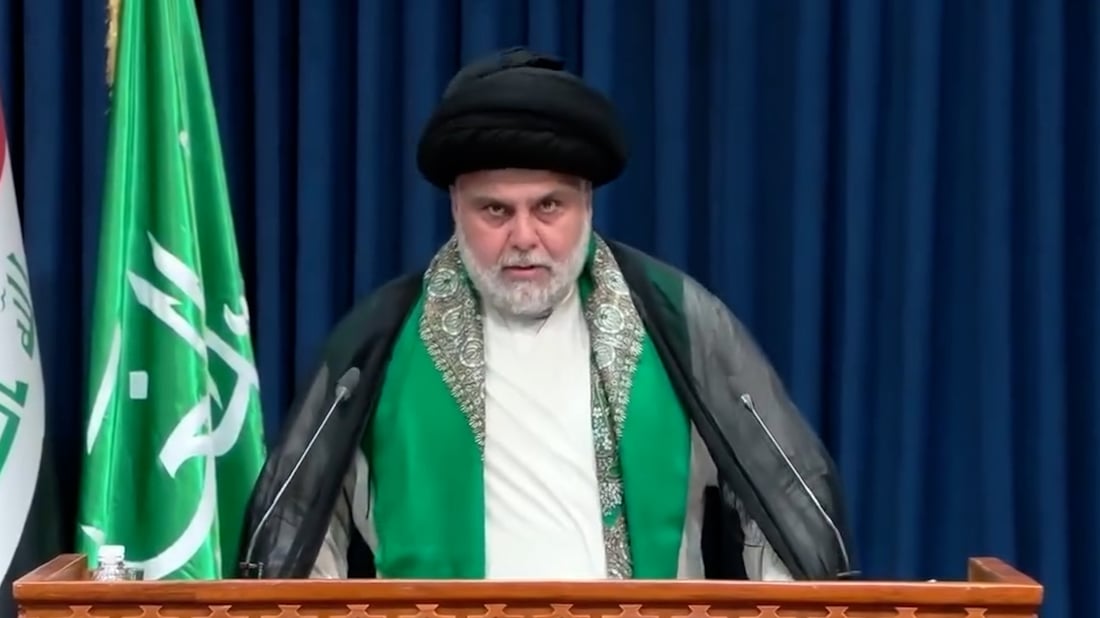
Shiite National Movement leader Muqtada Al-Sadr
Sadr criticizes ‘negative phenomena’ in Ashura and Arbaeen commemorations
BAGHDAD — Muqtada al-Sadr, leader of the Shiite National Movement, issued a statement identifying practices he described as “negative phenomena infiltrating” religious rituals, calling for changes in how some Ashura and Arbaeen commemorations are conducted across Iraq.
Sadr addressed a range of issues, including the use of music during ceremonies, gender mixing, food waste and sectarian rhetoric. He criticized “the use of music in Hussaini recitations and similar practices” and objected to “the mixing of genders in a manner that violates Islamic law and the instructions of Imam Hussein” at some mourning processions. He called for greater compliance with health regulations, criticized the practice of some men removing clothing during chest-beating rituals, and warned against compelling visitors to take part in activities organized by mourning processions.
Sadr also condemned the transformation of rituals into opportunities for financial gain, listing “turning Hussaini rituals into profit-making activities” among the practices he considers inappropriate. He said the rituals should “remain open” to all nationalities.
A significant portion of the statement focused on food. “Excessive cooking of food and throwing away the surplus without hesitation is forbidden, forbidden, forbidden,” Sadr said, adding that excess should be distributed to the poor and needy. He encouraged mourners to wear black during Muharram, particularly during Ashura, saying extravagant dress could distract from the spirit of mourning, and said the reward of participation “is not achieved except through active participation in reviving the Prophetic mission.”
Sadr also condemned sectarian discourse, including insults and the practice of declaring others unbelievers. “Insults and profanity without legitimate justification and in a crude manner are forms of sectarian incitement,” he said. He distinguished this from criticism, saying “constructive and conscious criticism is not sectarianism in any way” and should not be criminalized.
Ashura and Arbaeen are among the most important observances in Shia Islam, commemorating the death of Imam Hussein ibn Ali, the grandson of the Prophet Muhammad. Ashura falls on the 10th day of Muharram and marks the Battle of Karbala in 680 CE, when Hussein and a small group of family and supporters were killed by the forces of the Umayyad caliph Yazid. Arbaeen, meaning “forty” in Arabic, falls 40 days later and marks the end of the mourning period.
Sadr is an influential Shia cleric who heads the Shiite National Movement, also known as the Sadrist Movement. Although he formally withdrew from parliamentary politics in 2022 after his bloc resigned from parliament, he maintains a large grassroots following, particularly in Baghdad’s Sadr City and across southern Iraq.