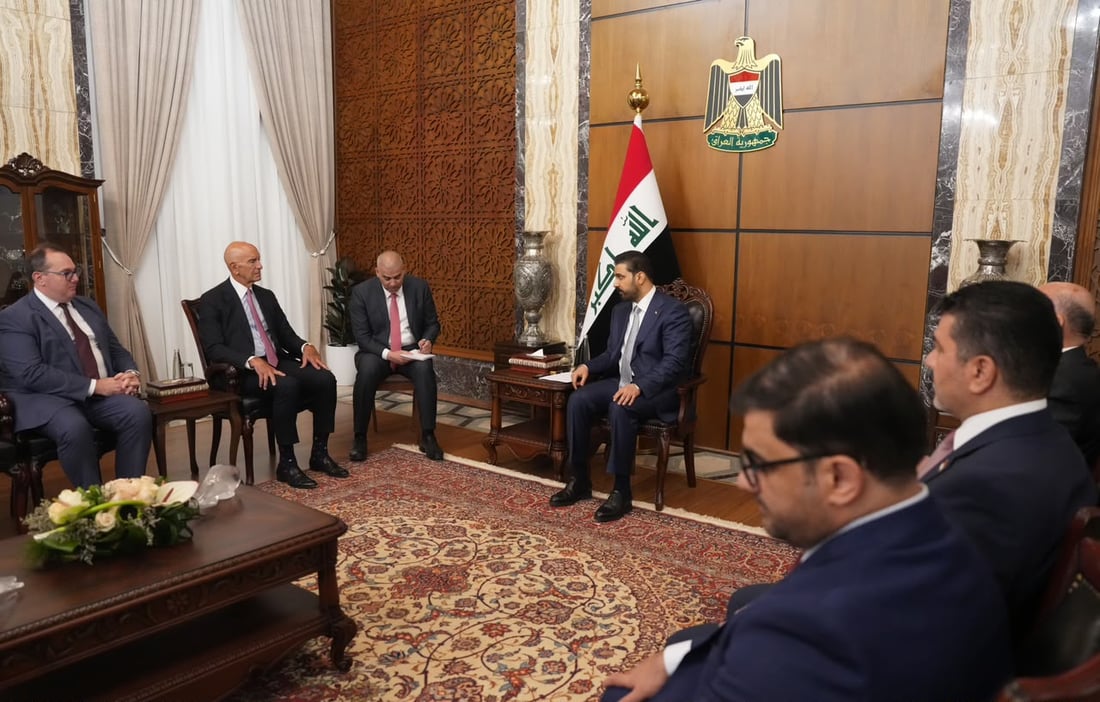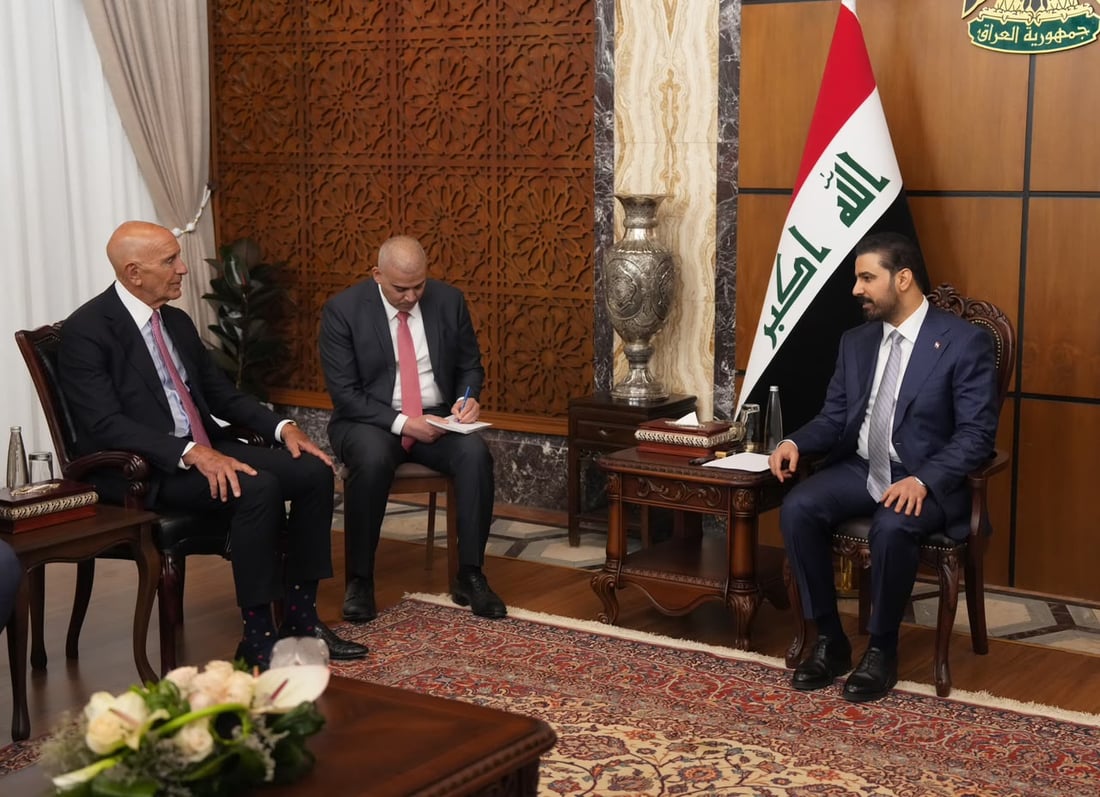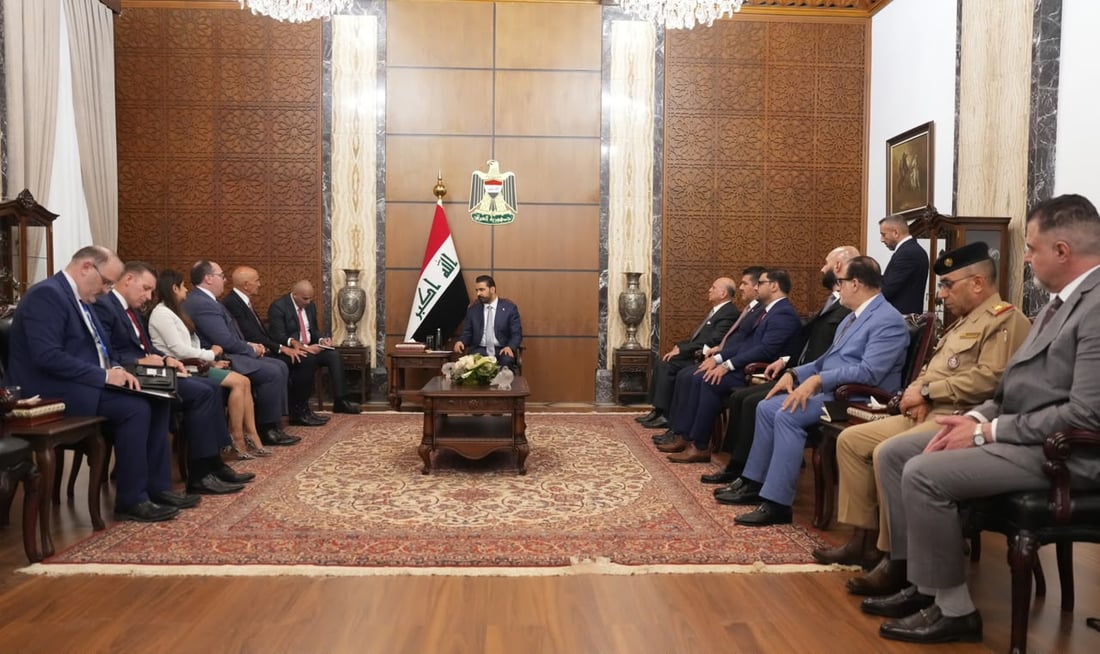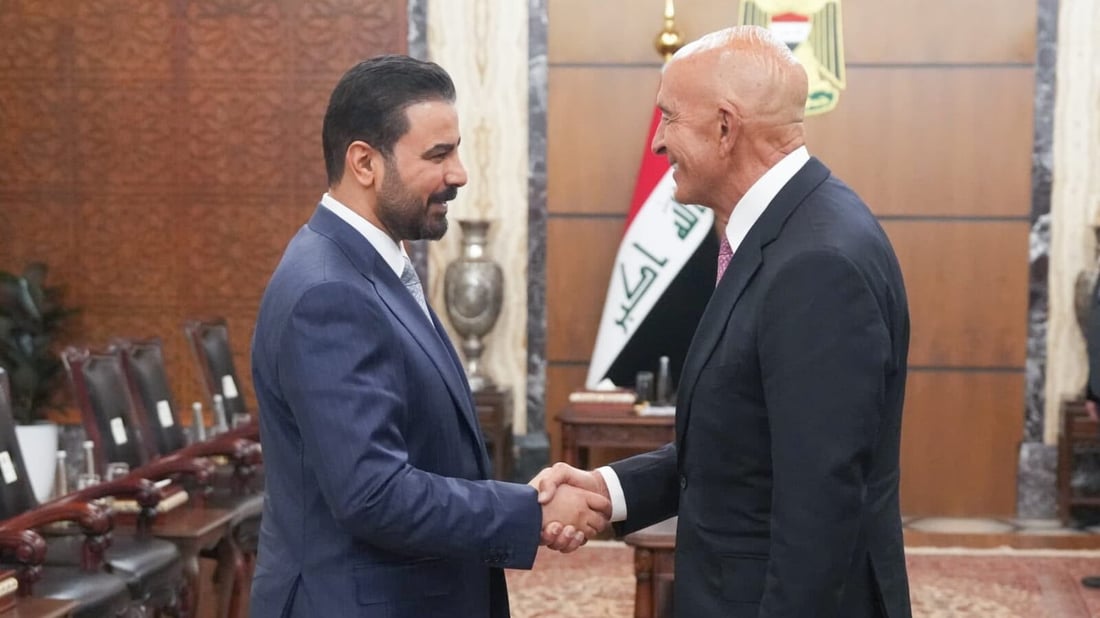
Iraqi Prime Minister Ali Falih al-Zaidi welcomes U.S. presidential envoy Tom Barrack during talks in Baghdad on June 16, ahead of a planned White House summit next month.
US envoy, Zaidi discuss disarmament and investment ahead of meeting with Trump
BAGHDAD — Iraq and the United States have agreed on a broad package of security, strategic and economic understandings centered on the complete disarmament of armed groups operating outside state control, ahead of an expected White House summit between Prime Minister Ali al-Zaidi and U.S. President Donald Trump next month.
The agreements were reached during talks in Baghdad between al-Zaidi and U.S. presidential envoy Tom Barrack, the prime minister’s office said Tuesday. Barrack conveyed Trump’s desire to host the Iraqi leader at the White House in mid-July to discuss the future of bilateral relations. The two sides reaffirmed their commitment to what the statement called a strong and mutually beneficial partnership capable of advancing Iraq’s sovereignty, security and prosperity.
A central focus was Iraq’s plan for the “complete disarmament” and dissolution of all armed groups operating outside state authority. Zaidi and Barrack stressed the need to confine weapons exclusively to state institutions, enforce full sovereignty and prevent Iraqi territory from being used to threaten regional peace.
The talks also produced agreements to expand economic cooperation and encourage U.S. investment. Iraq has completed the operational licensing process for Starlink and launched negotiations with Chevron to develop the West Qurna-2 and Nasiriyah oil fields, according to the statement. The two governments discussed enabling U.S. companies HKN, Western Zagros and Hunt to resume operations with full security guarantees, advancing a memorandum of understanding with TI Capital to rehabilitate the Kirkuk-Baniyas oil pipeline, and expanding cooperation on electricity projects, including Excelerate Energy’s planned floating liquefied natural gas import terminal in Khor al-Zubair. Both sides also voiced support for a “strong, united, democratic and sovereign federal Iraq.”
Barrack arrived in Baghdad on Monday, received by Chargé d’Affaires Joshua Harris and embassy staff, and said on X he would convey Trump’s support for the government and discuss a “partnership on a new direction” in bilateral relations. He also met Chief Justice Faiq Zaidan, praising what the Supreme Judicial Council described as “the role of the judiciary in completing the constitutional entitlements and the formation of the legislative and executive authorities.”
The disarmament initiative gained momentum in early June after the Coordination Framework endorsed a plan to restrict weapons to state control and authorized al-Zaidi to implement it. A government committee including the Defense Ministry, Interior Ministry, Joint Operations Command and the PMF was formed to oversee the handover of weapons, equipment and military sites and to develop mechanisms for integrating participating formations into state institutions.
Several major factions have since backed the initiative. Asaib Ahl al-Haq announced a committee to separate its forces from the PMF and place its weapons under state control, Saraya al-Salam transferred security responsibilities in Samarra to state forces, and the Imam Ali Battalions said they would place their weapons under government control. Officials have said heavy weapons, including tanks, artillery, missiles and drones, will be transferred to state storage before redistribution to the armed forces.
Kataib Hezbollah, Harakat al-Nujaba and Kataib Sayyid al-Shuhada have publicly rejected disarmamen.