
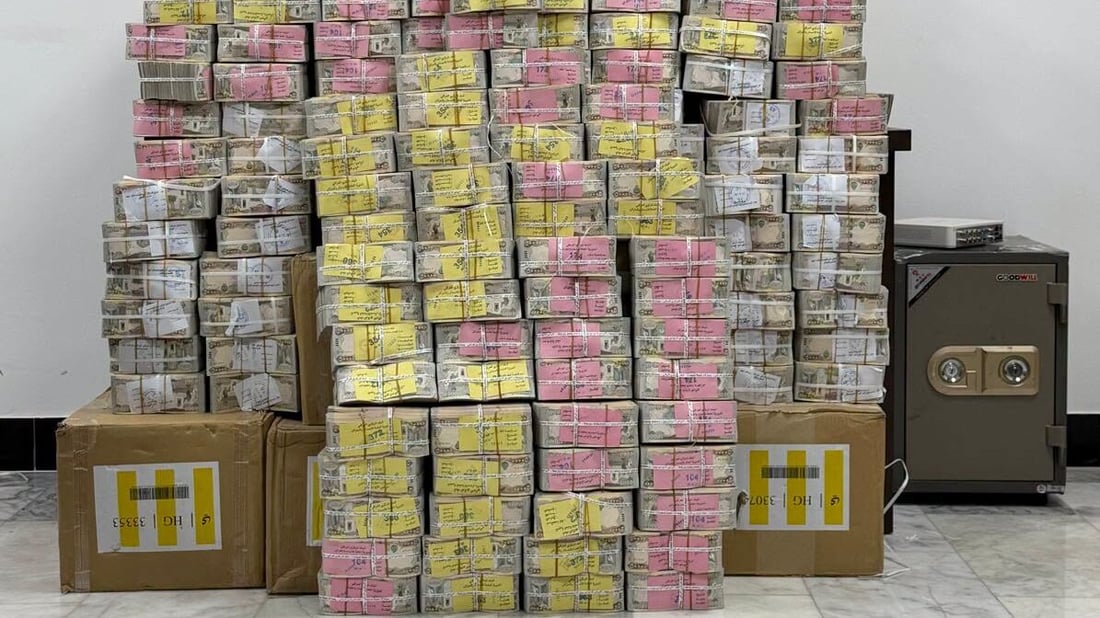
Integrity Commission says some countries refusing to help recover stolen funds
BAGHDAD — Iraq’s Federal Commission of Integrity said Saturday that some countries are refusing to cooperate in efforts to recover assets and extradite suspects linked to corruption cases, citing economic, humanitarian and legal reasons, while announcing draft memorandums of understanding intended to expand cooperation through negotiations and other mechanisms.
Abbas Mutab, director general of the commission’s Recovery Department and deputy chairman of the Iraq Recovery Fund’s board, said some countries had declined to assist while others had cooperated. “There are some countries that are not cooperative in the file of recovering the funds of the corrupt for reasons specific to them, and there are countries that are cooperative in this regard,” Mutab told the Iraqi News Agency.
He said the department had prepared draft memorandums of understanding to ease the recovery of assets and suspects, and that Iraqi authorities continue to follow developments, but that “some countries’ domestic laws do not allow them to take certain measures requested by Iraq.”
Mutab said Iraq had turned to negotiations and other mechanisms to encourage cooperation, adding that many countries decline “for various reasons, including economic ones and others related to the humanitarian aspect, and sometimes the corrupt person is a refugee in those countries, so there is difficulty in extradition.” He did not identify the countries.
The announcement comes as Prime Minister Ali al-Zaidi’s government has intensified its anti-corruption campaign, making the recovery of public funds and prosecution of suspects a central focus. Authorities have arrested dozens of current and former officials, lawmakers and business figures in recent weeks following the detention of former Deputy Oil Minister Adnan al-Jumaili, whose interrogation has led investigators to a widening network of suspects. Zaidi has described the campaign as the first phase of a broader effort.
Judicial authorities have also reported recovering large amounts of cash and other assets. This week the Supreme Judicial Council said seizures in the Jumaili case had grown to 127 billion dinars and $24 million in cash, along with dozens of properties, vehicles and quantities of gold, with additional funds later found hidden in a rainwater drainage pit.
On Friday, the council said it was working with Zaidi on a legal framework that would prioritize recovering misappropriated state funds while allowing reduced legal measures for some suspects who voluntarily return stolen assets, within the limits of Iraq’s amended General Amnesty Law. The judiciary said the proposal builds on an earlier recovery mechanism used in the tax-deposits case known as the “Theft of the Century.”