
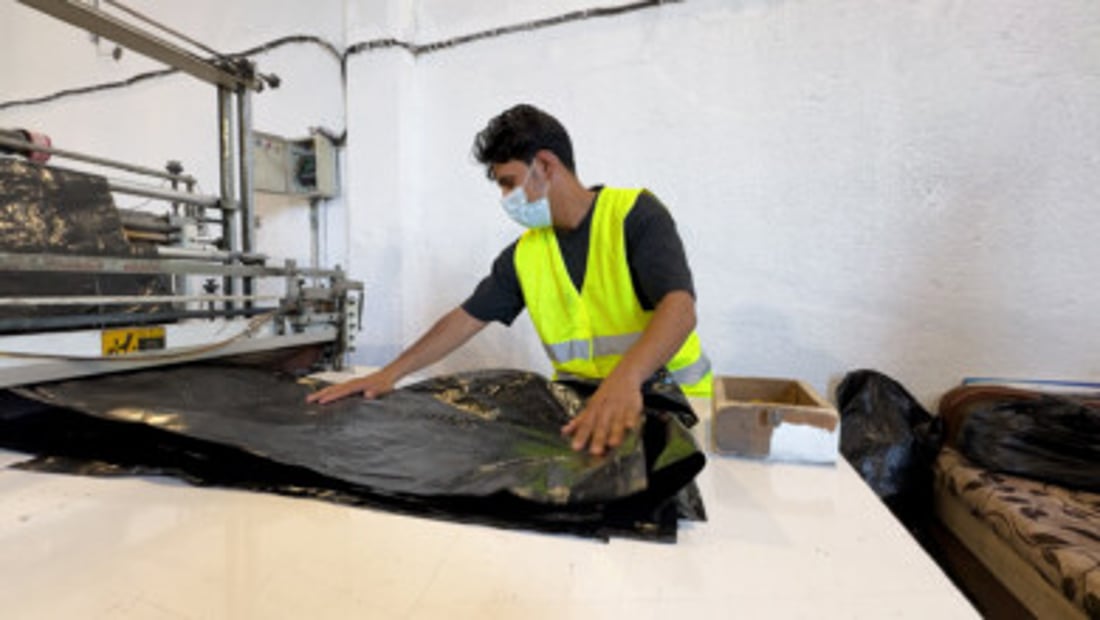
(Photo: 964media)
Basra
Zubair garbage bag factory doubles output for Muharram
BASRA — A municipal garbage bag factory in Zubair, Basra, has doubled production and switched to a two-shift schedule during Muharram, raising output to more than 15,000 bags a day to meet demand from Shiite processions and residential neighborhoods, municipal officials said.
Khalid Abdul Ridha, media officer for the Zubair Municipality, told 964media the factory is running two production lines on morning and evening shifts to supply bags for processions, organizations and households. He said daily production had risen to more than 15,000 bags, up from 7,000 to 10,000 on normal days.
The factory is staffed by six technical and administrative employees, split evenly between the two shifts. They operate the production lines, monitor operations and package the bags to keep supply steady through the month, Abdul Ridha said.
Muharram is the first month of the Islamic lunar calendar and holds particular significance for Shiite Muslims because it commemorates Imam Hussein, the grandson of the Prophet Muhammad, who was killed at the Battle of Karbala in 680. The 10th day, known as Ashura, is the focal point of mourning ceremonies.
Abdul Ridha said the municipality coordinates daily with its service departments to gauge demand from processions and residential areas, adjusting production to the volume of waste. Religious and social occasions are the factory’s biggest challenge, he said, as waste volumes climb and require the lines to run at full capacity for longer hours to support municipal cleanup campaigns.
Mohammed Taama, a technical employee, told 964media that production runs through several stages, starting with melting raw plastic pellets into liquid before the material is processed and cut into bags.
In Iraq, Muharram brings large processions and gatherings, with thousands of volunteers running mawakib, temporary service tents offering free food, water, tea and other help to mourners. The crowds and the widespread distribution of food and drink generate far more waste than usual, including disposable cups, plates and food containers.