
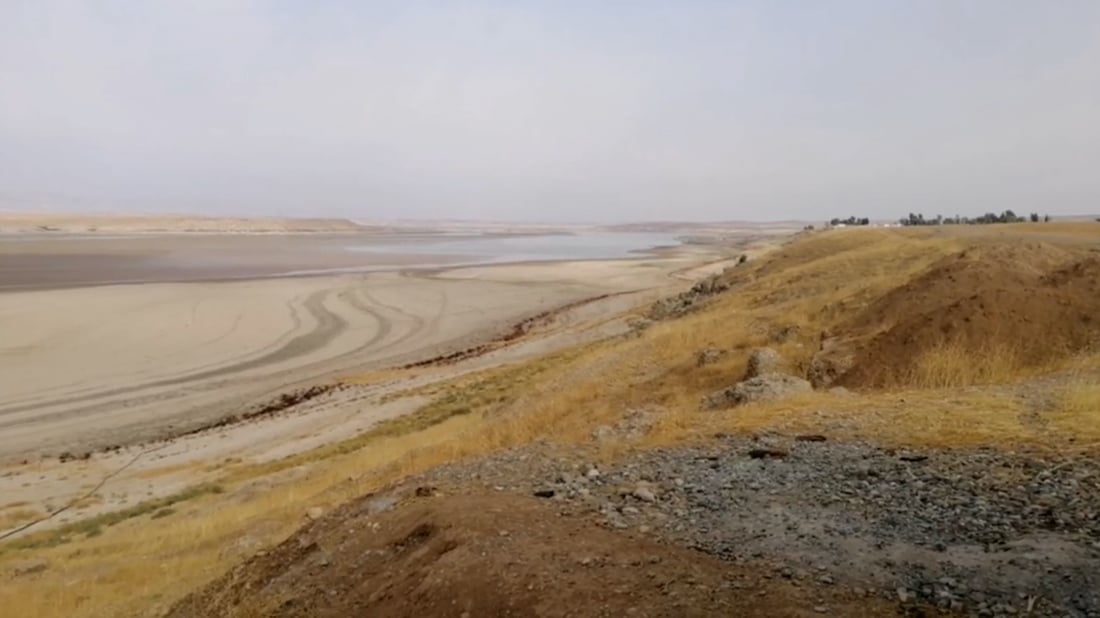
Iraq to release first scientific study on desertification rates
BAGHDAD — Iraq’s Agriculture Ministry said Friday it will soon release the results of the country’s first national scientific study measuring desertification rates in three districts, saying no precise official figures currently exist on the extent of desertification across Iraq.
Bassam Kanaan, director general of the Forestry and Desertification Control Department, said the study covers Nasiriyah district in Dhi Qar, Suwayrah district in Wasit and Tal Afar district in Nineveh. “The department adopted a modern approach to calculating areas of desertified land and land threatened by desertification, in response to the growing demand for accurate data,” he said.
A national committee with technical representatives from the agriculture, water resources, environment, and construction and housing ministries developed the methodology and selected the three districts as a first phase. Kanaan said the findings would be released soon before the work expands to cover the targeted governorates and eventually all of Iraq, subject to resources. The study relied on scientific indicators including vegetation cover and water metrics.
“There is no governmental body or international organization that has provided accurate percentages or figures regarding desertification and desertified lands in Iraq,” Kanaan said, noting that many commonly cited figures lack scientific accuracy. He said the committee was set up to produce reliable results that could later be presented to international bodies for recognition, noting Iraq is party to several agreements including the UN Convention to Combat Desertification.
Iraq has long been identified as one of the Middle East’s most climate-vulnerable countries, with rising temperatures, prolonged drought, declining rainfall and reduced river flows driving desertification. Previous estimates cited by officials and international organizations have suggested nearly 39% of the country’s land is at risk and more than half its agricultural land has degraded, though authorities now say those figures were not based on a unified national scientific assessment.